



fig4
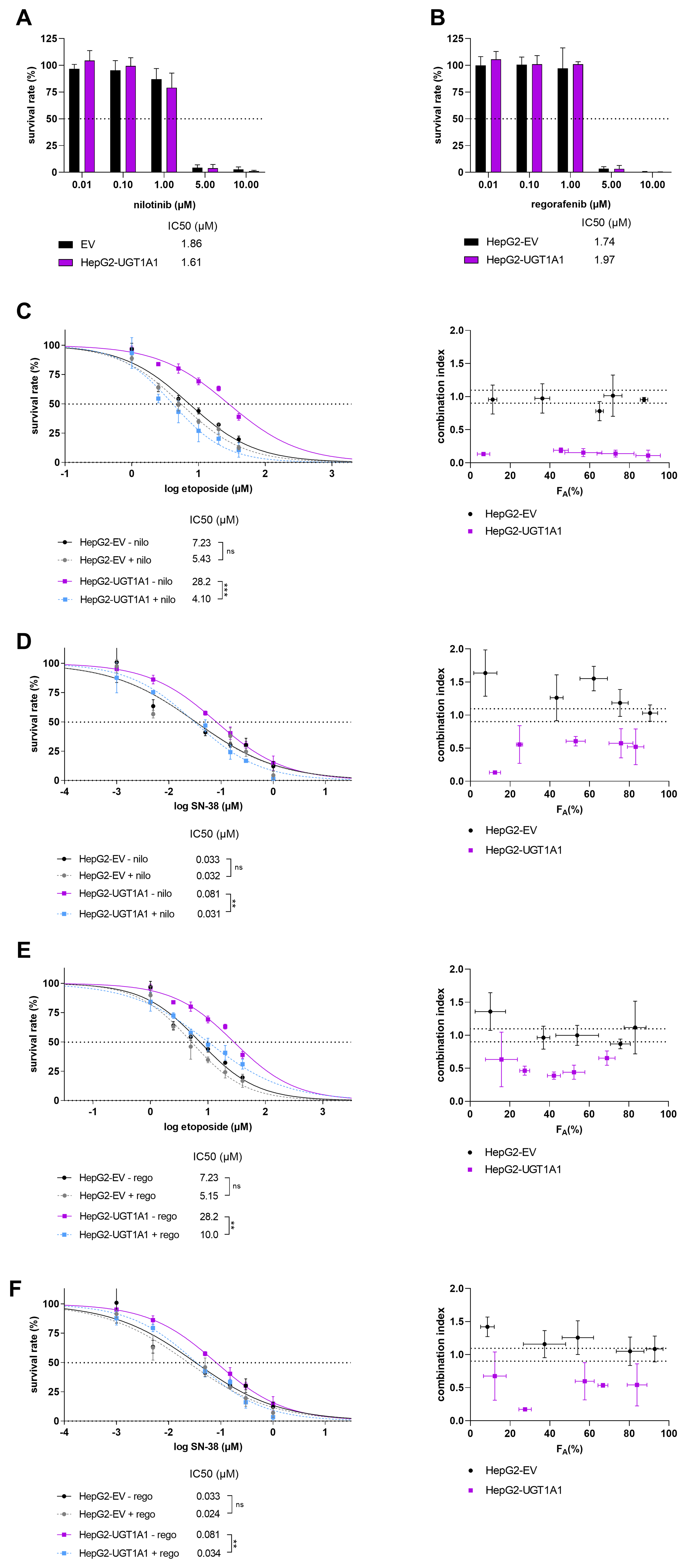
Figure 4. Survival rates for HepG2-EV and HepG2-UGT1A1 cells after treatment with (A) nilotinib and (B) regorafenib; Cell viabilities after 72 h treatment with etoposide (C and E) or SN-38 (D and F) with and without the addition of 1 µM nilotinib (nilo; C and D) or regorafenib (rego; E and F) to inhibit UGT activity. Cell viability was assessed using the CellTiter-Glo® 2.0 Cell Viability Assay. Cell viability curves were constructed from normalized raw data, and the resulting IC50 values were statistically compared using a two-tailed unpaired t-test with three biological replicates (left). Significance levels are denoted as follows: ns = not significant (P > 0.05), **P < 0.01, and ***P < 0.001. The outcomes were transformed into FA values (representing the percentage of cells killed by the tested drug concentrations) for use in a Chou-Talalay analysis (right), which classifies drug combination treatments as synergistic (CI < 0.9), additive (CI = 0.9-1.1), or antagonistic (CI > 1.1). UGT: Uridine diphosphate glucuronosyltransferase; CI: combination index.