




fig4
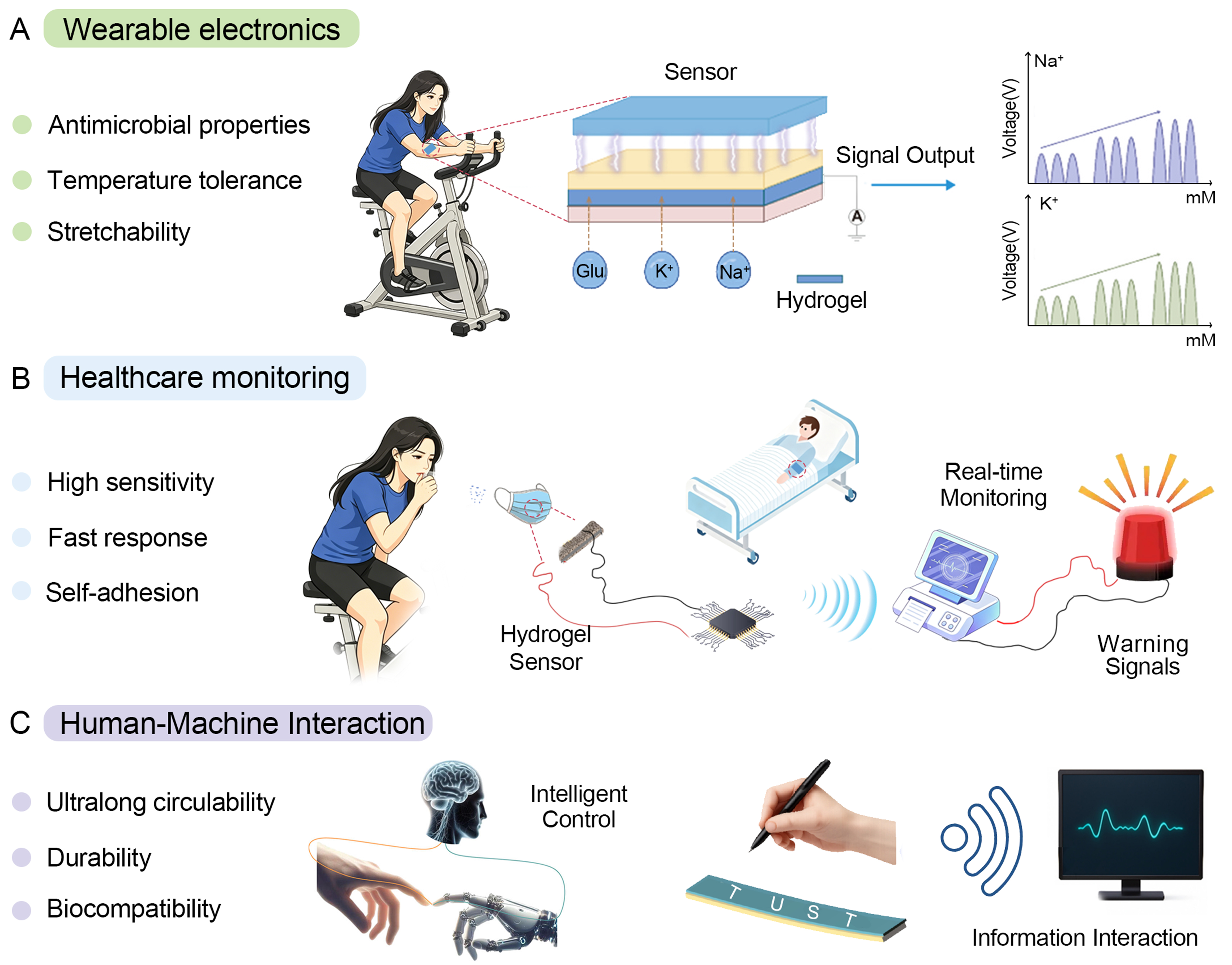
Figure 4. Overview of the applications of lignocellulose-derived hydrogel sensors in motion monitoring. (A) Wearable electronic applications based on lignocellulose hydrogel sensors, including mechanical flexibility, stretchability, temperature tolerance, antimicrobial properties, and physiological signal detection such as glucose (Glu), potassium ions (K+), and sodium ions (Na+)[50]. Adapted with permission from Ref.[50]. Copyright 2026, Elsevier; (B) Healthcare monitoring applications enabled by hydrogel sensors with high sensitivity, rapid response, and self-adhesive capability for real-time physiological monitoring and warning signal generation; (C) Human–machine interaction applications utilizing lignocellulose-derived hydrogel sensors with excellent durability, biocompatibility, and long-term operational stability for intelligent control and information interaction[105,244]. Adapted with permission from Ref.[105]. Copyright 2026, Elsevier. Adapted with permission from Ref.[244]. Copyright 2026, Springer Nature.