



fig1
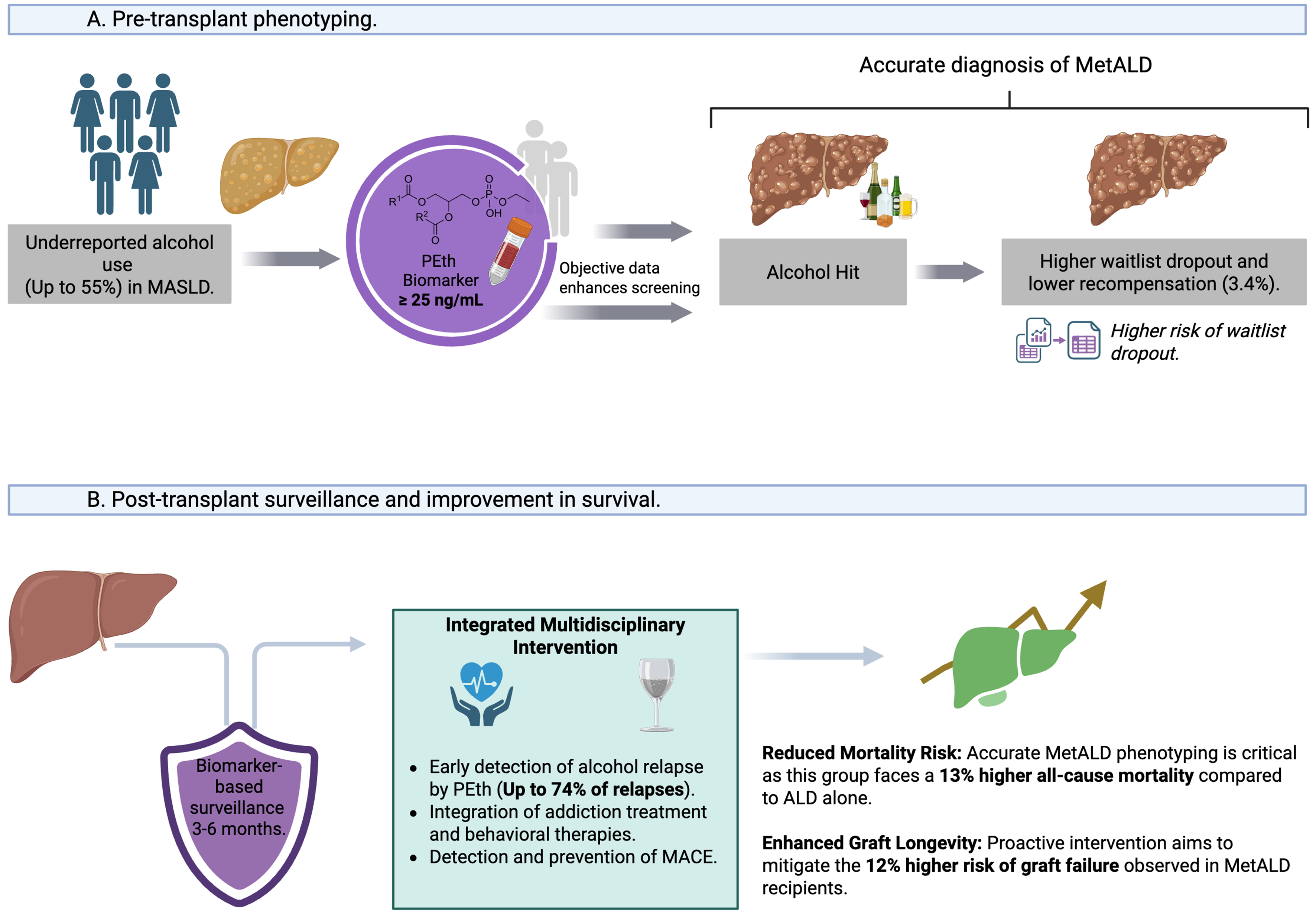
Figure 1. Improving phenotypic precision in MetALD liver transplantation: the role of PEth in pre-transplant evaluation and post-transplant outcomes. (A) Pre-LT phase: alcohol use is underreported in up to 55% of patients with SLD, and objective PEth testing (≥ 25 ng/mL) improves its detection[32], identifying the MetALD “double hit” phenotype, which is associated with a lower recompensation rate (3.4%)[28]; (B) Post-LT phase: biomarker-based surveillance with PEth every 3-6 months improves detection of alcohol relapse; among detected relapses, up to 74% were identified by PEth alone rather than by self-report[50]. These objective data guide integrated multidisciplinary interventions to mitigate the 13% higher mortality and 12% higher risk of graft failure observed in MetALD recipients[4]. Created in BioRender. Coronel, C. (2026) https://BioRender.com/ujjbb7o. ALD: Alcohol-associated liver disease; LT: liver transplantation; MACE: major adverse cardiovascular events; MASLD: metabolic dysfunction-associated steatotic liver disease; MetALD: metabolic dysfunction and alcohol-related liver disease; PEth: phosphatidylethanol; SLD: steatotic liver disease.