


fig2
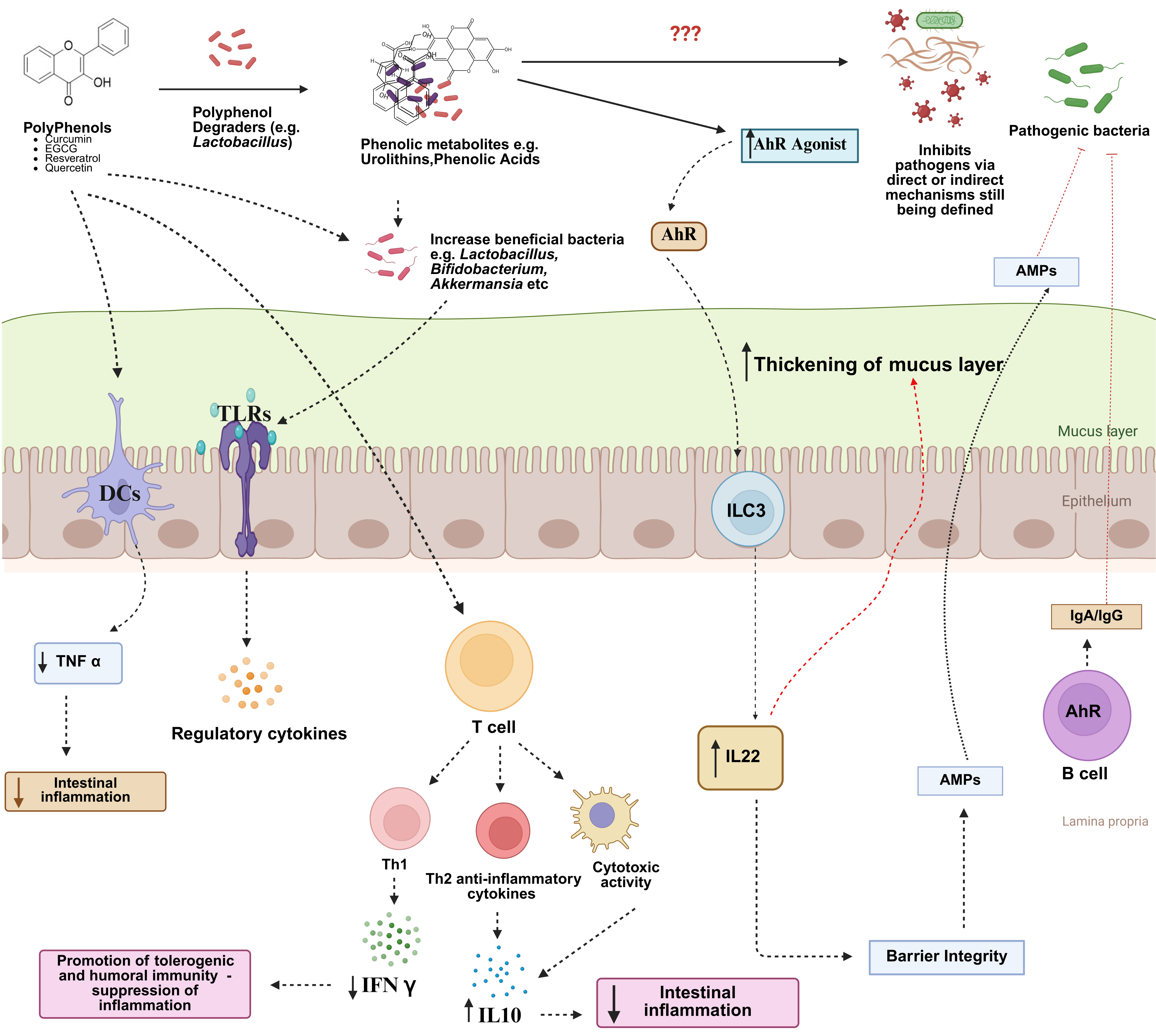
Figure 2. Possible mechanisms of how dietary polyphenols may modulate musical immunity to pathogens. Polyphenols may directly interact with dendritic cells or T-cells to alter cytokine secretion, changing the inflammatory tone with a reduction of pro-inflammatory cytokines such as IFNγ and promotion of Th2 and anti-inflammatory cytokines. Alternatively, polyphenols may change the composition of the gut microbiota, favoring the growth of bacteria such as Akkermansia spp. which can interact with toll-like receptors on epithelial cells to induce regulatory cytokine production. Finally, polyphenols may be degraded by certain gut microbes such as Lactobacillus spp. to yield phenolic metabolites which can potentially signal through the aryl hydrocarbon receptor (AhR) to promote production of IL22, antimicrobial peptides (AMPs), and mucosal IgA and IgG, which can all contribute to mucus production and immune-mediated neutralization of pathogens, whilst minimizing excessive inflammation and pathology. Created in BioRender. Williams, A. (2025) https://BioRender.com/zddbeiy. IL: Interleukin; IgA: Immunoglobulin A; IgG: Immunoglobulin G; Th2: T helper type 2 cells; Th1: T helper type 1 cells; IFN-γ: Interferon-γ; TNF: tumor necrosis factor; ILC3: group 3 innate lymphoid cells.