


fig3
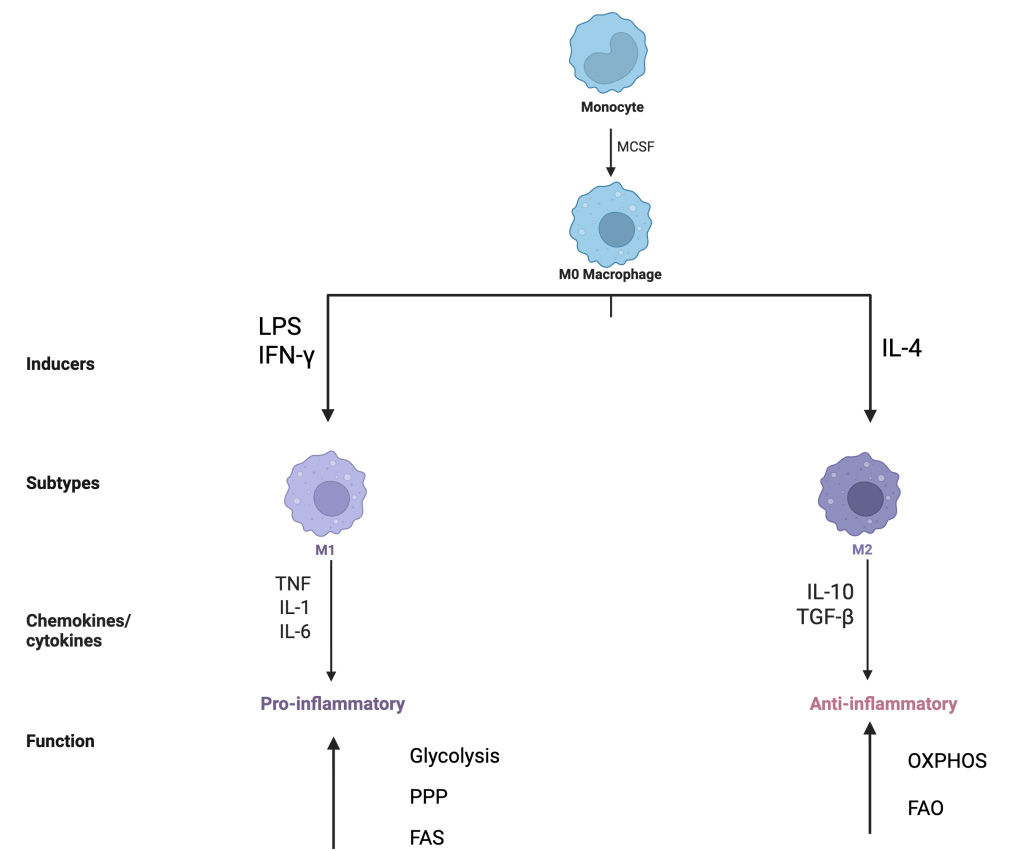
Figure 3. Diagram of Macrophage Polarization and Metabolic Reprogramming Macrophages have the potential to differentiate into different subtypes, and metabolic reprogramming occurs. Classical activation of macrophages, driven by stimuli such as LPS and IFN-γ, promotes a pro-inflammatory phenotype associated with the production of cytokines like IL-1, IL-6, and tumor necrosis factor (TNF). Alternatively, activation via IL-4 induces an anti-inflammatory state characterized by the secretion of mediators including IL-10 and transforming growth factor-beta (TGF-β). Beyond the primary, macrophages undergo metabolic reprogramming in the AS lesion environment, including glycolysis, oxidative phosphorylation (OXPHOS), pentose phosphate pathway (PPP), fatty acid oxidation (FAO), and fatty acid synthesis (FAS). The M1 subtype exhibited enhanced glycolysis, increased PPP, and enhanced FAS. The M2 subtype showed increased OXPHOS and FAO. The figure created with BioRender.com. LPS: Lipopolysaccharide; IFN-γ: interferon-gamma; IL-1: interleukin-1; IL-6: interleukin-6; TNF: tumor necrosis factor; IL-4: interleukin-4; IL-10: interleukin-10; MCSF: macrophage colony-stimulating factor.