


fig2
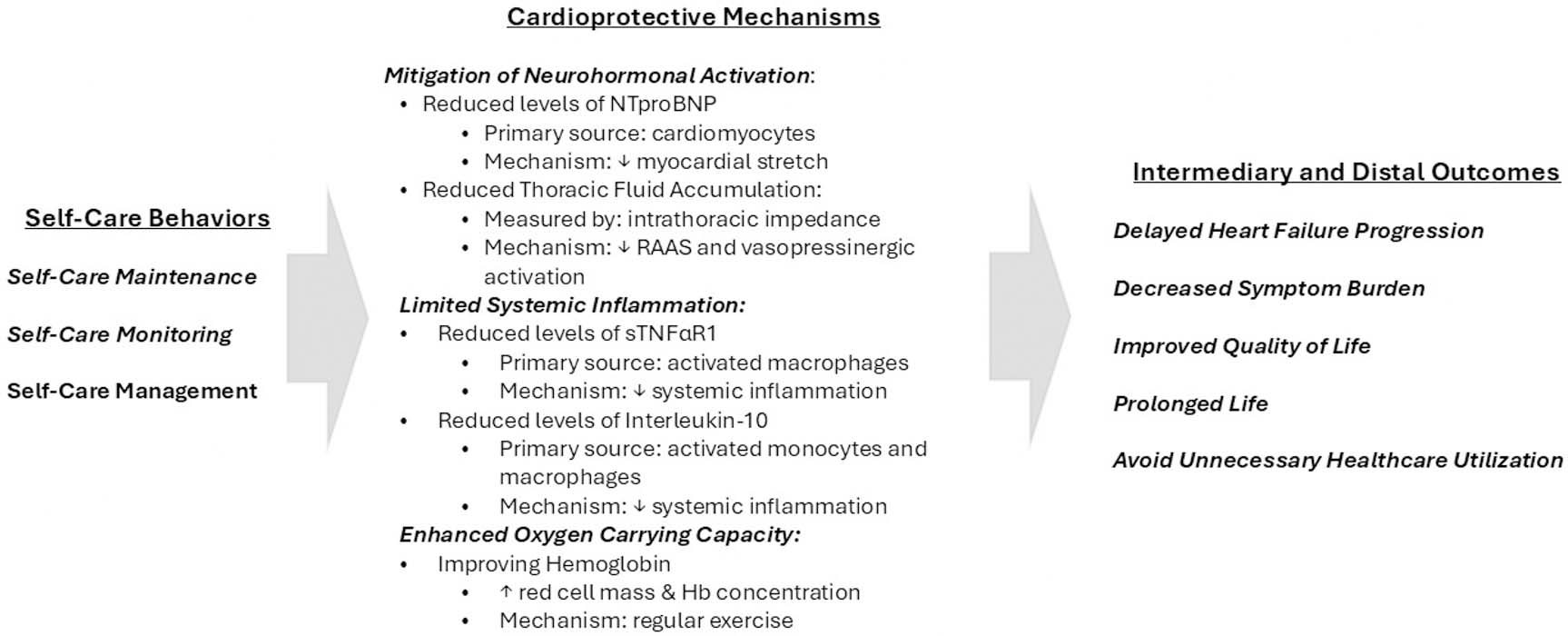
Figure 2. Established clinical associations between pathophysiological biomarkers and heart failure self-care. Based on empirical evidence, effective self-care behaviors are thought to be cardioprotective and therefore improve outcomes in persons with heart failure. There is evidence that effective self-care is associated with mitigated neurohormonal activation as evidenced by lower levels of myocardial stretch and thoracic fluid accumulation. There is additional evidence from multiple sources that effective self-care behaviors are associated with limited systemic inflammation based on multiple pro-inflammatory biomarkers. Finally, there is evidence that effective self-care behaviors, exercise in particular, are associated with erythropoiesis that partially offsets anemia of chronic illness. Hb: Hemoglobin; NTproBNP: amino-terminal B-type natriuretic peptide; RAAS: renin-angiotensin-aldosterone system; sTNFαR1: soluble receptor for tumor necrosis factor alpha type 1.