


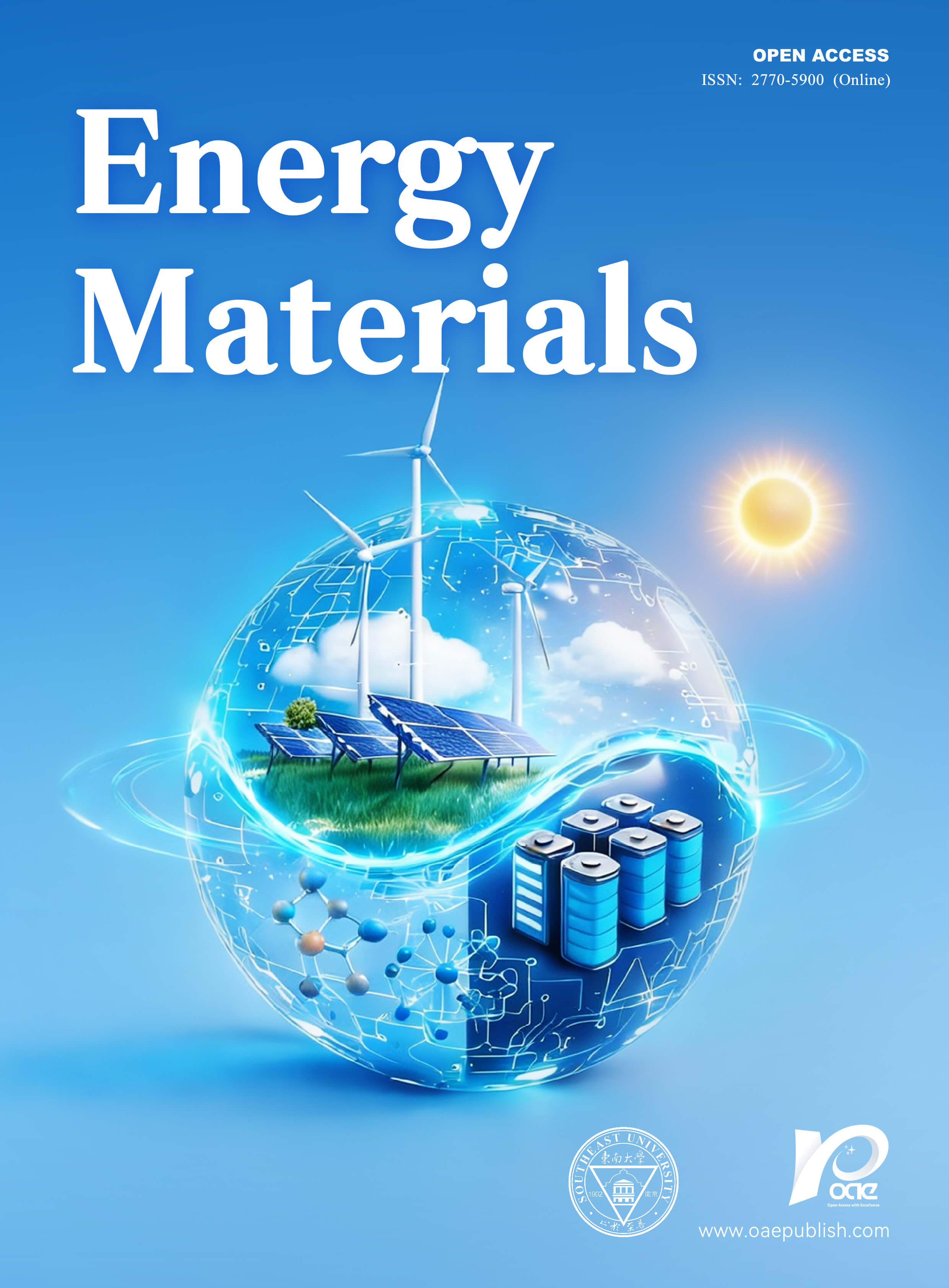
Reconstruction-mediated interfacial water engineering in Cu-Mo electrocatalyst for highly efficient and durable water splitting
 0
0 Abstract
The development of efficient and durable electrocatalysts for industrial-level water splitting remains a critical challenge. Here we report a CuO-MoS2/MoO3 precatalyst that undergoes electrochemical reconstruction under working conditions to yield two distinct active phases: Cu-MoS2 for the hydrogen evolution reaction (HER) at the cathode and an optimized CuO-MoS2/MoO3 for the oxygen evolution reaction (OER) at the anode. In 1.0 M KOH, the reconstructed electrodes deliver remarkably low overpotentials of 35 mV for HER and 124 mV for OER at 10 mA cm-2, along with outstanding long-term durability, sustaining 500 mA cm-2 for 100 h. Combined in situ Fourier-transform infrared spectroscopy and density functional theory calculations reveal that Cu species not only enhance charge transport but also tailor the electronic structure to optimize intermediate adsorption and reorganize interfacial water into a strongly hydrogen-bonded network, thereby accelerating water dissociation and proton transfer kinetics. When assembled into an anion-exchange-membrane water electrolyzer, the system delivers 1.0 A cm-2 at a low voltage of 1.77 V and 80 °C, with stable operation for 500 h, substantially surpassing noble-metal benchmarks. Our findings offer an efficient and durable catalyst system for sustainable hydrogen production, as well as fundamental insights into catalyst reconstruction and interfacial water regulation that inform the rational design of electrocatalytic materials.
Keywords
INTRODUCTION
Mounting energy shortages and environmental degradation have driven the pursuit of green and renewable energy sources. Owing to its high gravimetric energy density, non-polluting nature, and carbon-free combustion, hydrogen is regarded as a viable substitute for fossil fuels[1,2]. Electrocatalytic water splitting, powered by renewable electricity, provides a clean and efficient route to generate high-purity hydrogen[3,4]. This process comprises two half-reactions: hydrogen evolution reaction (HER) at the cathode and oxygen evolution reaction (OER) at the anode[5,6]. While noble metals (e.g., Pt for HER and IrO2 or RuO2 for OER) exhibit high catalytic activity, their prohibitive cost and limited reserves hinder large-scale application[7,8]. Consequently, it is imperative to develop low-cost, earth-abundant non-precious metal electrocatalysts capable of delivering industrial-level performance for water splitting.
Molybdenum chalcogenides and oxides, particularly MoS2 and MoOx, have recently gained traction as viable non-precious electrocatalysts, attributable to their compositionally tunable electronic bands, affordability, and natural reserves[9,10]. Specifically, MoS2 is celebrated for its HER-active edge terminals that afford near-optimal hydrogen chemisorption energy, albeit with largely passive basal planes[11]. In response, tactics such as defect engineering, phase modification, and heteroatom substitution have been deployed to amplify the density of active sites[12-16]. In parallel, MoOx and its derivatives are increasingly recognized for OER, capitalizing on their flexible oxidation states to expedite redox transitions and their layered topologies to permit facile chemical intercalation[17,18]. Consequently, constructing integrated bifunctional electrodes based on MoS2/MoOx hetero-interfaces has emerged as a promising route to achieve efficient overall water splitting within a unified electrolyte[19,20]. Nevertheless, the suboptimal intrinsic conductivity of these molybdenum-based materials continues to curtail electron movement, posing a persistent bottleneck for their practical exploitation.
To overcome this limitation, heteroatom doping has been widely investigated, and the incorporation of copper has proven especially efficacious for MoS2/MoOx systems[21,22]. Cu doping dramatically upgrades the pristine electrical conductivity by fostering electron delocalization across Mo-S bonds and opening up auxiliary channels for charge flow[23-25]. More importantly, the inserted Cu species concurrently rearrange the charge density surrounding the molybdenum active sites. Such electronic perturbation serves to optimize the Gibbs free energy of pivotal reaction intermediates, such as *H for HER and *OOH/*OH for OER, thereby reducing the energy barriers for both half-reactions[26,27]. Mechanistically, the electron-donating nature of Cu enriches the electron population at sulfur sites, which strengthens proton adsorption and eases hydrogen desorption for HER, while also promoting the necessary oxidation-state shifts and deprotonation steps for OER[28-30]. Furthermore, Cu species contribute to the reorganization of the interfacial water structure by establishing an optimized hydrogen-bonding network, which accelerates water dissociation and proton transfer at the electrode-electrolyte interface[31-33]. This structured aqueous microenvironment promotes the Volmer step in HER and facilitates nucleophilic attack and intermediate deprotonation in OER[34,35]. By concurrently enhancing conductivity, modulating electronic structure, and engineering a kinetically friendly interfacial micro-environment, copper integration delivers a synergistic enhancement in both catalytic efficacy and longevity, charting a viable path for advancing sustainable energy conversion.
Herein, we have constructed a CuO-MoS2/MoO3 precatalyst via anchoring CuO nanodots onto MoS2/MoO3 nanosheets for electrocatalytic overall water splitting. Notably, this precursor dynamically reconstitutes under applied bias into two operationally distinct architectures, forming Cu-MoS2 at the cathode for HER and an optimized CuO-MoS2/MoO3 structure at the anode for OER. The reconstructed cathode delivers a low overpotential of 35 mV at 10 mA cm-2 for HER, while the anode achieves an overpotential of 124 mV at the identical current density for OER. Both electrodes demonstrate exceptional operational stability, upholding a current density of 500 mA cm-2 for 100 h with negligible degradation. When deployed as paired electrodes in an anion-exchange-membrane water electrolyzer (AEMWE), the system requires only 1.77 V to reach 1.0 A cm-2 at 80 °C and retains this performance continuously for 500 h, surpassing the state-of-the-art Pt/C||RuO2 benchmark. In situ Fourier-transform infrared (FTIR) and density functional theory (DFT) calculations reveal that the reconstructed Cu species not only enhance charge transport but also optimize the electronic structure of active sites, lower the energy barriers for intermediate adsorption/desorption, and reorganize interfacial water into a strongly hydrogen-bonded network, collectively boosting the overall reaction kinetics. This work provides an effective strategy for designing efficient and robust electrocatalysts toward industrial water splitting.
EXPERIMENTAL
Preparation of CuO-MoS2/MoO3 sample
The synthesis of CuO-MoS2/MoO3 samples followed a three-step protocol. Initially, commercial MoS2
Material characterization
Morphological features of the catalysts were examined by transmission electron microscopy (TEM, JEM-2100F) and spherical aberration correction scanning transmission electron microscopy (AC-STEM, JEM-ARM200F). X-ray diffraction (XRD) patterns were acquired on a PANalytical X-Pert PRO MPD diffractometer employing a Cu Kα source operating at 40 kV and 40 mA. X-ray photoelectron spectroscopy (XPS) measurements were performed with an ESCALAB 250Xi spectrometer. Raman spectra were recorded using a LabRAM HR Evolution spectroscopy. In situ FTIR spectroscopy was carried out on a Nicolet iS50 spectrometer coupled with an H-type electrochemical cell (Gaossunion Technology Co., Ltd.) to monitor the reaction intermediates.
Electrochemical measurements
All electrochemical tests were conducted on a CHI760E workstation in 1.0 M KOH alkaline electrolyte, using a standard H-type three-electrode cell with a saturated calomel electrode (SCE) as the reference electrode and a carbon rod as the counter electrode. The as-prepared CuO-MoS2/MoO3 sample deposited on the carbon cloth served as the working electrode. Polarization curves for both HER and OER were obtained at a scan rate of 5 mV s-1 with 90% iR-compensation. All measured potentials were converted to the reversible hydrogen electrode (RHE) scale according to the equation: ERHE = ESCE + 0.059 pH + 0.241 V[19]. Electrochemical impedance spectroscopy (EIS) was recorded over a frequency range of 0.01 to 105 Hz, with applied potentials of -0.3 V vs. RHE for HER and 1.2 V vs. RHE for OER. The electrochemically active surface area (ECSA) was estimated from the double-layer capacitance (Cdl), derived from cyclic voltammetry (CV) curves at scan rates varying from 10 to 200 mV s-1. The non-Faradic potential windows of 0-0.1 V vs. RHE and 1.0-1.1 V vs. RHE were selected for HER and OER, respectively. The electrocatalytic overall water splitting was evaluated on a membrane electrode assembly (MEA) configuration, employing a reconstructed Cu-MoS2 cathode and a CuO-MoS2/MoO3 anode separated by an anion-exchange membrane (AEM).
DFT calculations
All DFT calculations were performed using the CP2K package with the Quickstep module[36,37]. The input file was generated using Multiwfn 3.8[38,39]. Periodic boundary conditions were imposed along the x and y directions, with a vacuum layer of 15-20 Å introduced along the z-axis to avoid periodic interactions. The Perdew-Burke-Ernzerhof (PBE) functional incorporating Grimme’s DFT-D3 (BJ) dispersion correction was adopted within the generalized gradient approximation (GGA) to treat exchange-correlation and van der Waals forces[40,41]. Core electrons were described by norm-conserving Goedecker-Teter-Hutter (GTH) pseudopotentials, while valence electrons were expanded with the DZVP-MOLOPT-SR-GTH basis set[42]. A plane-wave cutoff of 400 Ry and a relative cutoff of 55 Ry were set. The DFT + U method was applied to Mo atoms to better capture the localized d-electron behavior. Geometry optimization was performed using the Broyden-Fletcher-Goldfarb-Shanno (BFGS) algorithm, with convergence criteria of 4.5 × 10⁻⁴ Ha/Bohr for maximum force and 3.0 × 10⁻³ Bohr for maximum displacement. During optimization, the bottom two atomic layers were kept fixed to simulate surface constraints. SCF convergence was accelerated by the direct inversion in the iterative subspace (DIIS) minimizer and a full preconditioner, with an energy tolerance of 1.0 × 10⁻⁵.
RESULTS AND DISCUSSION
Characterizations of CuO-MoS2/MoO3 nanosheets
The CuO-MoS2/MoO3 nanosheets were obtained via controlled oxidation of the exfoliated Cu-MoS2 precursor. XRD analysis [Figure 1A] verified the coexistence of diffraction peaks ascribed to MoO3, MoS2, and CuO phases, confirming the successful formation of a ternary composite. This assignment was further substantiated by Raman spectroscopy [Figure 1B], which distinctly captured the characteristic vibrational signatures of all three constituents, offering complementary structural confirmation. Transmission electron microscopy [Figure 1C] disclosed typical nanosheet morphologies decorated with CuO nanodots that were evenly spread over the MoS2/MoO3 support. This homogeneous distribution was more clearly visualized in spherical aberration-corrected STEM images [Figure 1D], where the embedded CuO nanodots appeared as bright spots exhibiting strong contrast against the underlying substrate. High-resolution TEM analysis [Figure 1E] resolved clear lattice fringes with measured spacings of 0.270, 0.232, and 0.227 nm, indexed respectively to the (101) plane of MoO3, the (111) plane of CuO, and the (103) plane of MoS2. The presence of these three distinct spacings within the same region attests to the intimate interfacial contact among the different phases. Additionally, elemental mapping [Figure 1F] confirmed the uniform spatial distribution of O, Cu, Mo, and S throughout the composite architecture, indicating that CuO nanodots were well incorporated into the MoS2/MoO3 matrix and that a thoroughly mixed ternary material had been formed.
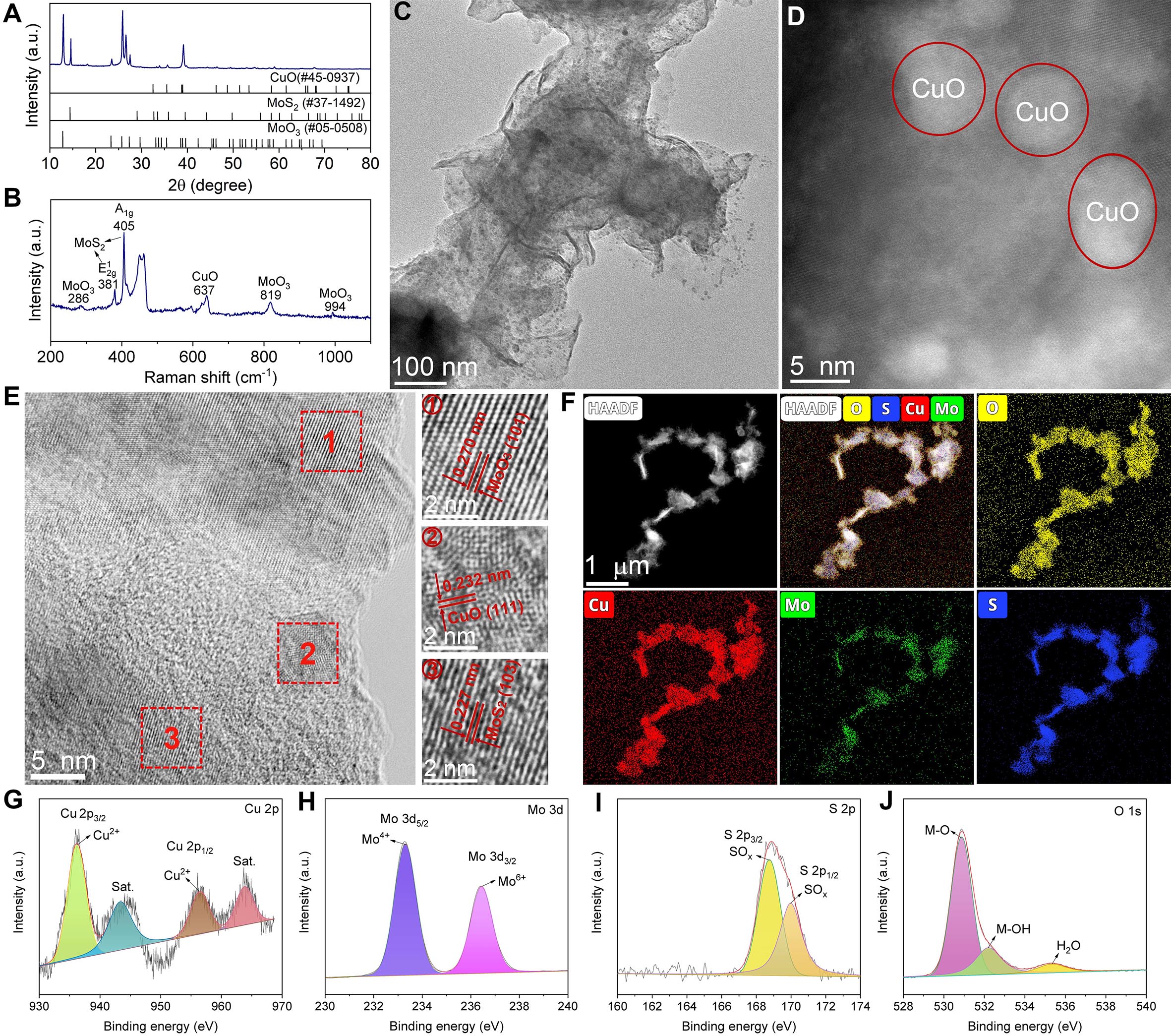
Figure 1. Characterizations of precatalysts. (A) XRD pattern; (B) Raman spectrum; (C) TEM image; (D) AC-STEM image; (E) HR-TEM image; (F) Elemental mapping of CuO-MoS2/MoO3 nanosheets; XPS spectra of (G) Cu 2p, (H) Mo 3d, (I) S 2p, and (J) O 1s for CuO-MoS2/MoO3 nanosheets.
XPS analysis was conducted to probe the surface chemical states of CuO-MoS2/MoO3 in parallel with MoS2/MoO3 for reference. The Cu 2p spectrum [Figure 1G] exhibited distinct peaks at 934.5 eV for Cu 2p3/2 and 954.6 eV for Cu 2p1/2, accompanied by pronounced shake-up satellite features, which are characteristic of Cu2+ oxidation state[43]. The high-resolution Mo 3d spectrum of CuO-MoS2/MoO3 [Figure 1H] displayed two characteristic peaks at 233.3 and 236.4 eV, corresponding to Mo4+ and Mo6+, respectively[19,44]. A notable positive shift in binding energy was observed for these Mo 3d peaks compared to those in MoS2/MoO3 (232.9 and 236.0 eV, Supplementary Figure 1), suggesting a modified electronic environment around Mo centers due to electron transfer toward CuO species. In the S 2p region [Figure 1I], the doublet located at 168.7 eV for S 2p3/2 and 169.9 eV for S 2p1/2 further confirmed the presence of SOx species in the MoS2/MoO3 phase[20]. Moreover, the O 1s spectrum [Figure 1J] was well-fitted with three components, including lattice oxygen in metal oxides (Mo) at 530.9 eV, surface hydroxyl groups (M-OH) at 532.2 eV, and adsorbed water molecules at 535.4 eV[45]. Collectively, these results confirm the successful synthesis of CuO-MoS2/MoO3 precatalyst.
Identification of the actual catalytic species
The as-prepared CuO-MoS2/MoO3 precatalyst was subjected to appreciable electrochemical reconstruction during electrolytic operation. To track this transformation and clarify the true active species under working conditions, we performed in situ electrochemical XRD to monitor phase evolution in real time for both HER and OER, given the composition dynamics induced by applied potentials. For the HER process
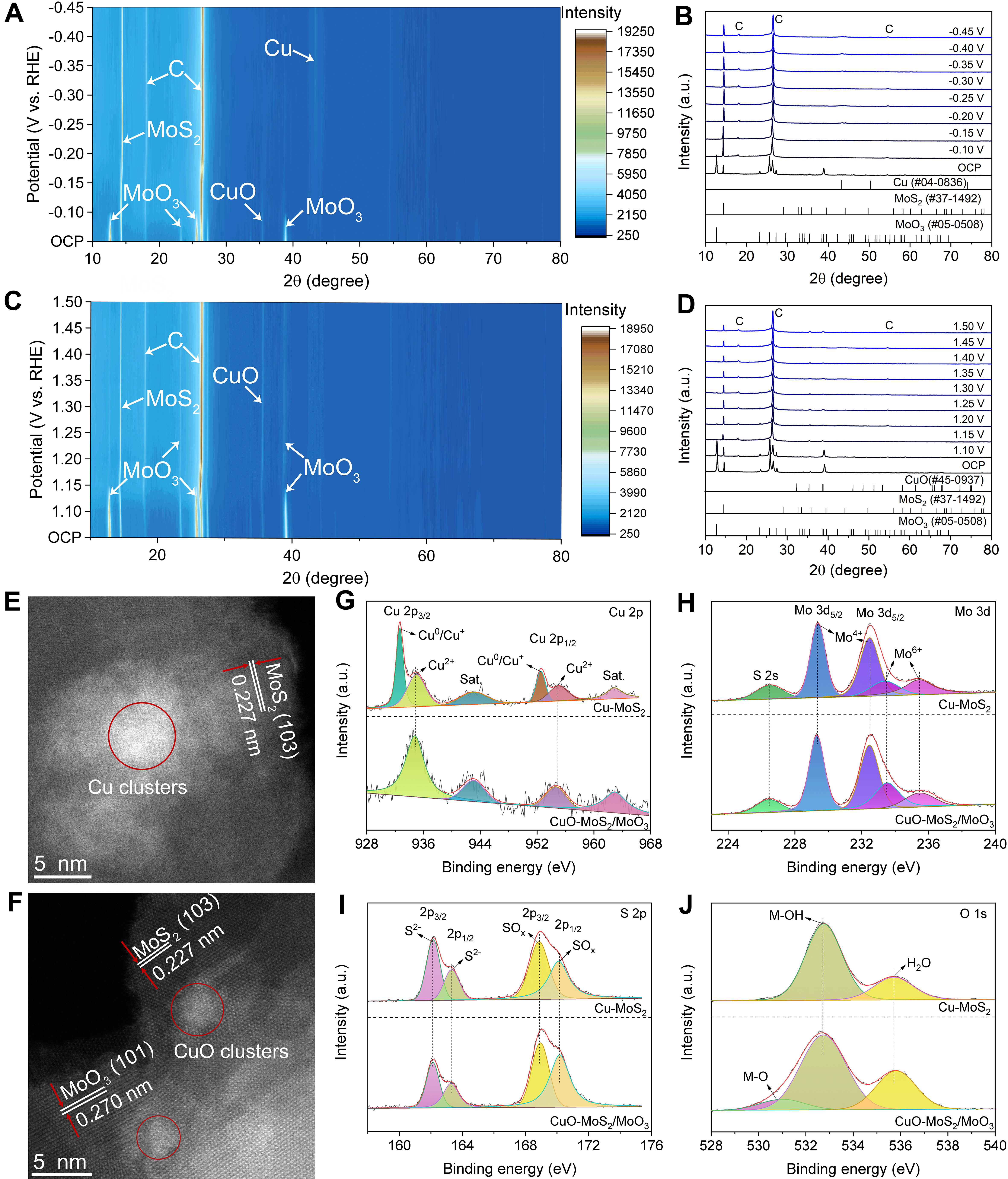
Figure 2. Characterizations of the reconstructed catalysts. (A and B) In situ XRD patterns of CuO-MoS2/MoO3 during HER process; (C and D) In situ XRD patterns of CuO-MoS2/MoO3 during OER process; AC-STEM images of (E) Cu-MoS2 and (F) CuO-MoS2/MoO3 after reaction; XPS spectra of (G) Cu 2p, (H) Mo 3d, (I) S 2p, and (J) O 1s in Cu-MoS2 and CuO-MoS2/MoO3.
Post-reaction AC-STEM characterization [Figure 2E and F] provided deeper structural insights into the reconstructed catalysts. After HER testing, finely dispersed Cu clusters were distinctly observed on the MoS2 (103) plane, corroborating the formation of Cu-MoS2. Following OER testing, distinct lattice spacings of 0.227 and 0.270 nm were observed, corresponding to the (103) plane of MoS2 and (101) plane of MoO3, respectively, with CuO clusters embedded in the MoS2/MoO3 matrix. Notably, both Cu and CuO clusters in the reconstructed catalysts exhibited significantly reduced sizes compared to the original CuO nanodots, indicating that electrochemical reconstruction generates finer, highly dispersed active species with potentially enhanced catalytic properties. XPS measurements were conducted to analyze the surface chemical states of the reconstructed catalysts [Figure 2G-J]. The reconstructed CuO-MoS2/MoO3 after OER still showed characteristic peaks of Cu2+ species, whereas Cu-MoS2 gave distinct signals attributable to Cu0 or Cu+ species, confirming the reduction of pristine CuO during HER operation. The appearance of Cu2+ species in the air-exposed Cu-MoS2 sample was attributed to surface reoxidation. Similar surface oxidation phenomena were observed for Mo and S elements in Cu-MoS2, manifested as Mo6+ and SOx species[46,47]. By contrast, the reconstructed CuO-MoS2/MoO3 catalyst showed enhanced peak intensities for Mo6+ and SOx species, together with the emergence of metal-oxygen (M-O) bonds in the O 1s spectrum, collectively demonstrating the coexistence of MoS2 and MoO3 phases in this OER-active material[47]. This comprehensive characterization provides compelling evidence that the electrochemical reconstruction process generates distinct, optimized active structures for HER and OER, with the transformed interfacial chemistry playing a crucial role in enhancing catalytic performance.
Evaluation of electrocatalytic HER and OER performance
The HER activity of the reconstructed Cu-MoS2 electrode was assessed in a 1.0 M KOH within a standard three-electrode cell. For comparison, pure Cu, MoS2, and commercial 20% Pt/C electrodes were also measured under identical conditions. As revealed by the polarization curves in Figure 3A, the Cu-MoS2 electrode exhibited a sharp increase in cathodic current with increasing overpotential, demonstrating significantly enhanced HER activity compared to the reference materials. Quantitative analysis of the polarization data [Figure 3B] shows that the Cu-MoS2 electrode required remarkably low overpotentials of only 35, 54, 112, and 287 mV to deliver current densities of 10, 50, 100, and 500 mA cm-2, respectively. These values are substantially lower than those required by pure Cu, MoS2, and even the Pt/C benchmark, particularly at higher current densities relevant to industrial applications. Further investigation of the HER kinetics through Tafel slope analysis, which was obtained from the linear regions of the Tafel plots with 90% iR compensation. As shown in Figure 3C, the Cu-MoS2 electrode displayed a favorable slope of
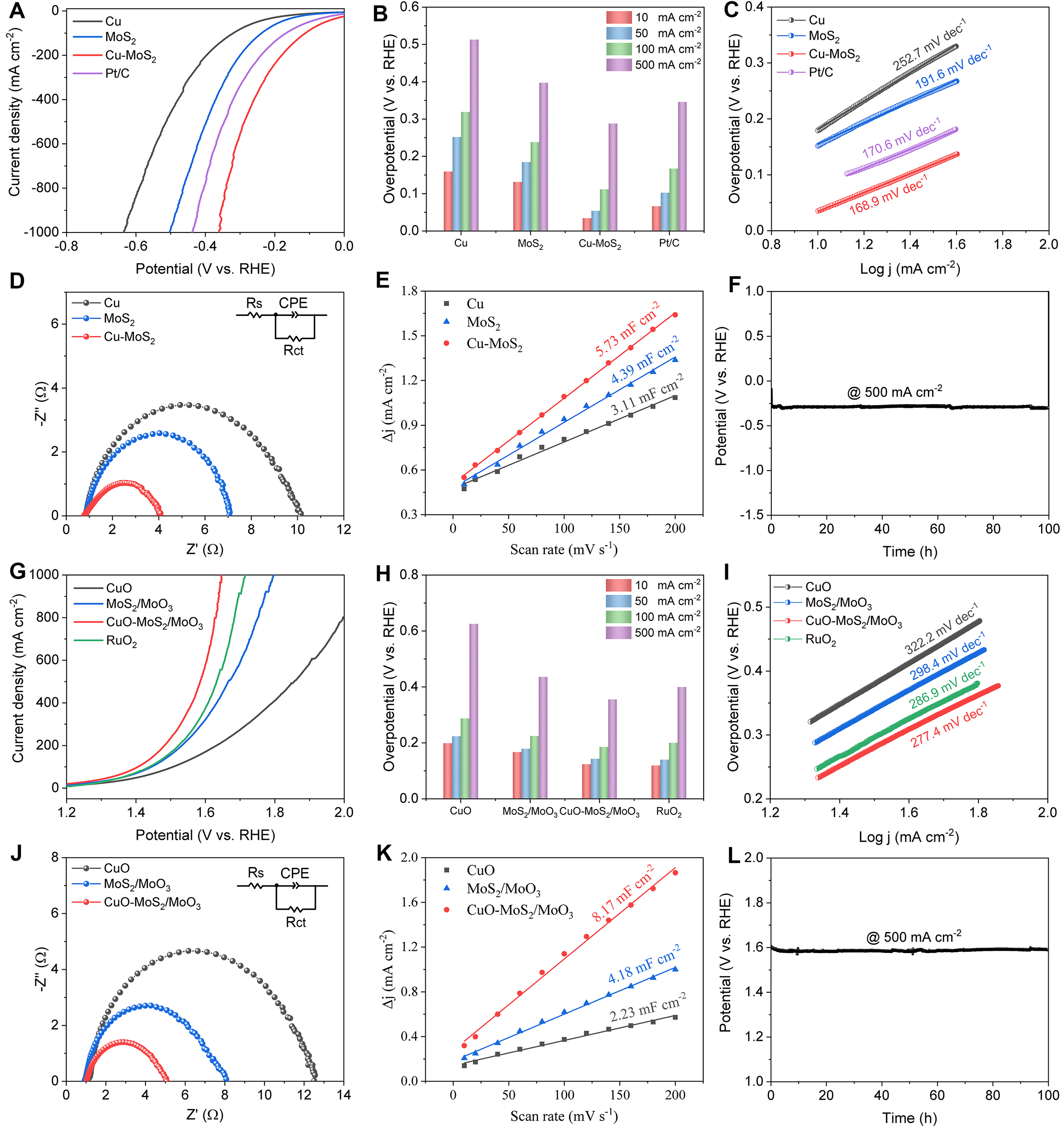
Figure 3. Electrochemical performance of HER and OER. (A) LSV curves; (B) Overpotentials; (C) Tafel plots; (D) EIS spectra; (E) Cdl values of Cu-MoS2 and control catalysts for HER; (F) Chronopotentiometric curve of Cu-MoS2 at 500 mA cm-2 for 100 h; (G) LSV curves; (H) Overpotentials; (I) Tafel plots; (J) EIS spectra; (K) Cdl values of CuO-MoS2/MoO3 and control catalysts for OER; (L) Chronopotentiometric curve of CuO-MoS2/MoO3 at 500 mA cm-2 for 100 h.
EIS measurements were employed to probe the interfacial charge transfer kinetics. The Nyquist plots
The OER performance of the CuO-MoS2/MoO3 electrode was rigorously evaluated in 1.0 M KOH electrolyte using a standard three-electrode system. As clearly depicted in the polarization curves [Figure 3G], the CuO-MoS2/MoO3 electrode demonstrated a substantially steeper increase in anodic current density with applied potential compared to all control electrodes, including CuO, MoS2/MoO3, and RuO2. This pronounced activity enhancement is quantitatively reflected in the exceptionally low overpotentials needed to attain 10, 50, 100, and 500 mA cm-2, which were measured at only 124, 143, 185, and 355 mV, respectively [Figure 3H]. These values represent significant improvements over the corresponding overpotentials of the reference catalysts, particularly at higher current densities relevant to industrial applications.
Further insight into the OER kinetics was obtained through Tafel analysis [Figure 3I]. The CuO-MoS2/MoO3 electrode exhibited a Tafel slope of 277.4 mV dec-1, which is notably lower than those of MoS2/MoO3
Mechanism investigations
To probe deeper into the water splitting mechanism, we employed in situ FTIR spectroscopy to examine the behavior of interfacial water molecules on Cu-MoS2 and CuO-MoS2/MoO3 surfaces. The in situ FTIR spectra [Figure 4A and B, and Supplementary Figure 6] revealed two characteristic vibrational modes of adsorbed water molecules at 1,640 and 2,800~3,700 cm-1, corresponding to the H-O-H bending and O-H stretching band, respectively[52,53]. Notably, both vibrational bands exhibited significantly enhanced intensity on Cu-MoS2 during HER compared to MoS2 [Supplementary Figure 7], demonstrating substantially improved water adsorption capability resulting from Cu incorporation. A parallel enhancement was observed for CuO-MoS2/MoO3 relative to MoS2/MoO3 under OER conditions [Supplementary Figure 8]. Time-dependent in situ FTIR measurements [Supplementary Figure 9] further captured the progressive accumulation of water-related signals during electrolysis, confirming continuous and efficient water activation on the catalyst surfaces throughout the electrochemical processes.
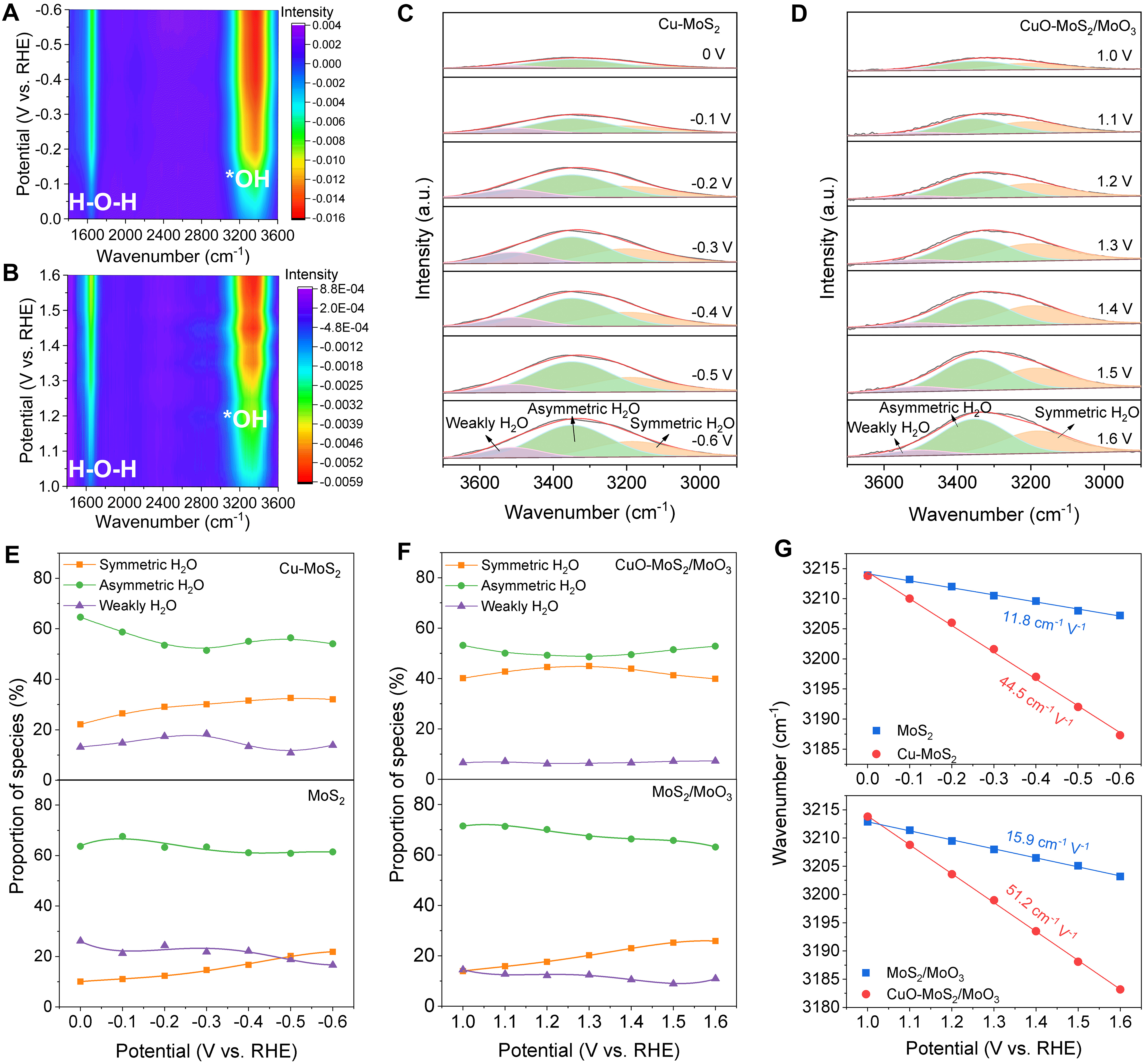
Figure 4. Identification of the interfacial water structure. In situ FTIR spectra of (A) Cu-MoS2 under applied potentials from 0 to -0.6 V vs. RHE and (B) CuO-MoS2/MoO3 under applied potentials from 1.0 to 1.6 V vs. RHE; The Gaussian fits of three O-H stretching modes on (C) Cu-MoS2 and (D) CuO-MoS2/MoO3; Potential-dependent population of the three water species on (E) Cu-MoS2 and MoS2 and (F) CuO-MoS2/MoO3 and MoS2/MoO3; (G) The corresponding wavenumber shift of symmetric H2O over Cu-MoS2 and MoS2, and CuO-MoS2/MoO3 and MoS2/MoO3.
For a deeper understanding of the interfacial water structure, we performed detailed Gaussian fitting analysis of the O-H stretching region using a multi-peak fitting routine. The fitting was conducted with peak positions allowed to vary within ±10 cm-1 of the literature values, while the full width at half maximum (FWHM) was constrained to 150-250 cm-1 and a linear baseline correction was applied. All fits achieved R2 values exceeding 0.99, confirming the high reliability of the deconvolution. This procedure resolved three distinct components centered at approximately 3,230, 3,420, and 3,550 cm-1 [Figure 4C and D, Supplementary Figure 10], which were assigned to symmetric strongly hydrogen-bonded water, asymmetric hydrogen-bonded water, and weakly hydrogen-bonded (isolated) water, respectively[54,55]. Peak area ratios were calculated from integrated areas after normalization to the total O-H stretching intensity. Quantitative analysis revealed a remarkable increase in the proportion of symmetric strongly hydrogen-bonded water on both Cu-MoS2 and CuO-MoS2/MoO3 compared with their unmodified counterparts [Figure 4E and F]. This specific water configuration is of particular significance, as it facilitates efficient proton transfer via a well-structured hydrogen-bonding network, indicating that Cu-modified surfaces actively promote the organization of interfacial water into a more ordered and strongly bonded structure[56].
Further potential-dependent measurements provided additional mechanistic clues. The O-H stretching frequency of symmetric hydrogen-bonded water displayed a pronounced potential-dependent shift characteristic of the Stark effect [Figure 4G]. The calculated Stark slopes for Cu-MoS2 (44.5 cm-1 V-1) and CuO-MoS2/MoO3 (51.2 cm-1 V-1) were substantially higher than those for MoS2 (11.8 cm-1 V-1) and MoS2/MoO3 (15.9 cm-1 V-1). These markedly higher Stark slopes imply that interfacial water molecules on Cu-modified catalysts possess greater flexibility and enhanced sensitivity to applied potential, resulting in more pronounced vibrational frequency shifts under electrochemical conditions[57]. Taken together, these findings offer strong evidence that both Cu-MoS2 and CuO-MoS2/MoO3 catalysts effectively promote the formation of strongly hydrogen-bonded water networks at the electrode-electrolyte interface. These structured water networks serve as efficient proton transfer pathways, thereby accelerating water dissociation and proton/hydroxide transport processes, which fundamentally enhance the kinetics of both HER and OER.
DFT calculations were systematically performed to obtain atomic-level insights into the catalytic mechanisms of both HER and OER. Well-optimized structural models were constructed to represent the catalytic systems, with MoS2 and Cu-MoS2 serving as HER catalysts, while MoS2/MoO3 and CuO-MoS2/MoO3 models were developed for OER investigations [Supplementary Figure 11]. Differential charge density analysis [Figure 5A] revealed substantial electron redistribution at the heterointerfaces, demonstrating distinct charge transfer patterns. Specifically, Cu-MoS2 exhibited significant electron transfer from Cu clusters to the MoS2 substrate with a total charge transfer of 0.36 e-, creating an electron-rich MoS2 surface. In contrast, CuO-MoS2/MoO3 showed reverse electron transfer from the MoS2/MoO3 substrate to CuO clusters, amounting to 0.15 e-. This pronounced interfacial charge redistribution effectively modulates the d-band centers of the catalytic sites, consequently optimizing their adsorption properties toward reaction intermediates[58]. The partial density of states (PDOS) analysis provided further evidence of electronic structure modulation[59]. As illustrated in Figure 5B, the d-band center of Mo 3d orbitals exhibited a notable upward shift from -1.69 eV in MoS2 to -1.02 eV in Cu-MoS2, and similarly from -0.38 eV in MoS2/MoO3 to -0.15 eV in CuO-MoS2/MoO3. A parallel electronic modulation was observed for S 2p orbitals [Figure 5C], confirming that the incorporation of Cu/CuO clusters effectively tunes the electronic structure of both Mo and S sites, thereby enhancing the water adsorption capability and optimizing the binding strength of reaction intermediates.
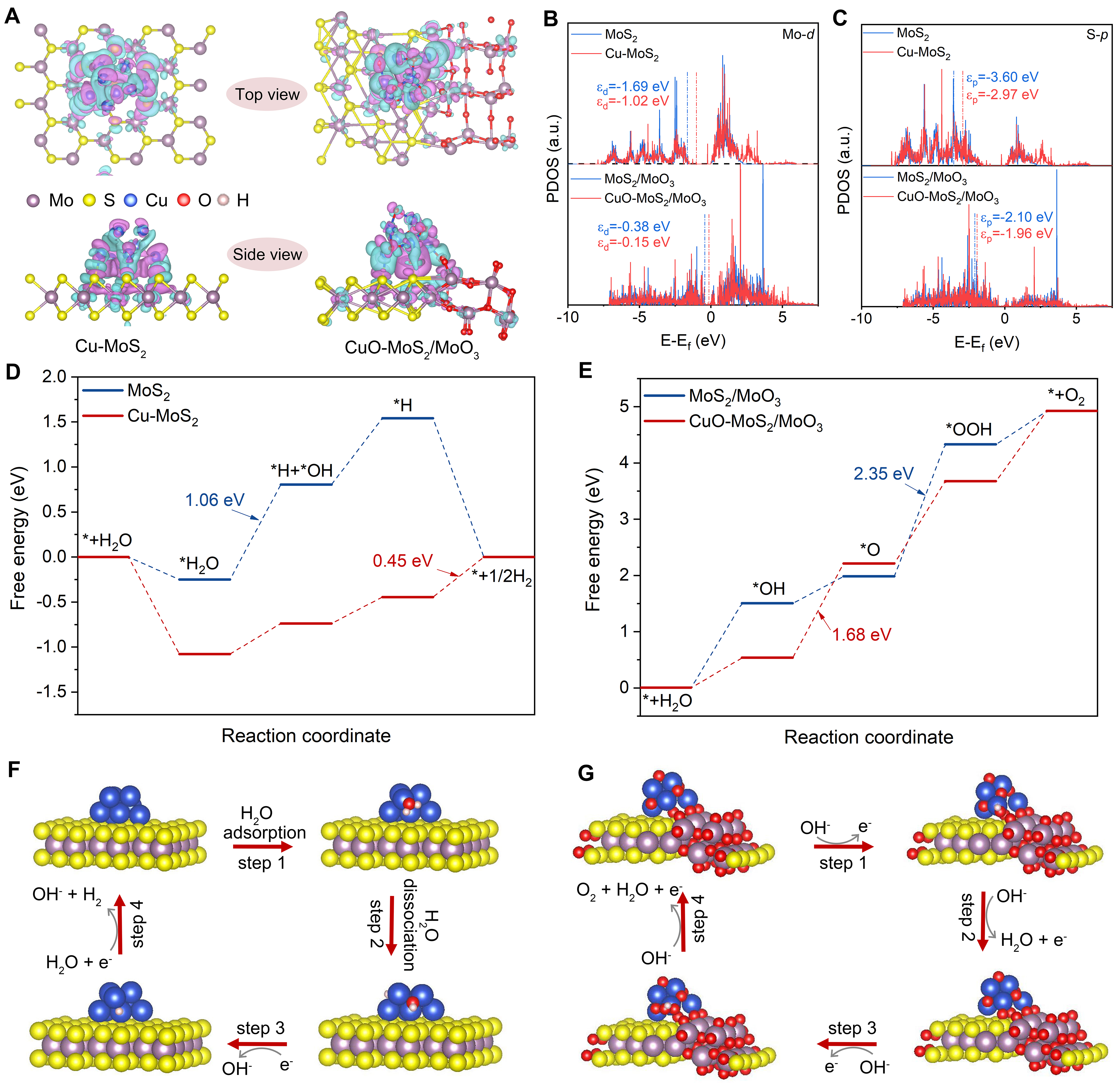
Figure 5. Theoretical investigation. (A) Differential charge density of Cu-MoS2 and CuO-MoS2/MoO3 model, purple and blue regions respectively, manifests the charge accumulation and depletion; The PDOS of (B) Mo-d and (C) S-p in the four catalyst models; Gibbs free energy diagram for (D) HER process on MoS2 and Cu-MoS2 (Cu-Mo interfacial site), and (E) OER process on MoS2/MoO3 and CuO-MoS2/MoO3 (CuO-MoS2/MoO3 interfacial site); Reaction pathways of (F) HER process on Cu-MoS2 at Cu-Mo interfacial site and (G) OER process on CuO-MoS2/MoO3 at CuO-MoS2/MoO3 interfacial site.
The reaction energetics were quantitatively evaluated through Gibbs free energy calculations
Electrochemical performance of overall water splitting
For a thorough assessment of the practical viability of our catalysts in industrial water electrolysis, we assembled an AEMWE featuring the reconstructed Cu-MoS2 as the cathode and CuO-MoS2/MoO3 as the anode. As a benchmark, a reference cell was constructed using commercial Pt/C (20 wt% Pt) and RuO2 as the cathode and anode, respectively, representing the state-of-the-art noble metal-based configuration. Schematic and photographic views of the AEMWE setup are presented in Figure 6A and B. Initial performance evaluation through polarization curves measured at 25 °C [Figure 6C] revealed the exceptional efficiency of our catalyst system. The Cu-MoS2||CuO-MoS2/MoO3 electrolyzer required only 1.82 and
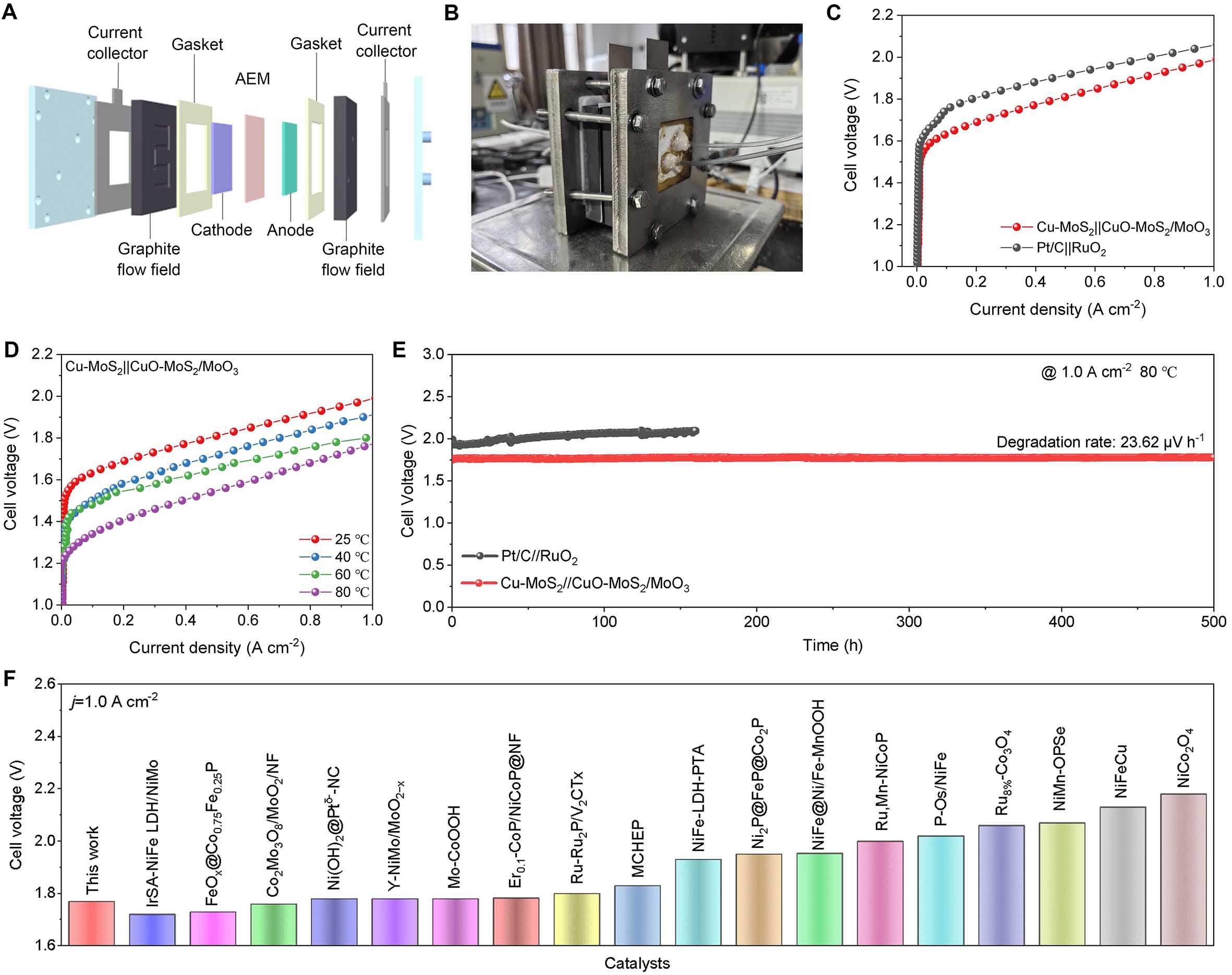
Figure 6. Performance of AEMWE for overall water splitting. (A) Schematic diagram and (B) digital photograph of the AEMWE setup, photograph taken by the authors; (C) Polarization curves of Cu-MoS2||CuO-MoS2/MoO3 and Pt/C||RuO2 electrolyzer at 25 °C; (D) Polarization curves of Cu-MoS2||CuO-MoS2/MoO3 electrolyzer at different temperatures; (E) Chronopotentiometric curves of the AEMWE operated under 1.0 A cm-2 at 80 °C; (F) Comparison of cell voltages for the Cu-MoS2||CuO-MoS2/MoO3 electrolyzer and recently reported AEM catalysts at 1.0 A cm-2.
The long-term stability test was performed at 1.0 A cm-2 and 80 °C using a closed-loop circulation system with 1.0 M KOH electrolyte circulated at 100 mL min-1 through both compartments. The electrolyte reservoir volume was 500 mL and was not replenished during the 500-h test. Impressively, the Cu-MoS2||CuO-MoS2/MoO3 electrolyzer exhibited remarkable durability throughout the 500-h testing period [Figure 6E], maintaining stable voltage output with a minimal degradation rate of merely 23.62 µV h-1. This performance stands in stark contrast to the commercial Pt/C||RuO2 benchmark system, which suffered rapid performance degradation with a voltage increase rate of 1.03 mV h-1 within just 160 h of operation, representing a degradation rate approximately 44 times faster than our system. To further validate the practical applicability, we evaluated the hydrogen production power consumption and energy conversion efficiency without iR compensation. The Cu-MoS2||CuO-MoS2/MoO3 electrolyzer achieved outstanding power consumption values of only 3.70 and 4.23 kWh Nm-3 at 0.5 and 1.0 A cm-2, respectively, corresponding to remarkable energy conversion efficiencies of 79.35% and 69.49%. These efficiency metrics, combined with the comprehensive performance comparison summarized in Figure 6F and Supplementary Table 3, demonstrate that our electrolyzer surpasses previously reported AEMWE systems. These outstanding results unequivocally highlight the strong potential of our catalyst system for practical implementation in industrial-level water electrolysis applications, positioning it as a viable and efficient alternative to conventional noble metal-based technologies.
CONCLUSION
In summary, we have demonstrated the electrochemical reconstruction of the CuO-MoS2/MoO3 precatalyst during electrochemical water splitting. Under operating conditions, the precatalyst transforms into Cu-MoS2 for HER while retaining an optimized structure for OER, yielding exceptional performance characterized by low overpotentials and outstanding durability at industrial current densities. Mechanistic investigations reveal that the incorporated Cu species not only optimize the electronic structure of active sites to reduce energy barriers but also reorganize interfacial water molecules into a strongly hydrogen-bonded network, significantly enhancing proton transfer efficiency. When implemented in a practical AEMWE, the system achieves 1.0 A cm-2 at 1.77 V and 80 °C while sustaining stable operation for 500 h, substantially outperforming noble-metal benchmarks. Beyond offering a high-performance catalyst system, this work provides valuable mechanistic understanding of reconstruction-driven catalysis and interfacial water regulation, offering guidance for the rational design of advanced electrocatalysts toward sustainable hydrogen production.
DECLARATIONS
Authors’ contributions
Writing - original draft, investigation, formal analysis: Zhang, J.; Li, J.
Investigation, methodology: Zhang, J.; Han, M.; Xia, S.
Writing- review & editing, formal analysis: Wang, Y.; Luan, C.; Yu, C.
Reviewed the final manuscript, supervision: Wu, Y.; Zhang, W.
All authors contributed to the conceptualization of this work.
Availability of data and materials
The data supporting the findings of this study are available within the article and its Supplementary Materials. Additional data are available from the corresponding author upon reasonable request.
AI and AI-assisted tools statement
Not applicable.
Financial support and sponsorship
This work is supported by the National Natural Science Foundation of China (52202226, 52172293, and 52402358), Anhui Natural Science Foundation (2208085MC48), the Central Universities (JZ2024HGTG0293, PA2025GDSK0052, and JZ2025HGTB0213), 2024 Team Project under the Anhui Provincial Jianghuai Talent Cultivation Program, and the 111 Project (B18018).
Conflicts of interest
All authors declared that there are no conflicts of interest.
Ethical approval and consent to participate
Not applicable.
Consent for publication
Not applicable.
Copyright
© The Author(s) 2026.
Supplementary Materials
REFERENCES
1. Qiu, C.; Sellers, C.; Wu, Z.; et al. Low-iridium stabilized ruthenium oxide anode catalyst for durable proton-exchange membrane water electrolysis. Nat. Nanotechnol. 2025, 20, 1787-95.
2. Yang, C.; Gao, Y.; Xing, Z.; et al. Bioinspired Sulfo oxygen bridges optimize interfacial water structure for enhanced hydrogen oxidation and evolution reactions. Nat. Commun. 2025, 16, 6459.
3. Li, P.; Jiang, Y.; Hu, Y.; et al. Hydrogen bond network connectivity in the electric double layer dominates the kinetic pH effect in hydrogen electrocatalysis on Pt. Nat. Catal. 2022, 5, 900-11.
4. Gao, X.; Chen, Y.; Wang, Y.; et al. Next-generation green hydrogen: progress and perspective from electricity, catalyst to electrolyte in electrocatalytic water splitting. Nano. Micro. Lett. 2024, 16, 237.
5. Sadeghi, E.; Chamani, S.; Peighambardoust, N. S.; Aydemir, U. Unveiling the potential of metal diborides for electrocatalytic water splitting: a comprehensive review. Energy. Environ. Mater. 2025, 8, e12873.
6. Shah MSA, Jang GY, Zhang K, Park JH. Transition metal carbide-based nanostructures for electrochemical hydrogen and oxygen evolution reactions. EcoEnergy 2023, 1, 344-74.
7. Jia, X.; Zhou, Z.; Liu, F.; et al. Closed-loop framework for discovering stable and low-cost bifunctional metal oxide catalysts for efficient electrocatalytic water splitting in acid. J. Am. Chem. Soc. 2025, 147, 22642-54.
8. Jeong, Y.; Naik, S. S.; Theerthagiri, J.; et al. Manifolding surface sites of compositional CoPd alloys via pulsed laser for hydrazine oxidation-assisted energy-saving electrolyzer: activity origin and mechanism discovery. Chem. Eng. J. 2023, 470, 144034.
9. Hai, G.; Xue, X.; Wu, Z.; Zhang, C.; Liu, X.; Huang, X. High-throughput calculation-based rational design of Fe-doped MoS2 nanosheets for electrocatalytic pH-universal overall water splitting. J. Energy. Chem. 2024, 91, 194-202.
10. Tripathi, P.; Singh, D.; Pathak, A.; Verma, A. K.; Sinha, A. S. K.; Singh, S. Engineering MoS2-based electrocatalysts for water splitting: a comprehensive review of doping, heterostructures, and support integration strategies. J. Mater. Chem. A. 2025, 13, 39603-59.
11. Wei, R.; Liao, M.; Sun, L.; et al. Opposite electron transfer induced high valence Mo sites for boosting the water splitting performance of Ir atoms. ACS. Appl. Mater. Interfaces. 2024, 16, 7141-51.
12. Yang, L.; Yuan, X.; Chen, C.; Wang, Q.; Liang, W.; Song, R. Rational design of MoS2@M (M=Sn, Cu, Ni, Co) hybrid nanostructures for enhanced electrocatalytic hydrogen evolution reaction. Mater. Chem. Phys. 2024, 318, 129234.
13. Wang, X.; Yang, C.; Zhang, Y.; et al. Medium-entropy alloy MoCoCu-P as an efficient bifunctional catalyst for water splitting. J. Alloys. Compd. 2024, 988, 174332.
14. Fu, Y.; Wang, J.; Ma, X.; et al. Ion-exchange strategy for fabricating highly dispersed Co-MoS2 on N-doped graphene for efficient bifunctional electrocatalytic water splitting. Int. J. Hydrogen. Energy. 2024, 59, 116-24.
15. Gupta, J.; Das, D.; Borse, P. H.; Sarada, B. V. In situ Pd-doped MoS2 nanosheets as an HER electrocatalyst for enhanced electrocatalytic water splitting. Sustain. Energy. Fuels. 2024, 8, 1526-39.
16. Min, X.; Wang, L.; Liu, H.; et al. Molybdenum and fluorine co-doping induces lattice oxygen activation in Ni-Fe spinel oxides for enhanced oxygen evolution. Energy. Mater. 2026, 6, 600014.
17. Lin, G.; Dong, A.; Li, Z.; et al. An interlayer anchored NiMo/MoO2 electrocatalyst for hydrogen evolution reaction in anion exchange membrane water electrolysis at high current density. Adv. Mater. 2025, 37, 2507525.
18. Gultom, N. S.; Li, C.; Kuo, D.; Silitonga, M. Z. Multiphase Fe-doped Ni3S2/MoOx electrocatalyst prepared by facile one-step hydrothermal for full-cell water splitting: Effect of Mo on physical and electrochemical properties. Appl. Catal. B. Environ. Energy. 2024, 353, 124100.
19. Wen, H.; Zhao, Y.; Zhang, H.; Wan-Me, Z.; Wan, X.; Xie, Y. Construction of an advanced MoS2/MoO3/NiFe-LDH/NF heterostructure catalyst toward boosting efficient alkaline oxygen evolution reaction. Catal. Sci. Technol. 2025, 15, 3871-7.
20. Li, Y.; Wang, C.; Cui, M.; Xiong, J.; Mi, L.; Chen, S. Heterostructured MoO2@MoS2@Co9S8 nanorods as high efficiency bifunctional electrocatalyst for overall water splitting. Appl. Surf. Sci. 2021, 543, 148804.
21. Wang, S.; Chen, S.; Wen, C.; et al. Nitrogen-doped MoO2/Cu heterojunction electrocatalyst for highly efficient alkaline hydrogen evolution reaction. Int. J. Hydrogen. Energy. 2024, 66, 103-9.
22. Sood, P.; Krishankant; Bagdwal, H.; et al. Polyoxometalate-derived Cu-MoO2 nanosheets as electrocatalysts for enhanced acidic water oxidation. ACS. Appl. Nano. Mater. 2023, 7, 69-76.
23. Teli, A. M.; Mishra, R. K.; Shin, J. C.; Jeon, W. Exploring the capability of Cu-MoS2 catalysts for use in electrocatalytic overall water splitting. Micromachines 2024, 15, 876.
24. Lin, T.; Xu, R.; Hu, Y.; Wang, J.; Liu, Y.; Zhou, W. The dependence of electrocatalytic HER activity of decorated MoS2 with Cu nanoclusters. Surf. Interf. 2024, 46, 104095.
25. Ren, Z.; Wang, S.; Yu, J.; Mao, F.; Wang, K.; Wu, H. Cu/MoO2 Schottky heterojunction derived from a new designed POMOFs in-situ as high efficient electrocatalysts for hydrogen evolution reaction in universal-pH electrolytes and seawater. Chem. Eng. J. 2023, 470, 144107.
26. Ilyas, T.; Raziq, F.; Ali, S.; et al. Facile synthesis of MoS2/Cu as trifunctional catalyst for electrochemical overall water splitting and photocatalytic CO2 conversion. Mater. Des. 2021, 204, 109674.
27. Zhao, Y.; Yang, Z.; Zhang, Y.; et al. Cu2O decorated with cocatalyst MoS2 for solar hydrogen production with enhanced efficiency under visible light. J. Phys. Chem. C. 2014, 118, 14238-45.
28. Yang, L.; Yuan, X.; Song, R.; Liang, W. Cu doped MoS2 nanosheets/NiS2 nanowires heterogeneous structure for enhanced hydrogen evolution reaction. J. Phys. Chem. Solids. 2023, 181, 111540.
29. Xu, G.; Geng, S. Copper-triggered adjacent S sites activating for enhancing the hydrogen evolution reaction in acid media. J. Electroanal. Chem. 2025, 994, 119276.
30. Li, Z.; Yan, X.; He, D.; et al. Manipulating coordination structures of mixed-valence copper single atoms on 1T-MoS2 for efficient hydrogen evolution. ACS. Catal. 2022, 12, 7687-95.
31. Mi, Z.; Wei, F.; Yang, K.; et al. A bidentate hydrogen-bond molecular vise activates interfacial water for universal hydrogen electrocatalysis. J. Am. Chem. Soc. 2026, 148, 10388-95.
32. Zhong, L.; Li, Y.; Zheng, L.; et al. Cu-mediated proximal electronic engineering in Ni/MoO2 heterostructures for industrial alkaline hydrogen evolution. Chem. Eng. J. 2025, 526, 170806.
33. Theerthagiri, J.; Karuppasamy, K.; Lee, S. J.; et al. Fundamentals and comprehensive insights on pulsed laser synthesis of advanced materials for diverse photo- and electrocatalytic applications. Light. Sci. Appl. 2022, 11, 250.
34. Al-Salihy, A.; Hu, J.; Liang, C.; Salah, A.; Bahgat, Radwan. A.; Xu, P. Optimizing surface structure with Cu nanodots-decorated NiMoO4 nanostructures to enhance electrocatalytic water splitting. Int. J. Hydrogen. Energy. 2025, 119, 82-94.
35. Chai, X.; Yuan, C.; Gao, R. T.; Wang, L. MoOx/CoMo on Cu nanowires as an efficiently bifunctional electrocatalyst for overall water splitting. ChemCatChem 2024, 16, e202400582.
36. Kühne, T. D.; Iannuzzi, M.; Del, Ben. M.; et al. CP2K: an electronic structure and molecular dynamics software package - Quickstep: efficient and accurate electronic structure calculations. J. Chem. Phys. 2020, 152, 194103.
37. Hutter, J.; Iannuzzi, M.; Schiffmann, F.; Vandevondele, J. cp2k: atomistic simulations of condensed matter systems. WIREs. Comput. Mol. Sci. 2013, 4, 15-25.
38. Lu, T.; Chen, F. Multiwfn: a multifunctional wavefunction analyzer. J. Comput. Chem. 2011, 33, 580-92.
39. Lu, T. A comprehensive electron wavefunction analysis toolbox for chemists, Multiwfn. J. Chem. Phys. 2024, 161, 082503.
40. Perdew, J. P.; Burke, K.; Ernzerhof, M. Generalized gradient approximation made simple. Phys. Rev. Lett. 1996, 77, 3865-8.
41. Grimme, S.; Ehrlich, S.; Goerigk, L. Effect of the damping function in dispersion corrected density functional theory. J. Comput. Chem. 2011, 32, 1456-65.
42. Goedecker, S.; Teter, M.; Hutter, J. Separable dual-space Gaussian pseudopotentials. Phys. Rev. B. 1996, 54, 1703-10.
43. Lee, Y. J.; Park, S. K. Synergistically coupling of Ni-Fe LDH arrays with hollow Co-Mo sulfide nanotriangles for highly efficient overall water splitting. Rare. Metals. 2023, 43, 522-32.
44. Liu, S.; Zhang, Z.; Dastafkan, K.; Shen, Y.; Zhao, C.; Wang, M. Yttrium-doped NiMo-MoO2 heterostructure electrocatalysts for hydrogen production from alkaline seawater. Nat. Commun. 2025, 16, 773.
45. Dongre, S. S.; Kumar, R.; Paswan, B.; et al. Synergistic electrocatalytic activity unveiled: Cu-Mo bimetal sulfo-selenide nanocomposite for hydrogen evolution reaction. Mater. Today. Sustain. 2024, 27, 100894.
46. Zhang, J.; Wang, Y.; Cui, J.; et al. Water-soluble defect-rich MoS2 ultrathin nanosheets for enhanced hydrogen evolution. J. Phys. Chem. Lett. 2019, 10, 3282-9.
47. Zhan, G.; Zhang, J.; Wang, Y.; et al. MoS2 quantum dots decorated ultrathin NiO nanosheets for overall water splitting. J. Colloid. Interface. Sci. 2020, 566, 411-8.
48. Liu, Q.; Fu, T.; Xiao, H.; et al. Constructing the Ni4N/Ni3N heterointerface of the bicontinuous Ni4N/Ni3N/NiO/CFs catalyst with pore connectivity effects for electrocatalytic hydrogen generation. Carbon. Neutral. 2025, 4, e70024.
49. Zhang, B. J.; Chang, B.; Qiu, S. P.; et al. Two-dimensional bifunctional electrocatalyst (Mo-NiFe-LDH) with multilevel structure for highly efficient overall water splitting. Rare. Metals. 2024, 43, 2613-22.
50. Zander, J.; Marschall, R. 1 min synthesis of phase pure nanocrystalline high-entropy sulfides for efficient water electrolysis. EcoEnergy 2025, 3, 482-98.
51. Wang, R.; Sun, X.; Zhong, J.; Wu, S.; Wang, Q.; (ken), Ostrikov. K. Low-temperature plasma-assisted synthesis of iron and nitrogen co-doped CoFeP-N nanowires for high-efficiency electrocatalytic water splitting. Appl. Catal. B. Environ. Energy. 2024, 352, 124027.
52. Tian, F.; Geng, S.; Li, M.; et al. Synergetic oxidized Mg and Mo sites on amorphous Ru metallene boost hydrogen evolution electrocatalysis. Adv. Mater. 2025, 37, 2501230.
53. Zhu, S.; Qin, X.; Yao, Y.; Shao, M. pH-dependent hydrogen and water binding energies on platinum surfaces as directly probed through surface-enhanced infrared absorption spectroscopy. J. Am. Chem. Soc. 2020, 142, 8748-54.
54. Liu, G.; Song, C.; Li, X.; et al. Defect-rich FeCoNiMnRu high-entropy alloys with activated interfacial water for boosting alkaline water/seawater hydrogen evolution. Chem. Eng. J. 2025, 509, 161070.
55. Li, P.; Jiang, Y.; Men, Y.; Jiao, Y.; Chen, S. Kinetic cation effect in alkaline hydrogen electrocatalysis and double layer proton transfer. Nat. Commun. 2025, 16, 1844.
56. Jin, D.; Qiao, F.; Zhou, Y.; et al. Cu/Mo2C synthesized through anderson-type polyoxometalates modulate interfacial water structure to achieve hydrogen evolution at high current density. Nano. Res. 2023, 17, 2546-54.
57. Men, Y.; Men, X.; Li, P.; et al. Cation-driven modulation of interfacial solvation structures for enhanced alkaline hydrogen oxidation kinetics. J. Am. Chem. Soc. 2025, 147, 21672-85.
58. Feng, M.; Tang, Y.; Li, Z.; et al. Differentiated modulating the electronic structure of NiFe@Ni/Fe-MnOx via phase transformation engineering to synergy promote bifunctional water splitting reactions. Small 2025, 21, 2410752.
59. Ma, W.; Zhang, Y.; Hu, L.; Lv, X.; Dang, J. Dynamic restructuring of asymmetric built-in electric field catalysts facilitates the efficient water splitting. Adv. Funct. Mater. 2024, 35, 2422734.
60. Nguyen, T. H.; Tran, P. K. L.; Tran, D. T.; Dinh, V. A.; Kim, N. H.; Lee, J. H. Ru-Ru2P hetero-cluster promoted V2CTx sheets-based electrocatalyst enables industrial-level AEM water electrolysis. Appl. Catal. B. Environ. 2024, 343, 123517.
Cite This Article
 Open Access
How to Cite
Download Citation
Export Citation File:
Type of Import
Tips on Downloading Citation
Citation Manager File Format
Type of Import
Direct Import: When the Direct Import option is selected (the default state), a dialogue box will give you the option to Save or Open the downloaded citation data. Choosing Open will either launch your citation manager or give you a choice of applications with which to use the metadata. The Save option saves the file locally for later use.
Indirect Import: When the Indirect Import option is selected, the metadata is displayed and may be copied and pasted as needed.
About This Article
Special Topic
Copyright

Data & Comments
Data
0










Comments
Comments must be written in English. Spam, offensive content, impersonation, and private information will not be permitted. If any comment is reported and identified as inappropriate content by OAE staff, the comment will be removed without notice. If you have any queries or need any help, please contact us at support@oaepublish.com.