

Development of AI-eChemist Laboratory
 0
0 
Abstract
The development of a self-driving laboratory (SDL) is driving electrocatalysis research from traditional trial-and-error approaches toward automation, high throughput, and intelligence. As an autonomous experimental system tailored to electrochemical scenarios, the AI-eChemist Laboratory integrates front-end intelligent decision-making, automated high-throughput experimentation, multimodal characterization, and data-driven analysis, providing a new paradigm for the discovery, mechanistic understanding, and application validation of complex electrocatalytic materials. This review first summarizes recent advances in SDL from two perspectives: front-end intelligence and autonomous experimental platforms. On this basis, we further focus on three key technical routes established in AI-eChemist: high-throughput synthesis and screening of model catalysts, high-throughput synthesis and screening of practical powder catalysts, and emerging screening strategies targeting intrinsic catalytic activity. These routes promote the construction of a closed-loop research system in AI-eChemist, spanning materials screening and mechanistic investigation to device validation, through standardized data acquisition, practical materials discovery, and intrinsic activity evaluation. Finally, in view of the demands of AI-eChemist for practical applications and autonomous development, we discuss future directions including multimodal characterization, automated function islands, scalable fabrication, and multi-agent collaboration, aiming to provide systematic insights for the intelligent discovery and application-oriented translation of advanced energy materials.
Keywords
INTRODUCTION
The rapid development of artificial intelligence (AI), robotics, and high-throughput experimentation is driving chemistry and materials research from traditional trial-and-error approaches toward the self-driving laboratory (SDL) paradigm[1,2]. Typical SDLs no longer simply replace manual operations with robotic arms or automated workstations, but instead rely on a closed-loop framework of “intelligent decision-making-automated execution-data feedback-model updating” to enable autonomous planning, dynamic optimization, and continuous iteration of experimental tasks[3]. In recent years, large language models (LLMs), knowledge graphs, materials databases, and machine learning (ML) models have continued to advance[4,5] and have been gradually coupled with experimental execution systems such as robotic chemists and autonomous experimental platforms[6,7], enabling autonomous laboratories to transform scientific questions into executable experimental tasks and continuously optimizing them through data feedback.
However, for electrocatalytic materials research, the construction of practically useful AI autonomous laboratories still faces more field-specific challenges. Electrochemical reactions involve multiscale coupled processes, including complex interfacial structures, dynamic intermediates, mass transport, and long-term stability evolution[8-10]. Accordingly, experimental outcomes are highly sensitive to material composition and structure, electrode configuration, testing conditions, and evaluation metrics[11,12]. Therefore, autonomous laboratories for electrochemistry should not be limited to integrating general automated hardware or improving throughput in synthesis and testing workflows. Instead, they need to establish field-specific closed-loop systems centered on key variables such as material structure regulation, interfacial reaction processes, and activity evaluation methods, thereby generating reliable feedback data, supporting mechanistic understanding, and bridging device-level validation[2,13,14].
Against this background, this review traces the developmental trajectory of the AI-eChemist Laboratory [Figure 1] and discusses how it has evolved from the accumulation of electrochemical methodologies to the integration of automated platforms, and further toward multi-agent-driven autonomous laboratories. Unlike existing reviews on SDLs or AI-driven materials discovery[15], this review does not aim to provide an exhaustive summary of general automated laboratories. Instead, it focuses on electrochemical research scenarios and clarifies how AI-eChemist addresses key bottlenecks in electrocatalytic materials discovery by establishing a complete technological chain spanning from front-end knowledge- and data-driven decision-making, to middle-end high-throughput experimental execution, and further to back-end mechanistic investigation and application validation.
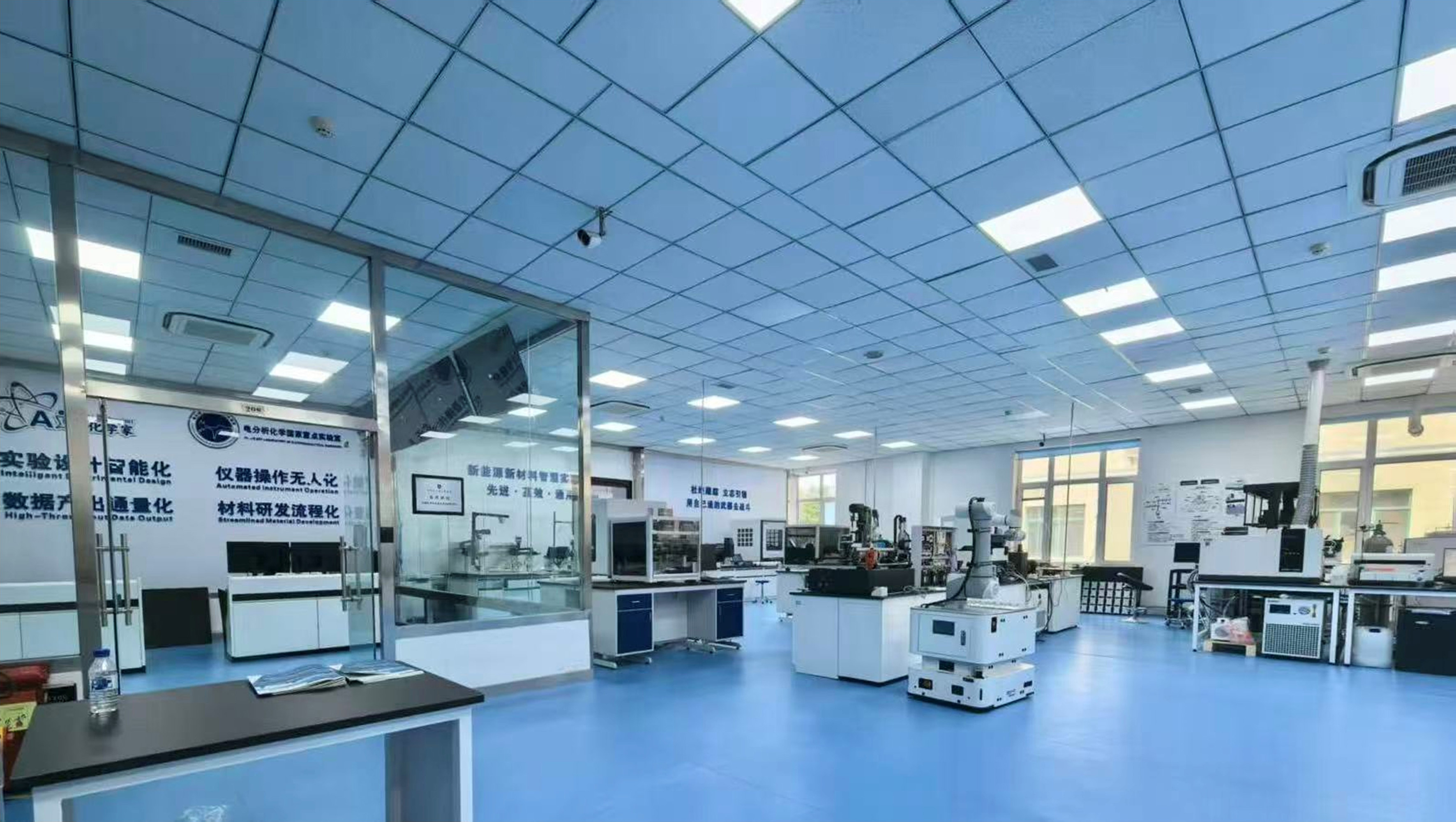
Figure 1. Overview of AI-eChemist Laboratory. The figure was photographed by the authors.
Specifically, this review first briefly summarizes the early foundations of SDLs, including front-end intelligent systems represented by LLMs, multi-agent systems, databases, and knowledge graphs, as well as middle-end automated experimental systems represented by robotic chemists and autonomous experimental platforms. Subsequently, we focus on three core technical routes established in AI-eChemist, including high-throughput synthesis and screening of model catalysts, high-throughput synthesis and screening of practical powder catalysts, and emerging screening methods targeting intrinsic catalytic activity. On this basis, this review further discusses the key challenges that AI-eChemist still needs to overcome for practical applications and envisions a future autonomous laboratory framework constructed through multi-agent collaboration. The future AI-eChemist does not imply the complete replacement of human researchers; rather, through human-machine collaboration, researchers and AI agents will jointly complete closed-loop research from knowledge generation and experimental validation to application-oriented translation.
FRONT-END INTELLIGENCE: FROM LLMS-ASSISTED PLANNING TO AGENT-DRIVEN CATALYST DISCOVERY
In recent years, AI-assisted chemistry and materials research have evolved from simple data retrieval and model prediction toward intelligent systems capable of task understanding, knowledge invocation, experimental planning, and feedback optimization[4,5]. Early data-driven materials design relied primarily on computational databases[16], experimental databases[17], and ML models[18] to narrow down the candidate materials space through structured data mining and performance prediction. With the development of LLMs, scientific agents have begun to acquire capabilities such as natural language understanding, literature and web retrieval, code execution, and experimental interface invocation, enabling open-ended scientific questions to be translated into executable experimental protocols. Scientific agents represented by Coscientist[5] demonstrate the potential of LLMs in scientific task parsing, tool use, and experimental planning [Figure 2A]. Building on this, hierarchical multi-agent systems represented by ChemAgents[19] coordinate functional agents for literature reading, experimental design, robotic operation, and computational analysis through a task-management agent [Figure 2B], providing an important framework for complex task decomposition, cross-module collaboration, and closed-loop decision-making.
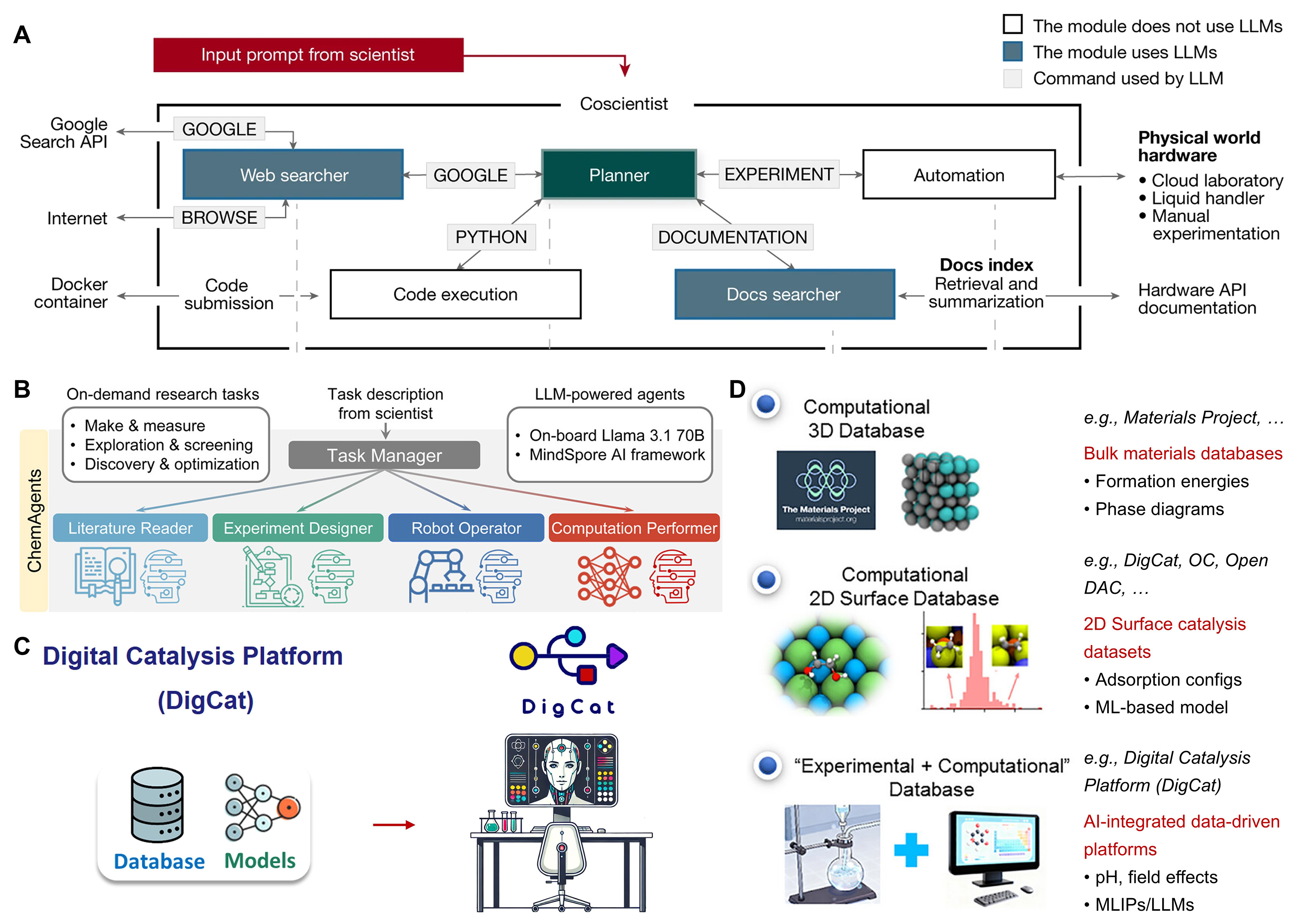
Figure 2. Front-end intelligence systems for autonomous laboratories and catalyst discovery. (A) An LLM-assisted scientific planning framework represented by Coscientist. This figure is reproduced from reference[5] under the terms of the CC BY 4.0 license; (B) A hierarchical multi-agent system represented by ChemAgents for on-demand autonomous chemical research. This figure is reproduced with permission from reference[19]. Copyright © 2025 American Chemical Society; (C) A data-driven AI catalyst agent workflow. This figure is reproduced from reference[20] under the terms of the CC BY 4.0 license; (D) Databases and knowledge infrastructure for catalyst discovery, supporting front-end intelligent decision-making and experimental planning. This figure is adapted from reference[21] (Figure 2A) under the terms of the CC BY 4.0 license. API: Application programming interface; LLM: large language model; DigCat: Digital Catalysis Platform; OC: Open Catalyst; DAC: direct air capture; ML: machine learning; MLIPs: machine learning interatomic potentials.
For catalyst discovery, performance is governed by the complex interplay among compositional space, surface structure, reaction conditions, and evaluation metrics. Therefore, relying solely on general-purpose LLMs is insufficient to generate reliable design judgments. Front-end intelligence for catalysis research thus needs to be deeply integrated with domain knowledge bases and predictive models, so that open-ended scientific questions can be transformed into candidate schemes with both chemical rationality and experimental feasibility. Data-driven AI catalyst agents can connect user-defined catalytic targets with databases, model predictions, result feedback, and experimental validation, thereby forming an intelligent workflow for candidate catalyst design[20] [Figure 2C]. Meanwhile, database systems for catalyst discovery are evolving from single computational or experimental data platforms into integrated knowledge foundations that combine experimental data, computational data, and AI models[21], such as DigCat [Figure 2D]. These structured, traceable, and computable knowledge foundations help reduce the uncertainty of LLM-generated outputs and improve the reliability of candidate material recommendations and experimental protocol design. Overall, AI-assisted catalysis research is evolving from general-purpose LLM-based tool use toward multi-agent collaborative systems centered on LLMs and integrated with domain databases and predictive models. However, candidate materials, experimental protocols, and optimization strategies generated by front-end intelligence can be transformed into verifiable scientific results only when they enter an executable and feedback-enabled experimental system. Therefore, the effective connection between intelligent decision-making and automated experimental execution becomes a key foundation for enabling closed-loop operation in autonomous laboratories.
AUTONOMOUS LABORATORIES: FROM MOBILE ROBOTIC CHEMISTS TO AUTONOMOUS EXPERIMENTAL PLATFORMS FOR ENERGY CATALYSIS
In parallel with the continuous development of front-end intelligence, robotic chemists and autonomous laboratory platforms have also driven chemistry and materials research. shifting from manual experimentation toward automation, autonomy, and closed-loop operation[2]. In the early stage, the mobile robotic chemist[22] automated experimental workflows such as sample transfer, reaction processing, and performance testing through free movement, precise positioning, and direct operation of existing instruments, providing an important paradigm for robotic systems to replace manual operations in complex laboratory environments. Furthermore, mobile robots were introduced into more general chemical synthesis scenarios and integrated with automated synthesis equipment, nuclear magnetic resonance/mass spectrometry analysis modules, central control systems, and databases, forming an autonomous closed loop of “synthesis-analysis-decision”[6] [Figure 3A]. This indicates that the core of autonomous laboratories is expanding from operational automation to machine decision-making driven by multisource data.
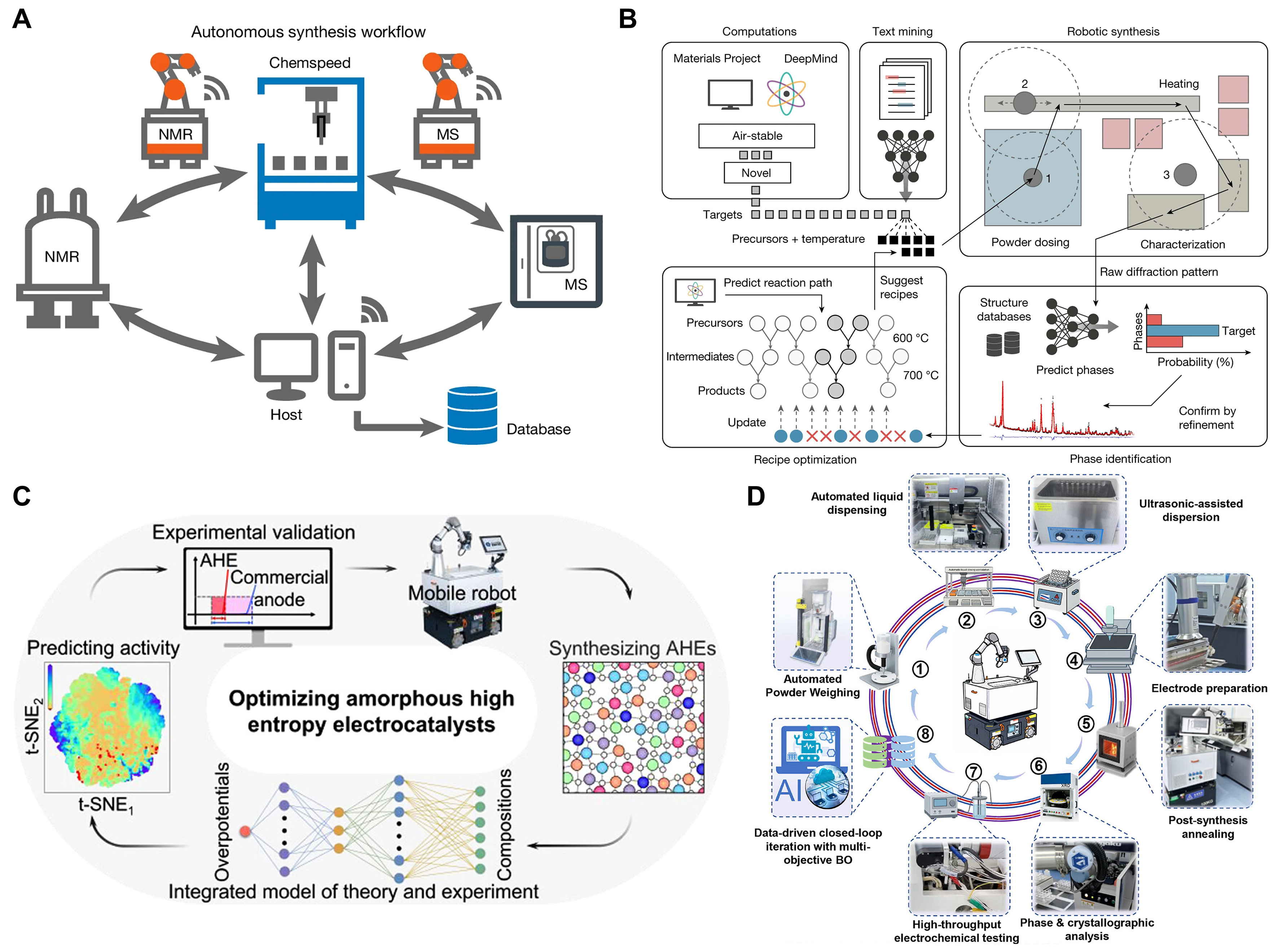
Figure 3. Development and applications of representative robotic chemists and autonomous laboratory platforms in materials discovery. (A) A mobile robot-assisted autonomous synthesis workflow. This figure is reproduced from reference[6] under the terms of the CC BY 4.0 license; (B) An autonomous platform for inorganic materials discovery. This figure is reproduced from reference[3] under the terms of the CC BY 4.0 license; (C) A theory-experiment collaborative optimization workflow for amorphous high-entropy electrocatalysts. This figure is reproduced with permission from reference[23] Copyright © 2025 American Chemical Society; (D) A robotic AI chemist-driven closed-loop discovery platform for high-entropy electrocatalysts. This figure is reproduced with permission from reference[24]. Copyright © 2026 Wiley‐VCH GmbH. AI: Artificial intelligence; NMR: nuclear magnetic resonance; MS: mass spectrometry; AHE: amorphous high-entropy electrocatalyst; t-SNE: t-distributed stochastic neighbor embedding; BO: Bayesian optimization.
With the introduction of ML, Bayesian optimization, and materials design tasks, autonomous experimental platforms have evolved from general chemical experimentation toward the design and optimization of complex materials systems. In inorganic materials synthesis, autonomous experimental platforms integrate computational prediction, text mining, robotic synthesis, structural characterization, and phase identification, enabling a closed-loop workflow from candidate material design and experimental execution to feedback optimization[3] [Figure 3B]. This progress indicates that autonomous experimental platforms can conduct data-driven searches in complex compositional and synthetic-condition spaces, laying the foundation for their further application in functional materials discovery. Catalytic materials exhibit complex composition-structure-performance relationships. Lei et al. introduced literature mining, theoretical calculations, composition-activity modeling, and experimental validation into the automatic discovery workflow of amorphous high-entropy electrocatalysts, achieving rapid optimization in complex electrocatalytic compositional spaces[23] [Figure 3C]. From general chemical synthesis to inorganic materials synthesis and further to energy catalytic materials optimization, the development of these platforms has gradually connected candidate design, automated experimentation, data analysis, and feedback optimization, providing important references for autonomous discovery in complex electrocatalytic systems.
In addition to improving the efficiency of materials discovery, autonomous optimization of complex electrocatalytic systems must account for multiple metrics, including activity, selectivity, stability, and cost. Yang et al. constructed a robotic AI chemist platform that integrates automated synthesis, phase analysis, electrochemical testing, and multi-objective Bayesian optimization for closed-loop search in the high-dimensional compositional space of high-entropy electrocatalysts[24] [Figure 3D]. Through experimental feedback and Pareto optimization, this platform screened candidate catalysts that balance multiple performance metrics within a limited number of experiments, demonstrating the potential of autonomous laboratories for multi-objective optimization of complex electrocatalytic materials. However, owing to the complexity of catalytic material systems, autonomous laboratories still face several key challenges, including the difficulty in accurately obtaining intrinsic composition-activity relationships, the challenge of balancing efficiency and reliability in the screening of practical powder catalysts, and the limitation that high-throughput evaluation metrics may not fully reflect genuine reaction activity. Based on these considerations, AI-eChemist has developed three complementary technical routes for electrochemical materials discovery, focusing on model catalysts, practical powder catalysts, and intrinsic activity evaluation.
DEVELOPMENT HISTORY AND TECHNICAL ROUTES OF AI-ECHEMIST
Technical route I: high-throughput synthesis and screening of model catalysts
In the early exploration stage of AI-eChemist, a critical challenge was how to obtain high-quality composition-activity relationship datasets while excluding the interference of catalyst morphology, loading amount, and other extrinsic factors. This is particularly important for high-entropy alloys (HEAs) with vast compositional spaces, where the efficient optimization capability of ML models critically depends on the accurate mapping between the intrinsic chemical properties and physical descriptors of materials[25]. Therefore, constructing standardized model catalyst systems with well-defined morphology and controllable composition is a key prerequisite for measuring intrinsic activity data and establishing reliable composition-performance relationships. Based on this demand, AI-eChemist established a high-throughput synthesis and screening route centered on model catalyst arrays, thereby ensuring the intrinsic nature and interpretability of the generated data.
Based on this demand, Pan et al. constructed a complete technical route from “model catalyst array fabrication” to “high-throughput intrinsic activity evaluation” using Pt-based quinary HEAs as the model system[26]. In this study, an LLM was first used to mine literature data, identify the core elemental library related to the oxygen reduction reaction (ORR), and design 70 quinary HEA combinations. Subsequently, micrometer-scale HEA arrays were fabricated on glassy carbon (GC) substrates through precursor printing combined with ultrahigh-temperature pulsed heating [Figure 4A][27]. This method effectively suppressed multielement phase separation and yielded single-phase solid-solution structures with dense and flat surfaces, providing an ideal model system for intrinsic activity evaluation. For activity evaluation, the study established an intrinsic activity quantification framework centered on relative current density (jrelative) based on the scanning electrochemical cell microscopy (SECCM) high-throughput screening platform [Figure 4B]. By using the ratio between the catalytic Faradaic current (i) and the non-Faradaic charging current (icharging), this framework normalizes the differences in catalyst surface area [Figure 4C], thereby reducing the influence of morphology and other non-intrinsic factors on activity assessment. Relying on this route, the intrinsic ORR activity of 70 HEA catalysts was evaluated within 12 h, and highly active ORR catalysts such as FeNiCuCoPt were identified[26], validating the feasibility and efficiency of this technical route for high-entropy systems.
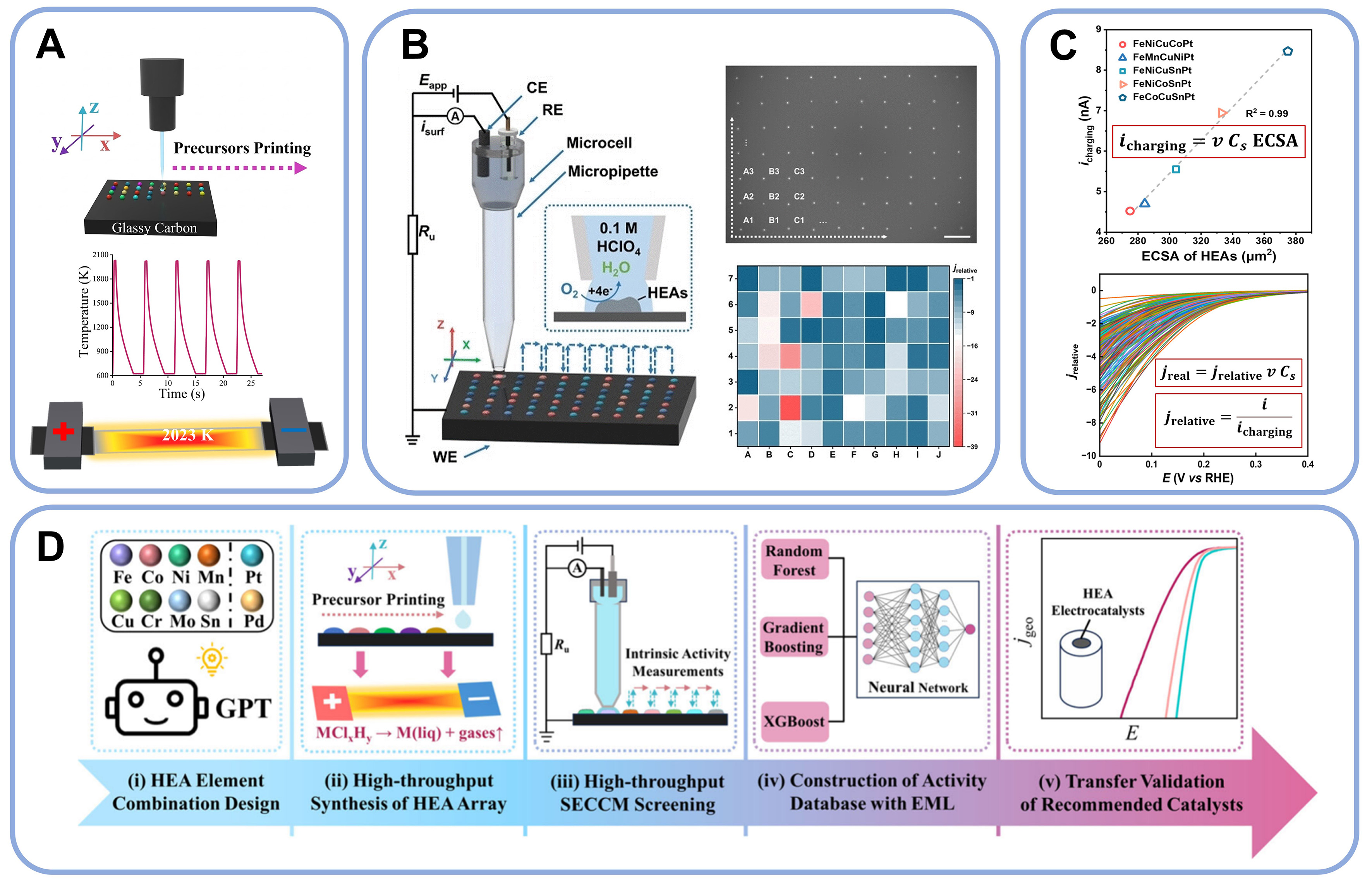
Figure 4. High-throughput synthesis and intrinsic activity evaluation of model catalysts. (A) Precursor printing and ultrahigh-temperature pulsed heating for the preparation of micrometer-scale HEA model catalyst arrays. This figure is reproduced with permission from reference[27] Copyright © 2024 American Chemical Society; (B) High-throughput electrochemical screening of catalyst arrays using SECCM. This figure is adapted with permission from reference[26] (Figure 2) © 2024 Wiley-VCH GmbH; (C) Intrinsic activity evaluation method based on jrelative. This figure is adapted with permission from reference[26] (Supplementary Figures 13 and 18A) © 2024 Wiley-VCH GmbH; (D) Discovery workflow for HEA-HER catalysts integrating model catalyst array fabrication, intrinsic activity screening, and data prediction. This figure is reproduced with permission from reference[27] Copyright © 2024 American Chemical Society. CE: Counter electrode; RE: reference electrode; WE: working electrode; HEA: high-entropy alloy; ECSA: electrochemcial active surface area; SECCM: scanning electrochemical cell microscopy; EML: ensemble machine learning; HER: hydrogen evolution reaction; RHE: reversible hydrogen electrode.
This high-throughput synthesis and screening strategy for model catalysts exhibits excellent scalability. Shan et al. further extended this technical route to the hydrogen evolution reaction (HER) field[27] [Figure 4D]. LLM was used to identify the HER-related elemental library and design 56 PtPd-based HEA combinations, while the same microarray-based model catalyst fabrication strategy and jrelative intrinsic activity evaluation framework were adopted to rapidly complete HER activity screening and dataset acquisition. Furthermore, using the composition-activity data of 238 HEAs within specific elemental-combination systems as the foundational dataset, this study constructed an ensemble ML (EML) model, enabling activity prediction across large-scale subdivided compositional spaces. Multiple highly active HER catalysts were successfully recommended and experimentally validated, thereby significantly improving the exploration efficiency of the HEA compositional space.
Technical route II: high-throughput synthesis and screening of practical powder catalysts
Model catalysts provide idealized platforms for mechanistic investigations, but their synthesis yields are usually limited, and they are typically tested while immobilized on substrates such as GC, making accurate physicochemical characterization difficult and creating a clear gap from the material forms used in practical industrial applications[28]. Therefore, there is an urgent need to develop practical powder catalysts that are closer to industrial application scenarios, such as carbon-supported nanoparticles and metal oxides, to fully utilize their pore networks, defect sites, and metal-support interactions. However, powder catalyst systems involve vast parameter spaces in terms of composition, structure, and synthesis process, and they also need to be further integrated into macroscopic devices such as membrane electrode assemblies (MEAs). As a result, traditional manual trial-and-error approaches can no longer meet the requirements for massive phase-space screening and intrinsic kinetic analysis. Therefore, research efforts are rapidly shifting toward the high-throughput synthesis and operando screening of practical powder catalysts, aiming to extend the application boundary of automated platforms from idealized model systems to complex practical materials[2,5].
To address the high-throughput synthesis challenges of complex powder catalysts, synthesis hardware and automation architectures have continuously evolved, expanding the boundaries of closed-loop exploration of solid-state materials[3,29]. To overcome the heating and cooling hysteresis of conventional heating methods, which makes them difficult to adapt to high-throughput synthesis, Shan et al. developed a high-throughput non-contact thermal-radiation synthesis architecture[30]. In this system, an LLM was employed to drive an automated solid/liquid dispensing workstation for the precise deposition of precursors onto carbon supports, while a programmatically controlled carbon-paper heat source enabled array-based rapid heating, allowing the temperature of microregions to rise to ~1,500 °C within seconds, followed by rapid quenching[31]. This pulsed thermal-radiation strategy shortened the synthesis cycle of powder catalysts from days to hours, providing a hardware foundation for the rapid acquisition of reliable data across broad compositional spaces.
With improved synthesis throughput, important progress has also been made in high-throughput operando screening systems for powder catalysts. Tu et al. proposed a data-driven high-throughput experimental workflow[32] [Figure 5]. By combining automated powder synthesis, catalyst-array fabrication, and a machine-vision-assisted high-throughput scanning flow cell (SFC) screening system, rapid evaluation of powder catalysts was achieved[32]. This system employs a vision module to recognize and locate powder-deposited spots in microarrays, while the forced convection generated by the SFC reduces the interference of mass-transport limitations and bubble adhesion on activity evaluation. Based on this platform, dual-index screening of activity and stability was performed, enabling the rapid identification of multimetal oxide powder catalysts with practical application potential. Subsequently, online inductively coupled plasma-mass spectrometry (ICP-MS) and differential electrochemical mass spectrometry (DEMS) were combined for operando mechanistic validation[33], revealing the regulatory effects of the complex compositional microenvironment on metal dissolution and reaction pathways. Finally, the catalyst achieved long-term stable operation in proton exchange membrane water electrolyzer (PEMWE) devices, establishing a full-chain closed loop from high-throughput powder catalyst discovery and mechanistic validation to MEA integration.
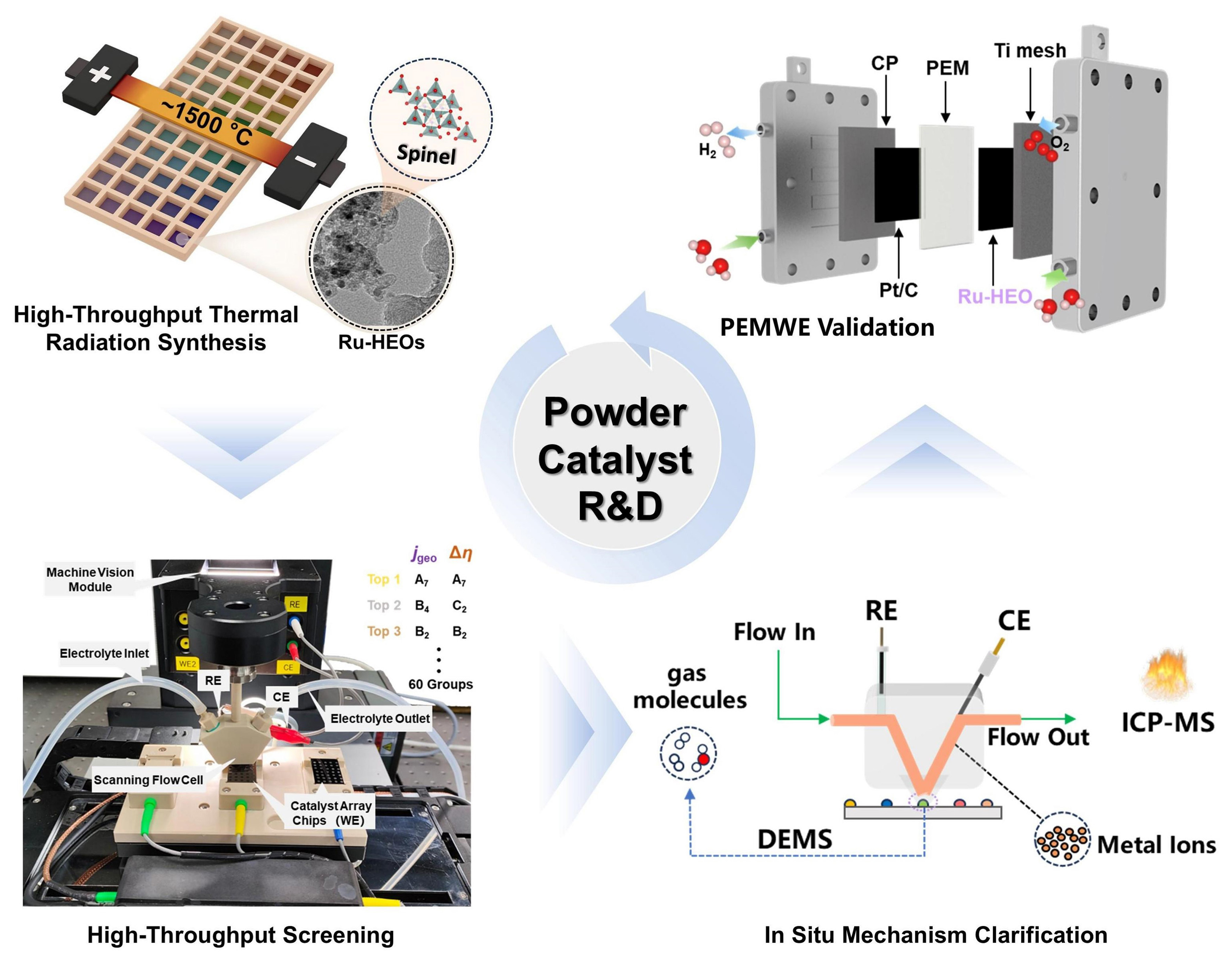
Figure 5. High-throughput synthesis and activity evaluation of practical powder catalysts. This figure is adapted from reference[32] (Figures 2A, 3A, 4F, and 6A) under the terms of the CC BY-NC 4.0 license. HEOs: High-entropy oxides; PEMWE: proton exchange membrane water electrolyzer; CP: carbon paper; PEM: proton exchange membrane; CE: counter electrode; RE: reference electrode; DEMS: differential electrochemical mass spectrometry; ICP-MS: inductively coupled plasma-mass spectrometry.
The future core of SDLs lies in moving beyond hardware integration toward closed-loop systems with advanced cognition and self-correction capabilities. Empowered by large multimodal models and vision-based perception technologies, these systems are expected to diagnose physical failures in real time, such as droplet-deposition deviation and electrode detachment, and further infer dynamic corrective strategies[7]. Meanwhile, the standardization of software-hardware interfaces will promote cross-scale engineering scale-up, enabling embodied intelligent networks based on multi-agent collaboration to further connect fundamental exploration with industrial manufacturing, thereby supporting the on-demand customization and scalable application of complex powder catalysts[34].
Technical route III: emerging screening strategies toward intrinsic electrocatalysis
With the development of high-throughput synthesis and automated measurement technologies, the screening efficiency of electrocatalytic materials has been significantly enhanced. However, evaluation metrics still largely remain at the level of geometric current density (jgeo) or simply normalized current values[35,36]. Although these metrics have been widely adopted in large-scale screening, they primarily reflect the apparent performance of materials under specific electrode configurations and testing conditions, rather than the intrinsic reactivity of the catalytic sites themselves.
In recent years, electrocatalytic activity evaluation has gradually evolved from macroscopically averaged responses toward kinetic parameters with greater intrinsic significance. Methods such as single-entity electrochemistry[37], SECCM[38], and scanning electrochemical microscopy (SECM)[39] provide important experimental approaches for understanding intrinsic activity at the active-site level. However, current evaluations still largely rely on conventional intrinsic activity descriptors, such as electrochemical active surface area (ECSA)-normalized current density, turnover frequency (TOF), and Tafel slope. The accurate determination of these descriptors usually requires complex surface-area calibration, active-site quantification, or kinetic fitting, making them difficult to directly adapt for high-throughput screening[40,41].
Therefore, the key to high-throughput screening lies not only in achieving intrinsic measurements, but also in developing new intrinsic activity descriptors suitable for high-throughput evaluation [Figure 6A]. For example, Koper et al. developed a voltammetric reversibility descriptor based on the kinetic characteristics of key intermediate transformations, such as *O, *OH, and *OOH[42], to complement conventional ECSA-normalized current density [Figure 6B]. Based on intrinsic kinetic measurements of single-particle transition metal oxides (TMOs), Gao et al. proposed melting point as a simple descriptor for intrinsic oxygen evolution reaction (OER) activity and revealed a volcano-type correlation between melting point and real overpotential (ηreal) [Figure 6C], providing a quantifiable metric for advancing high-throughput screening from “apparent performance” toward “intrinsic activity”[43].
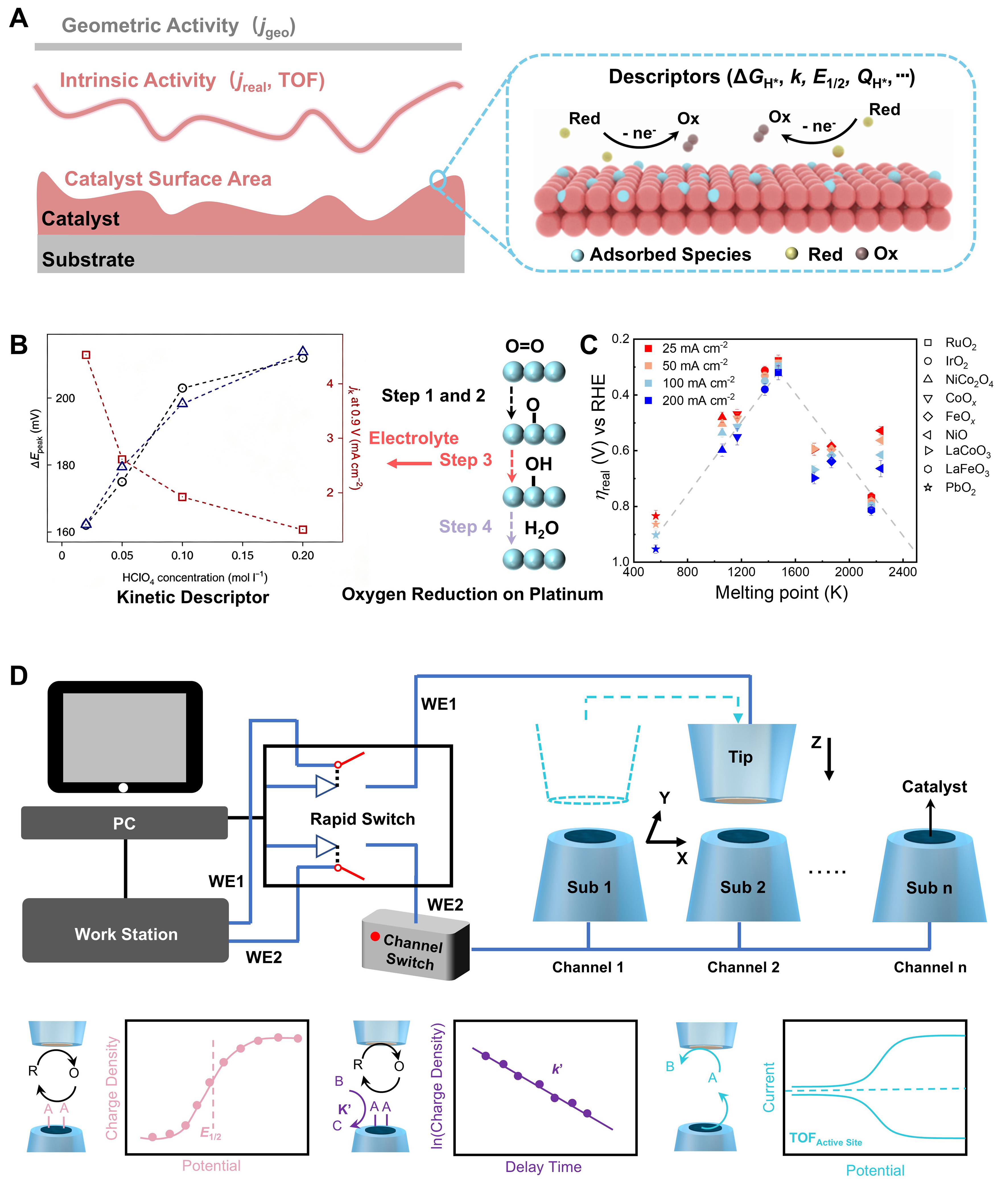
Figure 6. Quantification of intrinsic electrocatalytic activity and emerging screening strategies. (A) Conventional electrocatalytic activity descriptors, such as jgeo and TOF, toward descriptors compatible with high-throughput screening; (B) An ORR kinetic descriptor based on voltammetric reversibility. This figure is adapted from reference[42] (Graphical Abstract) under the terms of the CC BY 4.0 license; (C and D) Newly developed high-throughput screening methods: (C) intrinsic OER activity evaluation of single-particle TMOs and the corresponding melting point descriptor. This figure is reproduced with permission from reference[43] Copyright © 2024 Wiley‐VCH GmbH; (D) An array-based intrinsic activity evaluation platform based on SECM and extraction of key parameters. TOF: Turnover frequency; ORR: oxygen reduction reaction; TMOs: transition metal oxides; SECM: scanning electrochemical microscopy; OER: oxygen evolution reaction; PC: personal computer; WE: working electrode.
In this context, SECM-related methods also provide new opportunities for high-throughput intrinsic activity evaluation. When combined with automated titration or arrayed operando testing platforms, SECM is expected to extract experimental parameters that more closely reflect the reaction nature of active sites under working conditions. For example, for HER, surface interrogation-SECM (SI-SECM) can be used to titrate surface H* coverage and extract experimental parameters related to the adsorption and transformation of key intermediates, thereby providing a basis for ranking the intrinsic activity of complex multicomponent catalysts[44]. For multistep reactions such as OER, delayed SI-SECM can directly extract the kinetic constant k’ of active sites under working conditions and deconvolute intrinsic activity into two experimentally measurable parameters: the number of active sites and the per-site kinetic constant k’ [Figure 6D].
Beyond descriptor development, establishing kinetic analysis methodologies and theoretical frameworks under high-mass-transport conditions is also an important direction. In recent years, techniques such as SFC have enabled relatively high-throughput electrochemical measurements under controlled flow conditions[45] and can be combined with online analysis of intermediates or products to provide information on reaction pathways[32]. If a Koutecký-Levich-like relationship can be further established under forced convection conditions, the kinetic current density (jkin) is expected to be directly extracted. Compared with jgeo alone, jkin more closely reflects the intrinsic reaction capability of catalysts and is therefore more suitable as a high-throughput evaluation metric for intrinsic activity[46].
CURRENT KEY CHALLENGES AND SOLUTIONS FOR AI-ECHEMIST
With the development of automation and intelligent technologies, automated laboratories are gradually transitioning from proof-of-concept demonstrations toward practical applications and scalable deployment in complex electrochemical systems[2,47]. However, current automated laboratories still face three key challenges: mechanistic understanding of material reactions remains limited by fragmented multimodal information and the difficulty of resolving dynamic interfacial processes[8]; device construction still relies heavily on manual operation, with insufficient automation, standardization, and operating-condition diagnosis; and materials synthesis mostly remains at the laboratory scale, making it difficult to meet the demands of scalable applications in terms of production yield, consistency, and continuous manufacturing. Therefore, multimodal characterization data fusion and knowledge graph construction, automated electrolyzer function islands, and scalable materials fabrication processes have become important directions for enhancing the capability of AI-eChemist.
At the materials level, electrochemical reactions involve multiscale coupled processes, including charge transfer, interfacial structural evolution, and intermediate formation, making it difficult for a single characterization technique to reveal their dynamic mechanisms[8]. By integrating multimodal characterization techniques, such as hydrodynamics, electrochemistry, mass spectrometry, and Raman spectroscopy, multidimensional real-time monitoring of reaction processes can be achieved [Figure 7A]. Further combining time-resolved data alignment, feature extraction, and knowledge graph construction can correlate catalyst composition, structural evolution, reaction pathways, and performance metrics, promoting the transformation of fragmented experimental data into structured knowledge and constructing a closed-loop “measurement-modeling-prediction-validation” workflow, thereby improving the understanding of active-site evolution, rate-determining steps, and deactivation mechanisms.
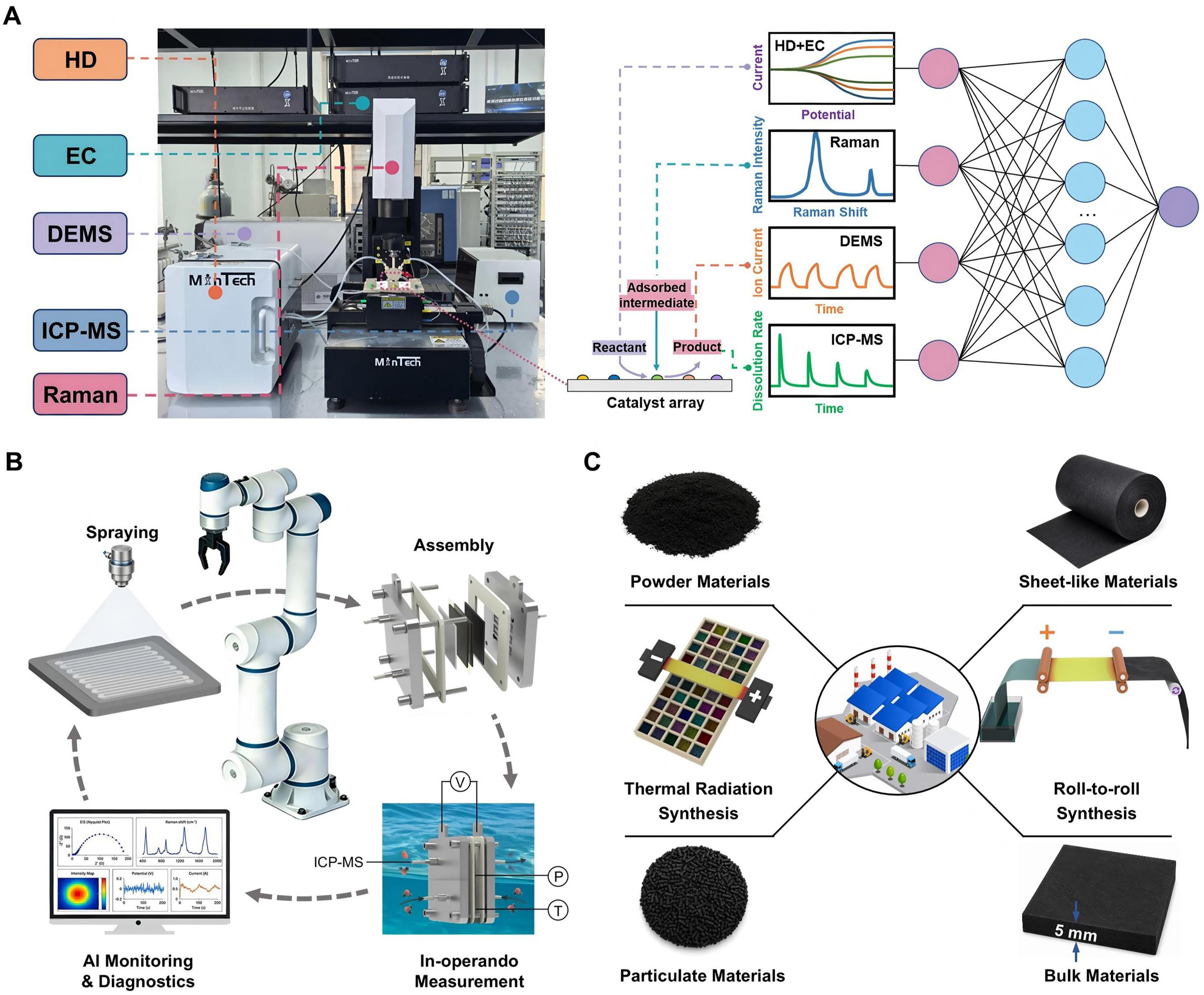
Figure 7. Key challenges and corresponding strategies in the development of AI-eChemist. (A) A framework of data fusion and knowledge graph construction based on multimodal operando characterization. The figure was photographed by the authors; (B) An automated electrolyzer function island integrating MEA automated fabrication, precise assembly, operando monitoring, and AI diagnosis; (C) Scalable synthesis of advanced materials. MEA: Membrane electrode assembly; AI: artificial intelligence; DEMS: differential electrochemical mass spectrometry; ICP-MS: inductively coupled plasma-mass spectrometry; HD: hydrodynamics; EC: electrochemistry.
The performance of electrolyzers is highly dependent on the fabrication quality of MEAs, assembly precision, and stability under operating conditions[48]. Conventional manual workflows suffer from low efficiency, poor reproducibility, and insufficient standardization. Therefore, constructing an automated function island covering the entire process of MEA fabrication, electrolyzer assembly, testing, and diagnosis represents an important pathway for transforming device development toward standardized and intelligent workflows [Figure 7B]. Automated spray coating and slurry-state control can improve the controllability and consistency of MEA fabrication[49], while vision-based positioning and force-feedback robotic assembly can enhance the reproducibility of device construction[50]. Meanwhile, multimodal operando monitoring and intelligent diagnostic systems can continuously acquire multidimensional signals, including temperature, voltage, current, and products. Combined with AI and data-driven methods, these systems can support intelligent diagnosis, performance prediction, and operating-condition optimization of electrolyzers.
At the level of scalable fabrication, the transition of advanced materials from laboratory discovery to practical application still requires addressing the difficulty of maintaining structural consistency and performance stability during scale-up [Figure 7C]. For powder materials, high-throughput advanced materials synthesis workstations based on thermal radiation can improve reaction efficiency through rapid non-contact heating[30], while maintaining structural and performance consistency during scale-up, thereby enabling the transition from milligram-scale screening to gram-scale fabrication. For self-supported electrode materials, roll-to-roll synthesis workstations based on Joule heating can complete rapid thermal treatment during continuous transport[51-53], enabling the continuous fabrication of large-area electrode materials and providing a foundation for the engineering application of electrochemical devices.
In summary, the further development of AI-eChemist requires extending beyond “materials discovery” toward a full-chain framework encompassing “mechanistic investigation-device construction-scalable manufacturing”. Through multimodal data fusion, construction of automated electrolyzer function islands, and development of advanced scale-up processes, AI-eChemist is expected to establish an integrated research paradigm combining high-throughput experimentation, operando characterization, intelligent analysis, and scalable fabrication, thereby accelerating the discovery and application translation of electrochemical energy materials.
FUTURE DEVELOPMENT GOAL: MULTIMODAL AI-AGENT AUTONOMOUS LABORATORIES
Currently, the development of high-performance electrocatalysts is at a critical transition stage from automation to autonomy[7]. Although high-throughput synthesis and automated testing have significantly improved material screening efficiency, bottlenecks such as data silos, fragmented workflows, and delayed mechanistic understanding still limit the ability to extract generalizable scientific principles from massive experimental data[2]. Looking ahead, autonomous experimental systems will move toward full closed-loop and self-evolving operation, enabling a paradigm shift from data acquisition to knowledge generation[19].
Multi-agent-driven autonomous laboratories will become the core infrastructure for this transformation. In this framework, the research workflow is decomposed into modular tasks of design-execution-analysis-optimization, which are collaboratively completed by a set of highly specialized agents [Figure 8A]: the literature agent is responsible for knowledge extraction and mechanistic hypothesis generation; the experiment agent translates scientific goals into executable experimental protocols; robot agent performs sample preparation and testing; the data agent conducts multimodal data processing and model analysis; and the task-management agent acts as the central coordinator, integrating outputs from different agents and guiding subsequent decisions. Dynamic feedback among these agents is established through the task-management agent: literature and data agents propose candidate hypotheses, the experiment agent generates experimental protocols, the robot agent executes the experiments and returns experimental results, and the data agent evaluates performance, uncertainty, and abnormal information, which are then fed back to the task-management agent to update subsequent experimental decisions. This system constructs a virtual research team, transforming the experimental workflow from linear execution into a dynamic closed loop [Figure 8B].
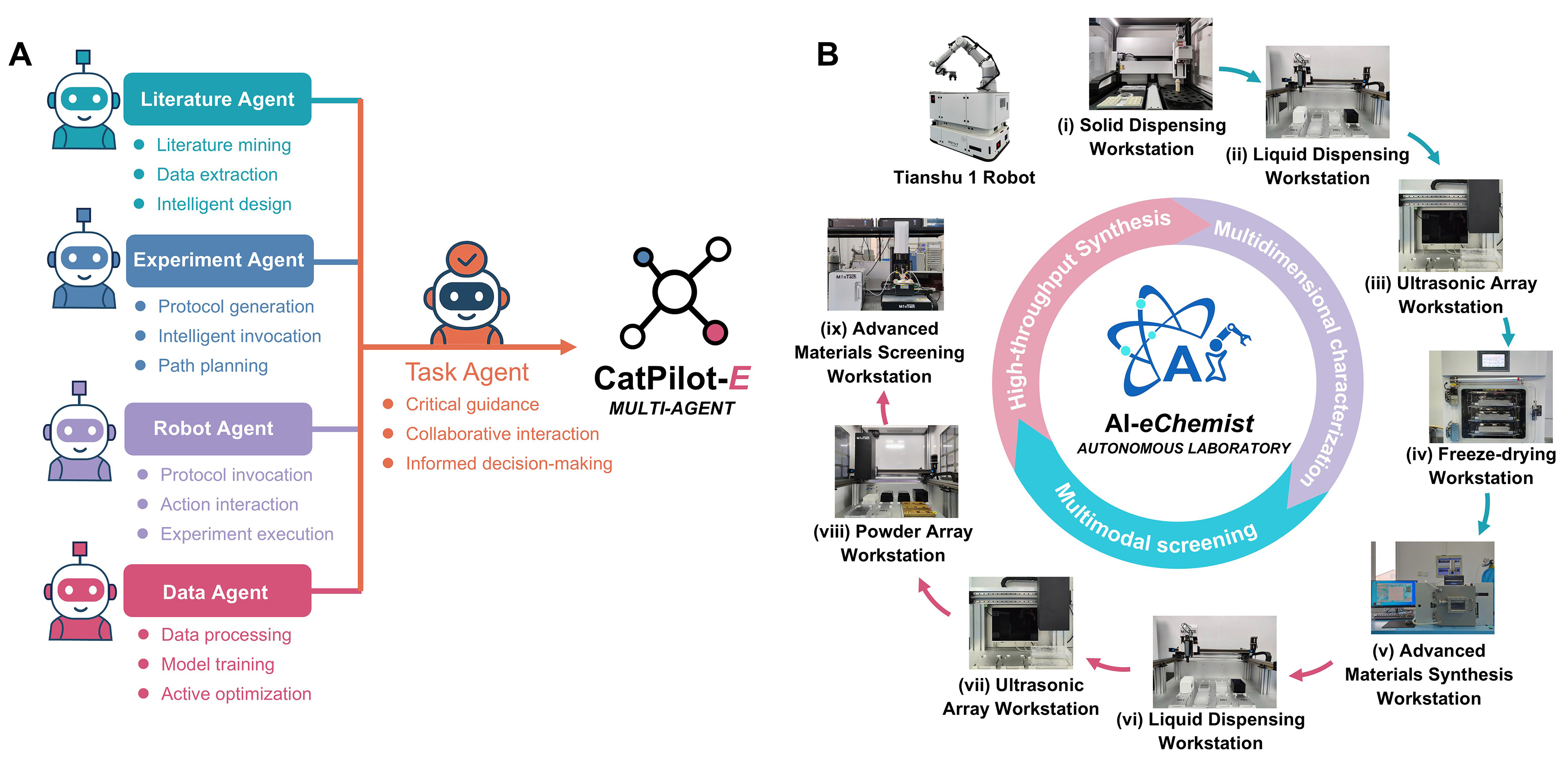
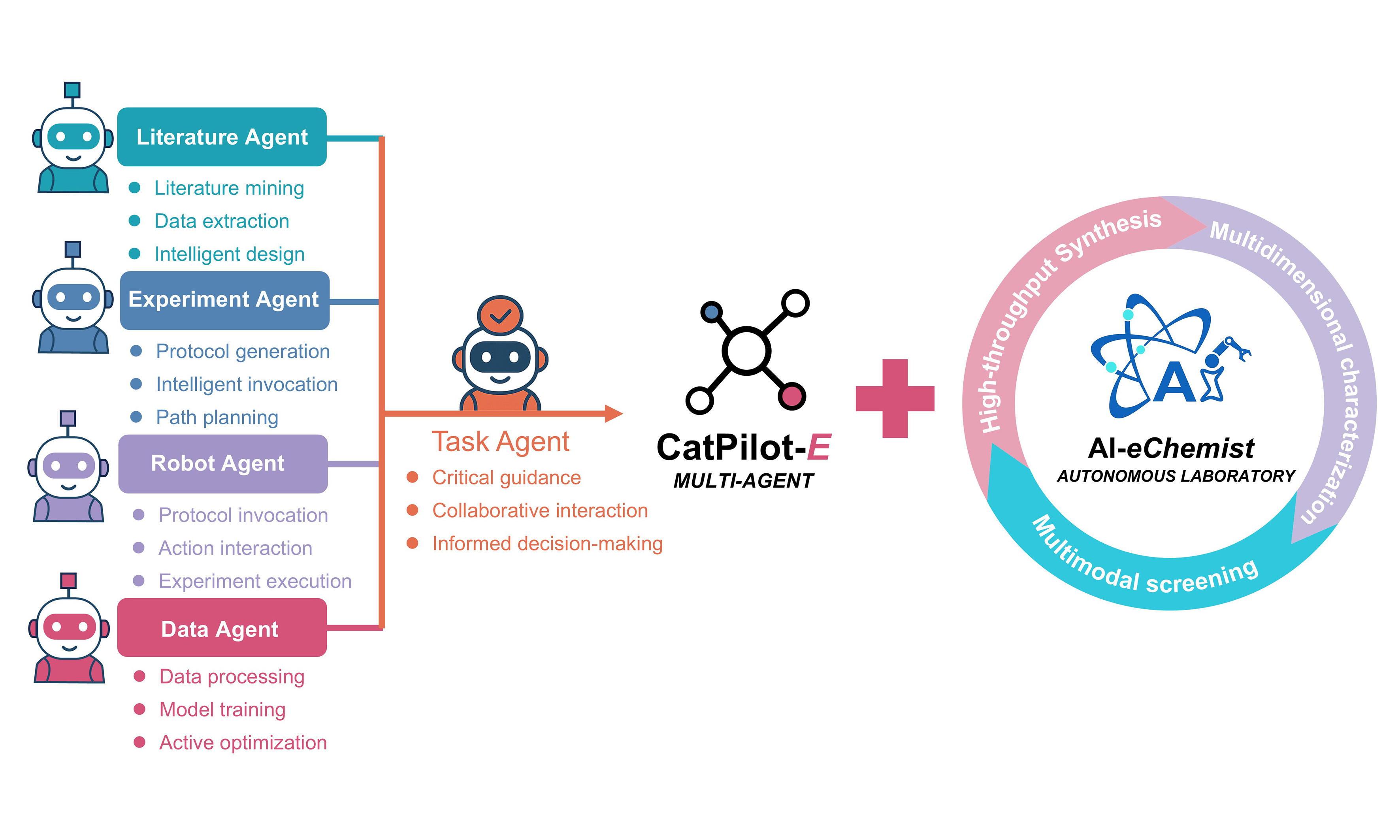
Figure 8. Multi-agent-driven autonomous laboratory and multimodal knowledge graph architecture. (A) The CatPilot-E multi-agent virtual research team; (B) Workflow of AI-eChemist. The figures were photographed by the authors.
Human-machine collaboration will run through the entire development process of autonomous laboratories. As multi-agent systems undertake tasks such as experimental execution and data analysis, the role of human scientists will shift from operators to strategy makers and value assessors, mainly responsible for proposing scientific questions, defining experimental boundaries, reviewing experimental protocols, and evaluating and validating experimental results[1]. When the system produces recommendations with high uncertainty, encounters robotic execution failures, or generates results that conflict with existing knowledge, human researchers still need to intervene in decision-making to determine whether to repeat experiments, add validation, adjust constraints, or terminate the current optimization direction. This collaborative framework preserves human creativity and scientific judgment while also unleashing the potential of AI in complex system optimization[54].
The development of autonomous laboratories still faces challenges such as insufficient hardware standardization, lack of software specifications, difficulty in unified modeling of multimodal data, and data silos. In the future, it is necessary to construct a system-engineering framework that enables the co-evolution of equipment-data-models, promoting the deep integration of multi-agent collaboration, autonomous closed-loop optimization, and multidimensional knowledge graphs. This will move electrochemical materials discovery from “high-throughput screening” toward a new stage of “autonomous design and closed-loop optimization”, providing core support for the rational design of energy catalytic systems.
CONCLUSION AND OUTLOOK
SDLs are gradually transitioning from proof-of-concept demonstrations toward in-depth applications in specific scientific domains, with their focus shifting from simply pursuing experimental automation and throughput enhancement to reliable data acquisition, interpretable knowledge generation, and materials application-oriented translation. The development of AI-eChemist reflects the urgent need in electrochemical research for dedicated autonomous experimental systems. For complex electrochemical materials, automated platforms need not only to complete high-throughput synthesis and testing, but also to establish a closed-loop system integrating front-end intelligent decision-making, middle-end experimental execution, back-end mechanistic investigation, and device validation, while accounting for interfacial complexity, condition dependence, and the diversity of evaluation metrics. Toward this goal, the three technical routes of model catalysts, practical powder catalysts, and intrinsic activity evaluation have laid the foundation for the development of AI-eChemist from the perspectives of standardized data acquisition, practical materials discovery, and high-quality feedback metrics, respectively.
However, future AI-eChemist and related autonomous laboratory systems still face multiple challenges. First, electrochemical data are highly dependent on material composition and structure, electrode configuration, testing conditions, and experimental workflows, while data recording and management standards remain inconsistent across different platforms. Therefore, standardized experimental protocols, raw-data recording specifications, and traceable data management systems are urgently needed. Second, complex catalytic systems often involve limited datasets together with high-dimensional parameter spaces. Model recommendations can be affected by uncertainty, data bias, and limited interpretability, requiring domain-knowledge constraints, uncertainty evaluation, active learning, and human-machine collaborative validation to improve the reliability of closed-loop optimization. Meanwhile, abnormalities such as droplet-deposition deviation, sample detachment, pipeline blockage, and instrument drift may occur during automated experiments, highlighting the need for online perception, fault diagnosis, and self-correction capabilities. In addition, optimized materials identified through high-throughput screening do not necessarily retain their advantages in MEA fabrication and practical devices, and multiscale correlations among model systems, powder catalysts, MEAs, and device testing should be further strengthened.
In the future, AI-eChemist needs to further promote the synergistic evolution of hardware, data, models, and knowledge systems. Through the integration of multimodal in situ characterization, knowledge graphs, automated functional modules and multi-agent collaborative frameworks, autonomous laboratories are expected to achieve a dynamic closed loop encompassing knowledge extraction, experiment design, automated execution, anomaly diagnosis, and strategy updating. This development will drive electrochemical materials discovery beyond “high-throughput screening” toward “autonomous design, reliable validation, and closed-loop optimization”.
DECLARATIONS
Authors’ contributions
Investigation, methodology, writing - review & editing: Tan, Y.
Conceptualization, investigation, writing - original draft: Chen, L.
Data curation, software: Shan, X.
Supervision, software: Tu, Y.
Formal analysis: Wang, P.
Visualization: Xu, J.
Validation: Gao, H.
Supervision, writing - review and editing, project administration, funding acquisition: Zhou, M.
Availability of data and materials
Not applicable.
AI and AI-assisted tools statement
During the preparation of this manuscript, the OpenAI tool ChatGPT (GPT-5 series, version 5.4, released 2026-03-05) was used to enhance the clarity of the robotic arm and nozzle in Figure 7B, to assemble the data visualization for the AI Monitoring & Diagnostics section in Figure 7B using the authors’ data, and generate the graphical elements of the four materials and the factory model in Figure 7C, ensuring compliance with OAE’s editorial and ethical standards. The tool did not influence the study design, data collection, analysis, interpretation, or the scientific content of the work. All authors take full responsibility for the accuracy, integrity, and final content of the manuscript.
Financial support and sponsorship
This work was supported by the National Natural Science Foundation of China (22574150) and the Major Project of Changchun State Key Laboratory (23GZZ05).
Conflicts of interest
Zhou, M. is an Editorial Board Member of the journal AI Agent. Zhou, M. was not involved in any steps of editorial processing, including reviewer selection, manuscript handling, and decision making, while the other authors have declared that they have no conflicts of interest.
Ethical approval and consent to participate
Not applicable.
Consent for publication
Not applicable.
Copyright
© The Author(s) 2026.
REFERENCES
1. Seifrid, M.; Pollice, R.; Aguilar-Granda, A.; et al. Autonomous chemical experiments: challenges and perspectives on establishing a self-driving lab. Acc. Chem. Res. 2022, 55, 2454-66.
2. Tom, G.; Schmid, S. P.; Baird, S. G.; et al. Self-driving laboratories for chemistry and materials science. Chem. Rev. 2024, 124, 9633-732.
3. Szymanski, N. J.; Rendy, B.; Fei, Y.; et al. An autonomous laboratory for the accelerated synthesis of inorganic materials. Nature 2023, 624, 86-91.
4. M Bran, A.; Cox, S.; Schilter, O.; Baldassari, C.; White, A. D.; Schwaller, P. Augmenting large language models with chemistry tools. Nat. Mach. Intell. 2024, 6, 525-35.
5. Boiko, D. A.; Macknight, R.; Kline, B.; Gomes, G. Autonomous chemical research with large language models. Nature 2023, 624, 570-8.
6. Dai, T.; Vijayakrishnan, S.; Szczypiński, F. T.; et al. Autonomous mobile robots for exploratory synthetic chemistry. Nature 2024, 635, 890-7.
7. Zhang, Z.; Ren, Z.; Hsu, C. W.; et al. A multimodal robotic platform for multi-element electrocatalyst discovery. Nature 2025, 647, 390-6.
8. Chen, X.; Sun, Y. L.; Lin, X. M.; Dong, J. C.; Li, J. F. In situ studies of electrochemical energy conversion and storage technologies: from materials, intermediates, and products to surroundings. Nanomicro. Lett. 2026, 18, 170.
9. Prajapati, A.; Hahn, C.; Weidinger, I. M.; et al. Best practices for in-situ and operando techniques within electrocatalytic systems. Nat. Commun. 2025, 16, 2593.
10. Ning, M.; Wang, S.; Wan, J.; et al. Dynamic active sites in electrocatalysis. Angew. Chem. Int. Ed. Engl. 2024, 63, e202415794.
11. Ehelebe, K.; Schmitt, N.; Sievers, G.; et al. Benchmarking fuel cell electrocatalysts using gas diffusion electrodes: inter-lab comparison and best practices. ACS. Energy. Lett. 2022, 7, 816-26.
12. Zlatar, M.; Escalera-López, D.; Rodríguez, M. G.; et al. Standardizing OER electrocatalyst benchmarking in aqueous electrolytes: comprehensive guidelines for accelerated stress tests and backing electrodes. ACS. Catal. 2023, 13, 15375-92.
13. Pablo-García, S. García, Á.; Akkoc, G. D.; et al. An affordable platform for automated synthesis and electrochemical characterization. Device 2025, 3, 100567.
14. Sheng, H.; Sun, J.; Rodríguez, O.; et al. Autonomous closed-loop mechanistic investigation of molecular electrochemistry via automation. Nat. Commun. 2024, 15, 2781.
15. Pyzer-Knapp, E. O.; Pitera, J. W.; Staar, P. W. J.; et al. Accelerating materials discovery using artificial intelligence, high performance computing and robotics. npj. Comput. Mater. 2022, 8, 84.
16. Kirklin, S.; Saal, J. E.; Meredig, B.; et al. The Open Quantum Materials Database (OQMD): assessing the accuracy of DFT formation energies. npj. Comput. Mater. 2015, 1, 15010.
17. Agrawal, A.; Choudhary, A. Perspective: materials informatics and big data: realization of the “fourth paradigm” of science in materials science. APL. Mater. 2016, 4, 053208.
18. Butler, K. T.; Davies, D. W.; Cartwright, H.; Isayev, O.; Walsh, A. Machine learning for molecular and materials science. Nature 2018, 559, 547-55.
19. Song, T.; Luo, M.; Zhang, X.; et al. A multiagent-driven robotic AI chemist enabling autonomous chemical research on demand. J. Am. Chem. Soc. 2025, 147, 12534-45.
20. Zhang, D.; Jia, X.; Liu, H.; et al. Cloud synthesis: a global closed-loop feedback powered by autonomous AI-driven catalyst design agent. AI. Agent. 2025, 1, 2.
21. Zhang, D.; Chen, Y.; Liu, C.; et al. Accelerating catalyst materials discovery with large artificial intelligence models. Angew. Chem. Int. Ed. Engl. 2026, 65, e26150.
22. Burger, B.; Maffettone, P. M.; Gusev, V. V.; et al. A mobile robotic chemist. Nature 2020, 583, 237-41.
23. Lei, Z.; Huang, Y.; Zhu, Y.; et al. Automatic discovery and optimal generation of amorphous high-entropy electrocatalysts. J. Am. Chem. Soc. 2025, 147, 21743-53.
24. Yang, R.; Zhou, D.; Jia, Z.; et al. Toward practical design of high‐entropy catalysts for chlorine evolution reaction via Pareto‐guided multi‐objective Bayesian optimization enabled by a robotic AI‐chemist. Angew. Chem. Int. Ed. Engl. 2026, 65, e8794274.
25. Yao, Y.; Dong, Q.; Brozena, A.; et al. High-entropy nanoparticles: synthesis-structure-property relationships and data-driven discovery. Science 2022, 376, eabn3103.
26. Pan, Y.; Shan, X.; Cai, F.; Gao, H.; Xu, J.; Zhou, M. Accelerating the discovery of oxygen reduction electrocatalysts: high‐throughput screening of element combinations in pt‐based high‐entropy alloys. Angew. Chem. Int. Ed. Engl. 2024, 63, e202407116.
27. Shan, X.; Pan, Y.; Cai, F.; et al. Accelerating the discovery of efficient high-entropy alloy electrocatalysts: high-throughput experimentation and data-driven strategies. Nano. Lett. 2024, 24, 11632-40.
28. Kraushofer, F.; Parkinson, G. S. Single-atom catalysis: insights from model systems. Chem. Rev. 2022, 122, 14911-39.
29. Zhu, Q.; Huang, Y.; Zhou, D.; et al. Automated synthesis of oxygen-producing catalysts from Martian meteorites by a robotic AI chemist. Nat. Synth. 2023, 3, 319-28.
30. Shan, X.; Cai, F.; Tu, Y.; et al. Unveiling the correlation between high-entropy alloy element systems and electrocatalytic activity. Natl. Sci. Rev. 2026, 13, nwag161.
31. Dong, Q.; Yao, Y.; Cheng, S.; et al. Programmable heating and quenching for efficient thermochemical synthesis. Nature 2022, 605, 470-6.
32. Tu, Y.; Shan, X.; Chen, L.; et al. Accelerated discovery of highly stable ruthenium-based high-entropy oxides for acidic oxygen evolution. Sci. Adv. 2026, 12, eaed8479.
33. Priamushko, T.; Franz, E.; Logar, A.; et al. Be aware of transient dissolution processes in Co3O4 acidic oxygen evolution reaction electrocatalysts. J. Am. Chem. Soc. 2025, 147, 3517-28.
34. Sim, M.; Vakili, M. G.; Strieth-Kalthoff, F.; et al. ChemOS 2.0: an orchestration architecture for chemical self-driving laboratories. Matter 2024, 7, 2959-77.
35. Yao, Y.; Huang, Z.; Li, T.; et al. High-throughput, combinatorial synthesis of multimetallic nanoclusters. Proc. Natl. Acad. Sci. U. S. A. 2020, 117, 6316-22.
36. Zhu, Q.; Zhang, F.; Huang, Y.; et al. An all-round AI-Chemist with a scientific mind. Natl. Sci. Rev. 2022, 9, nwac190.
37. Zhang, X.; Gao, H.; Xu, J.; Zhou, M. Polyelectrolyte-functionalized carbon nanocones enable rapid and accurate analysis of Ag nanoparticle colloids. Chin. Chem. Lett. 2025, 36, 110148.
38. Santana Santos, C.; Jaato, B. N.; Sanjuán, I.; Schuhmann, W.; Andronescu, C. Operando scanning electrochemical probe microscopy during electrocatalysis. Chem. Rev. 2023, 123, 4972-5019.
39. Clarke, T. B.; Krushinski, L. E.; Vannoy, K. J.; et al. Single entity electrocatalysis. Chem. Rev. 2024, 124, 9015-80.
40. Anantharaj, S.; Kundu, S. Do the Evaluation parameters reflect intrinsic activity of electrocatalysts in electrochemical water splitting? ACS. Energy. Lett. 2019, 4, 1260-4.
41. Anantharaj, S.; Noda, S.; Driess, M.; Menezes, P. W. The pitfalls of using potentiodynamic polarization curves for tafel analysis in electrocatalytic water splitting. ACS. Energy. Lett. 2021, 6, 1607-11.
42. Luo, M.; Koper, M. T. M. A kinetic descriptor for the electrolyte effect on the oxygen reduction kinetics on Pt(111). Nat. Catal. 2022, 5, 615-23.
43. Gao, H.; Xu, J.; Zhang, X.; Zhou, M. Benchmarking the Intrinsic Activity of Transition Metal Oxides for the Oxygen Evolution Reaction with Advanced Nanoelectrodes. Angew. Chem. Int. Ed. Engl. 2024, 63, e202404663.
44. Liang, Z.; Ahn, H. S.; Bard, A. J. A study of the mechanism of the hydrogen evolution reaction on nickel by surface interrogation scanning electrochemical microscopy. J. Am. Chem. Soc. 2017, 139, 4854-8.
45. Huang, J.; Wang, Z.; Liang, J.; et al. Accelerating the pace of oxygen evolution reaction catalyst discovery through megalibraries. J. Am. Chem. Soc. 2025, 147, 30956-66.
46. Dix, S. T.; Lu, S.; Linic, S. Critical practices in rigorously assessing the inherent activity of nanoparticle electrocatalysts. ACS. Catal. 2020, 10, 10735-41.
47. Chen, W.; Feng, L.; Ma, B.; et al. Click-locking strategy enables automated synthesis of single-atom catalysts with industrial compatibility. Nat. Synth. 2026, 5, 935-47.
48. Hong, R.; Xing, L.; Wang, N.; Meng, L.; Du, L.; Ye, S. Ionomers: behind-the-scenes influencer determining the performance of membrane electrode assemblies in PEM fuel cells/electrolyzers. ACS. Energy. Lett. 2026, 11, 1193-207.
49. Yanagi, R.; Yang, P.; Tricker, A. W.; et al. Enhancing water and oxygen transport through electrode engineering for AEM water electrolyzers. Joule 2025, 9, 102001.
50. Fowler, D.; Gurau, V.; Cox, D. Bridging the gap between automated manufacturing of fuel cell components and robotic assembly of fuel cell stacks. Energies 2019, 12, 3604.
51. Shi, W.; Liu, H.; Zhang, J.; et al. Roll-to-roll synthesis of multielement heterostructured catalysts. Nat. Synth. 2025, 4, 836-47.
52. Du, P.; Deng, B.; He, X.; et al. Roll-to-roll flash joule heating to stabilize electrocatalysts onto meter-scale Ni foam for advanced water splitting. ACS. Nano. 2024, 19, 1327-39.
53. Shi, X.; Gong, Y.; Wang, Z.; et al. Liquid metal‐enabled rapid structure ordering of intermetallic nanocrystals with electronic modulation. Adv. Funct. Mater. 2025, 36, e25452.
Cite This Article
 Open Access
How to Cite
Download Citation
Export Citation File:
Type of Import
Tips on Downloading Citation
Citation Manager File Format
Type of Import
Direct Import: When the Direct Import option is selected (the default state), a dialogue box will give you the option to Save or Open the downloaded citation data. Choosing Open will either launch your citation manager or give you a choice of applications with which to use the metadata. The Save option saves the file locally for later use.
Indirect Import: When the Indirect Import option is selected, the metadata is displayed and may be copied and pasted as needed.
About This Article
Copyright

Data & Comments
Data
0







Comments
Comments must be written in English. Spam, offensive content, impersonation, and private information will not be permitted. If any comment is reported and identified as inappropriate content by OAE staff, the comment will be removed without notice. If you have any queries or need any help, please contact us at support@oaepublish.com.