




Operando triboelectric probing of electrical double layers at dielectric solid-liquid interfaces
 0
0 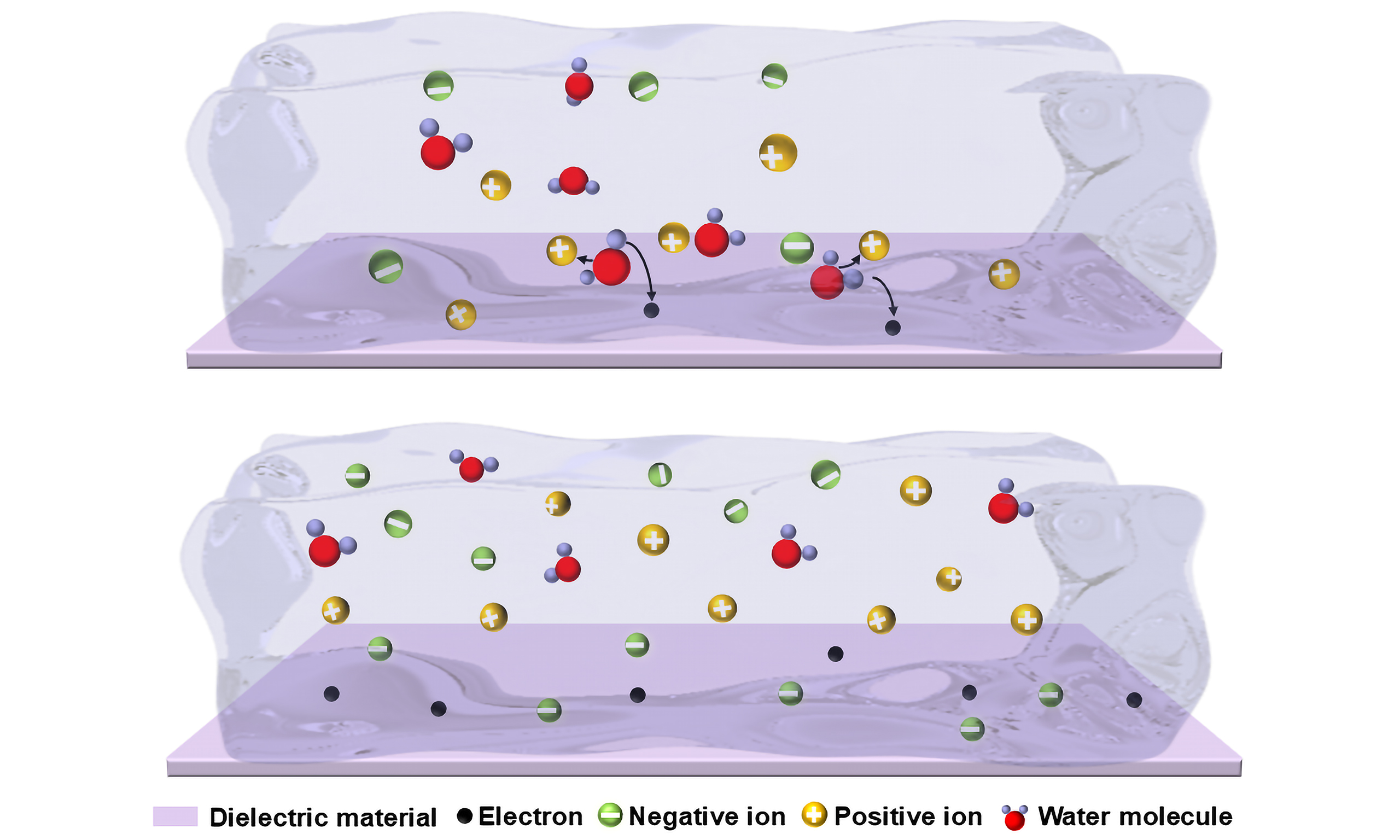
INTRODUCTION
Electrical double layers (EDLs)[1,2], arising from interfacial charge separation and ionic redistribution at solid-liquid interfaces, define the fundamental electrostatic boundary conditions governing ion transport[3], charge transfer[4,5], interfacial energy conversion[6], and energy-information coupling across interfacial systems. Over the past century, theoretical and experimental investigations of EDLs have evolved from the idealized compact charge layer described by the Helmholtz[7] model to increasingly complex electrostatic frameworks represented by the Gouy-Chapman (GC)[8] and Gouy-Chapman-Stern (GCS)[9] models, progressively incorporating ionic screening, ion correlations[10], solvent polarization[11], and interfacial electrostatic coupling. These advances have established the scientific foundation for modern electrochemistry, energy storage[12,13], catalysis, colloidal science[14], iontronics, and bioelectronics[15-17]. Nevertheless, current understanding and characterization of EDLs remain predominantly centered on conductive electrode interfaces, where interfacial electrostatic states can be externally imposed and electrically interrogated under equilibrium or near-equilibrium conditions.
In contrast, dielectric solid-liquid interfaces are characterized by intrinsic charge organization and electrostatic properties that fundamentally differ from conventional electrode-electrolyte interfaces[18,19]. Because dielectric interfaces cannot sustain externally controlled interfacial potentials, conventional electrode-based electrochemical methodologies become intrinsically ineffective for probing dielectric EDLs. More importantly, dielectric EDLs are strongly coupled with dynamic ionic redistribution, solvent reorganization, interfacial polarization, and mechanical perturbation, resulting in continuously evolving nonequilibrium electrostatic structures under realistic operating conditions. Such complexity becomes particularly evident in soft materials, polymers, hydrogels, biological interfaces, and adaptive iontronic systems, where environmental fluctuations and interfacial deformations dynamically reorganize local electrostatics. Consequently, despite the central role of dielectric EDLs in interfacial ion transport, sensing[20,21], and energy-information transduction, effective strategies for accessing and probing EDL evolution remain largely lacking.
Triboelectric nanogenerators (TENGs)[22-24], arising from contact electrification (CE)[25,26] coupled with electrostatic induction, provide a fundamentally distinct route for probing dielectric EDLs. Unlike conventional electrochemical techniques that rely on externally applied potentials, triboelectric probing transduces dynamically evolving interfacial charges into measurable electrical outputs through mechanically induced electrostatic interactions[27]. TENG-based systems do not employ a well-defined externally applied potential. While this is often described as “bias-free”, the effective electrostatic driving force originates from triboelectric charge generation and interfacial charge separation rather than an external bias. Importantly, although internally generated, this driving force can be systematically tuned through material selection, surface properties, mechanical loading conditions, and device geometry, which together determine the triboelectric charge and interfacial EDL. It should be noted that the EDL in realistic solid-liquid interfaces represents an emergent interfacial electrostatic state rather than a single isolated mechanism. Processes such as ion-specific adsorption, ion transport, and interfacial charge trapping are inherently coupled and collectively contribute to the formation and evolution of the EDL. Therefore, the triboelectric response should be interpreted as a reflection of this coupled interfacial electrostatic state, rather than being attributed to any single microscopic process. Transient ionic redistribution, electrostatic screening, and interfacial polarization within dielectric EDLs modulate triboelectric charge transfer and electrostatic induction, thereby establishing an operando electrostatic readout of EDL formation, ion-specific interactions, and dynamic interfacial electrostatic restructuring. Importantly, because triboelectric responses are inherently sensitive to nonequilibrium interfacial electrostatics, TENG-based probing enables operando access to interfacial states governed by dielectric EDL evolution, under mechanically, chemically, and environmentally coupled conditions that remain difficult to interrogate using conventional equilibrium-based approaches. In this Perspective, we discuss recent advances in operando triboelectric probing of dielectric EDLs, summarize emerging mechanistic understanding of triboelectric-interfacial electrostatic coupling, and further highlight future opportunities for real-time EDL interrogation and active electrostatic regulation in iontronic, soft matter, and biological systems.
CURRENT METHODS FOR ACCESSING DIELECTRIC EDLS
EDLs have traditionally been investigated using electrochemical methodologies developed for conductive electrode interfaces[5,28]. Techniques such as electrochemical impedance spectroscopy (EIS)[29], cyclic voltammetry (CV), and scanning electrochemical microscopy (SECM) [Figure 1A] enable sensitive interrogation of interfacial capacitance, charge-transfer behavior, and electrochemical dynamics through externally controlled interfacial potentials. These methodologies have established the experimental foundation of modern electrochemistry and interfacial science, and provide the important advantage of precisely defined and continuously tunable electrochemical boundary conditions, enabling quantitative investigation of interfacial processes under thermodynamically well-controlled equilibrium or near-equilibrium states. At the same time, because these approaches intrinsically rely on electrically addressable conductive interfaces, their applicability becomes fundamentally limited when extended to dielectric solid-liquid interfaces, where external potential control cannot be directly imposed, and interfacial electrostatic states must instead arise from intrinsic charge redistribution and polarization processes.
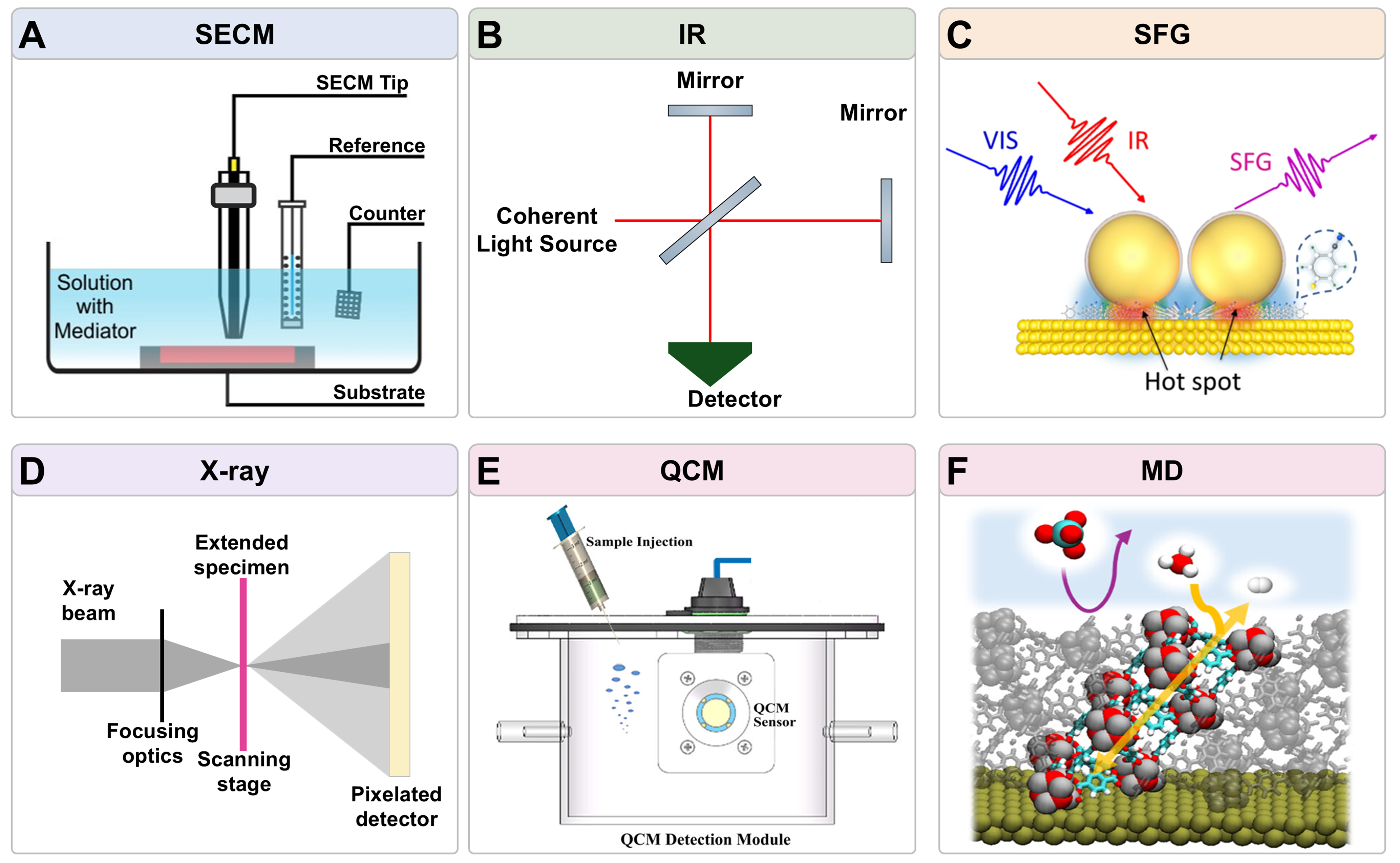
Figure 1. Schematic overview of representative techniques for probing and characterizing solid-liquid interfacial EDLs. (A) SECM[30]. Reprinted with permission. Copyright 2016, American Chemical Society; (B) IR, (C) SFG spectroscopy[31]. Reprinted with permission. Copyright 2020, American Physical Society; (D) X-ray characterization. PowerPoint; (E) QCM[32]. Reprinted with permission. Copyright 2025, American Chemical Society; (F) MD simulations[33]. Reprinted with permission. Copyright 2025, American Chemical Society. EDLs: Electrical double layers; SECM: scanning electrochemical microscopy; IR: infrared spectroscopy; SFG: sum-frequency generation; QCM: quartz crystal microbalance; MD: molecular dynamics; VIS: visible light.
To overcome these limitations, a variety of complementary approaches have been explored for accessing dielectric interfaces. Optical spectroscopies, including Raman spectroscopy, confocal Raman microscope[34], infrared spectroscopy (IR) [Figure 1B], and sum-frequency generation (SFG) spectroscopy [Figure 1C], provide molecular-level insight into ion adsorption, solvent organization, and interfacial molecular structures with high chemical and vibrational specificity, although the interfacial information often requires indirect interpretation based on spectral-structure correlations. Scanning probe approaches, such as atomic force microscopy (AFM)-based measurements and Kelvin probe force microscopy (KPFM) based on AFM, further enable nanoscale mapping of local surface potentials and interfacial interactions with high spatial resolution under controlled environments, but their measurements can be influenced by tip-sample interactions and require careful interpretation of probe-induced perturbations. In addition, X-ray characterization techniques [Figure 1D] reveal interfacial ion distributions and structural ordering, while quartz crystal microbalance (QCM) measurements [Figure 1E] sensitively monitor interfacial adsorption and mass-transfer dynamics by tracking integrated mass variations associated with interfacial processes rather than states. Neutron techniques[35] offer non-destructive, deep-penetration in situ analysis of EDL, but suffer from low spatial resolution and reliance on costly, large-scale facilities. Computational simulations, including molecular dynamics (MD) calculations [Figure 1F], further provide atomistic understanding of ionic organization, electrostatic correlations, and solvent-mediated interfacial interactions with atomic-scale resolution, but their predictive accuracy depends on force-field accuracy and model assumptions.
Despite substantial advances in interfacial characterization, operando access to dielectric interfacial EDL remains highly challenging. Existing methodologies predominantly provide indirect structural, spectroscopic, or model-dependent information, whereas EDL probing at dielectric interfaces remains inaccessible under realistic operating conditions. Such limitations become particularly pronounced in concentrated electrolytes, dynamically evolving interfaces, and mechanically coupled systems, where ionic redistribution, electrostatic screening, solvent polarization, and interfacial deformation continuously reshape EDLs under nonequilibrium conditions. Consequently, effective strategies capable of sensitively transducing dielectric interfacial EDL evolution into measurable electrical information remain largely lacking.
Operando triboelectric probing of dielectric EDLs
TENGs, arising from CE coupled with electrostatic induction, provide a fundamentally distinct strategy for probing dielectric EDLs by directly transducing interfacial electrostatic evolution into measurable electrical outputs during dynamic solid-liquid interactions, where electrostatic evolution refers to the dynamic evolution of the interfacial EDL. Through interfacial electrostatic transduction, transient ionic redistribution, electrostatic screening, and interfacial polarization within dielectric EDLs are sensitively encoded in triboelectric electrical responses, thereby enabling bias-free and operando access to nonequilibrium dielectric interfacial electrostatics. It is important to clarify that the mechanical contact-separation in this work acts as a reproducible and non-destructive perturbation, rather than altering the intrinsic EDL structure. The consistent triboelectric outputs under repeated cycles indicate that no irreversible interfacial restructuring occurs. Therefore, mechanical excitation provides a constant driving condition, while the observed variations in response are governed by electrolyte-dependent EDL properties, ensuring reliable comparative analysis.
The sensitivity of triboelectric probing to dielectric interfacial electrostatic evolution becomes particularly evident under varying electrolyte environments[27]. In symmetric electrolytes, increasing ionic concentration generally suppresses triboelectric responses because enhanced counterion accumulation progressively screens interfacial charges within the EDL. Such behavior reflects a screening-dominated EDL, where ionic compensation weakens effective interfacial electrostatic coupling and suppresses triboelectric charge transfer. In contrast, asymmetric electrolytes containing ions with different sizes, mobility, valence states, or hydration characteristics exhibit different EDL evolution. Rather than simple monotonic suppression, increasing electrolyte concentration can induce polarity inversion of triboelectric responses, indicating substantial restructuring of interfacial ion organization and electrostatic compensation within dielectric EDLs. Under highly asymmetric ionic environments, preferential ion accumulation and ion-specific adsorption near dielectric surfaces can dominate local electrostatic organization, resulting in charge overcompensation and reversal of effective charge polarity. This polarity reversal therefore represents a characteristic signature of electrolyte-specific EDL restructuring rather than a simple concentration-dependent screening effect. The extent of polarity inversion is governed by the competition between intrinsic surface charges and ion-specific interfacial adsorption, highlighting the decisive role of electrolyte chemistry in determining dielectric EDL structures. These observations demonstrate that triboelectric electrical responses are intrinsically sensitive not only to electrostatic screening strength, but also to ion-specific electrostatic coupling and dynamic interfacial electrostatic reconstruction. More importantly, triboelectric probing is sensitive to transient dielectric interfacial electrostatic evolution and thus enables bias-free operando access to nonequilibrium dielectric interfacial electrostatics, without requiring a directly biased or electrochemically active electrode at the solid-liquid interface or an externally applied bias. Compared with conventional equilibrium-based electrochemical characterization approaches, TENG-based probing therefore provides a fundamentally distinct route for interrogating dynamically evolving dielectric interfacial electrostatics, particularly in concentrated electrolytes, mechanically perturbed systems, and nonequilibrium interfacial environments where traditional electrochemical methodologies become difficult to implement. It should be emphasized that the triboelectric response in this work is interpreted as a sensitive probe of EDL-governed interfacial electrostatics at dielectric solid-liquid interfaces. The measured signal originates from interfacial charge redistribution and electrostatic induction associated with the EDL and therefore reflects its evolution under different electrolyte and interfacial conditions.
PERSPECTIVES AND CHALLENGES
Beyond currently explored dielectric electrolyte systems, operando triboelectric probing may provide new opportunities for accessing dynamically evolving EDLs under realistic operating conditions [Figure 2A]. Because triboelectric charge responses originate from interfacial electrostatic evolution, triboelectric probing is intrinsically sensitive to nonequilibrium electrostatic processes during wetting, evaporation, ion transport, and mechanically coupled interfacial dynamics. Such capability may enable real-time EDL probing of the evolution of dielectric EDLs in adaptive solid-liquid systems that remain difficult to access with conventional equilibrium-based electrochemical methodologies. More broadly, triboelectric probing provides a new route for operando access to dynamically evolving EDLs at dielectric interfaces. The intrinsic compatibility of triboelectric systems with dielectric, soft matter, and biological interfaces further establishes a unique platform for probing complex EDLs [Figure 2B]. At soft and biointerfaces[36,37], interfacial ionic redistribution, solvent reorganization, and electrostatic polarization continuously reconstruct local electrostatic states, which can be encoded in triboelectric electrical responses during dynamic interfacial interactions. Such capability enables operando EDL probing across soft iontronic systems, biological interfaces, hydrogels, and deformable electronic platforms, offering new opportunities for adaptive bioelectronics, wearable iontronic systems, and interfacial energy-information transduction. Extension of triboelectric probing to soft and biological interfaces requires consideration of environmental stability, electromagnetic interference (EMI), and signal complexity[38-40]. Such systems are intrinsically vulnerable to environmental degradation and EMI, for which self-healing and EMI-shielding hydrogels provide promising solutions. Meanwhile, triboelectric signals in complex media arise from coupled mechanical, ionic, and electrostatic processes, necessitating localized or multi-modal strategies for reliable decoupling and interpretation. Beyond EDL probing, triboelectric-induced interfacial polarization may further enable active electrostatic regulation of dielectric EDLs through dynamic modulation of interfacial electric fields, ionic organization, and electrostatic compensation [Figure 2C]. Importantly, such interfacial electrostatic behavior can also be influenced by dielectric surface properties, including surface chemistry and wettability, which regulate ion adsorption and interfacial charge accessibility. This closed-loop electrostatic coupling between probing and regulation fundamentally differs from conventional control strategies relying on externally imposed electrode potentials, thereby establishing a bias-free route for adaptive manipulation of dielectric interfacial EDLs.
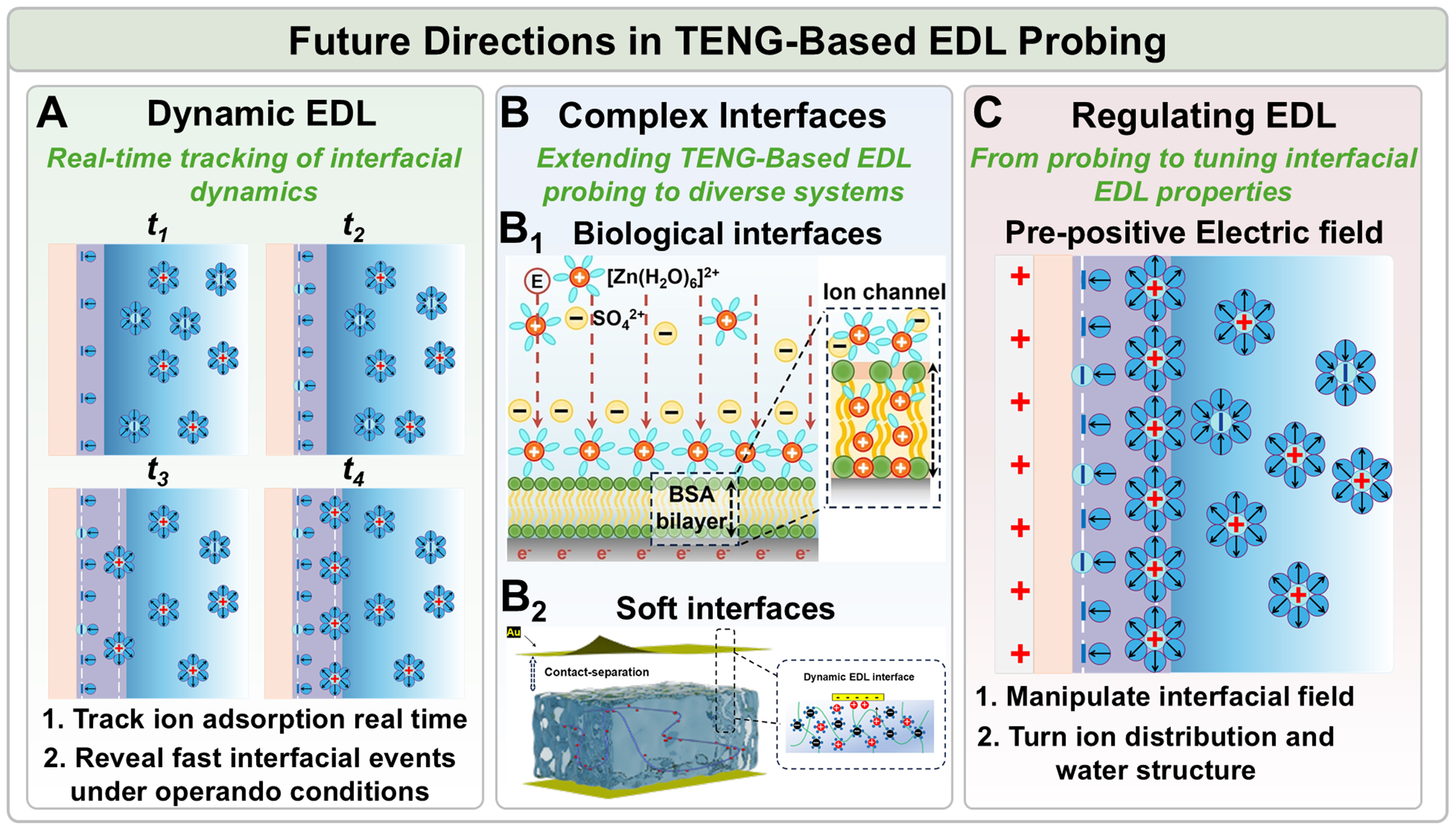
Figure 2. TENG-based operando probing of EDLs and future directions. (A) Evolution process of EDL formation; (B) Complex interfaces: B1: EDL at biological interfaces[36]. Reprinted with permission. Copyright 2024, WILEY-VCH; B2: EDL at soft interfaces[37]. Reprinted with permission. Copyright 2024, American Chemical Society; (C) Regulation of the EDL. TENG: Triboelectric nanogenerator; EDLs: electrical double layers; BSA: bovine serum albumin.
Despite these emerging opportunities, several fundamental challenges remain for triboelectric probing of dielectric EDLs. One major challenge lies in establishing rigorous quantitative relationships between triboelectric electrical responses and intrinsic interfacial EDLs. Triboelectric signals generally originate from strongly coupled nonequilibrium processes involving interfacial charge transfer, ionic screening, solvent polarization, interfacial mechanics, and electrostatic induction, making quantitative EDLs decoding highly challenging. From a theoretical perspective, an important and interesting future direction is the development of quantitative frameworks that couple dynamic mechanical boundary conditions with classical electrostatic models, such as the Poisson-Boltzmann formalism. Such approaches may enable the establishment of predictive relationships between triboelectric responses and fundamental EDL parameters, including Debye length and zeta potential. This direction holds significant promise for further advancing a unified understanding of interfacial electrostatic phenomena. In addition, triboelectric responses are highly sensitive to environmental humidity, electrolyte composition, interfacial geometry, and mechanical perturbation, which complicates reproducibility and cross-system comparison. Another critical challenge concerns spatiotemporal electrostatic accessibility. Dielectric interfacial EDLs continuously evolve across multiple temporal and spatial scales, whereas current triboelectric measurements predominantly provide averaged electrical responses. Developing localized operando probing strategies and integrating triboelectric interrogation with multimodal characterization techniques will therefore be essential for resolving transient interfacial EDL evolution under realistic operating conditions.
Overall, operando triboelectric probing establishes a fundamentally distinct framework for accessing, understanding, and actively regulating dynamically evolving dielectric interfacial EDLs. Triboelectric probing, beyond conventional electrode-based electrochemical techniques, offers a new approach for operando characterization of dynamically evolving EDLs in adaptive iontronic, soft matter, and biological systems.
DECLARATIONS
Authors’ contributions
Wrote the original draft: Wei, Y.; Li, X.
Supervised, reviewed, and revised the manuscript: Wei, D.
Availability of data and materials
Not applicable.
AI and AI-assisted tools statement
Not applicable.
Financial support and sponsorship
This work was supported by the National Natural Science Foundation (Grant No. 22479016) and China Postdoctoral Science Foundation (Certificate Number: 2025M781041 Li, X.).
Conflicts of interest
All authors declared that there are no conflicts of interest.
Ethical approval and consent to participate
Not applicable.
Consent for publication
Not applicable.
Copyright
© The Author(s) 2026.
REFERENCES
1. Greco, A.; Imoto, S.; Backus, E. H. G.; Nagata, Y.; Hunger, J.; Bonn, M. Ultrafast aqueous electric double layer dynamics. Science 2025, 388, 405-10.
2. Gonella, G.; Backus, E. H. G.; Nagata, Y.; et al. Water at charged interfaces. Nat. Rev. Chem. 2021, 5, 466-85.
3. Esfandiar, A.; Radha, B.; Wang, F. C.; et al. Size effect in ion transport through angstrom-scale slits. Science 2017, 358, 511-3.
4. Andersson, L.; Sprik, M.; Hutter, J.; Zhang, C. Electronic response and charge inversion at polarized gold electrode. Angew. Chem. Int. Ed. Engl. 2025, 64, e202413614.
5. Lin, K.; Lin, C. Y.; Polster, J. W.; Chen, Y.; Siwy, Z. S. Charge inversion and calcium gating in mixtures of ions in nanopores. J. Am. Chem. Soc. 2020, 142, 2925-34.
7. Helmholtz, H. On some laws governing the distribution of electric currents in conductors, with applications to experiments on animal electricity (in Germany). Ann. Phys. 1853, 165, 211-33.
8. Chapman, D. L. LI. A contribution to the theory of electrocapillarity. Philos. Mag. 1913, 25, 475-81.
9. Grahame, D. C. The electrical double layer and the theory of electrocapillarity. Chem. Rev. 1947, 41, 441-501.
10. Fedorov, M. V.; Kornyshev, A. A. Ionic liquids at electrified interfaces. Chem. Rev. 2014, 114, 2978-3036.
11. Merlet, C.; Péan, C.; Rotenberg, B.; et al. Highly confined ions store charge more efficiently in supercapacitors. Nat. Commun. 2013, 4, 2701.
12. Zhou, Y.; Su, M.; Yu, X.; et al. Real-time mass spectrometric characterization of the solid-electrolyte interphase of a lithium-ion battery. Nat. Nanotechnol. 2020, 15, 224-30.
13. Ma, H.; Li, S.; Wang, S.; Yang, W.; Han, J. Biomimetic all-wood sponge for the co-generation of adsorption-based atmospheric water harvesting and hydrovoltaic power generation. Research 2026, 9, 1195.
14. Lin, S.; Chen, X.; Wang, Z. L. Contact electrification at the liquid-solid interface. Chem. Rev. 2022, 122, 5209-32.
16. Wang, X.; Ivanov, A. P.; Edel, J. B. Biocompatible biphasic iontronics enable neuron-like ionic signal transmission. Research 2024, 7, 0294.
17. Zhuang, P.; Chen, L.; Zhang, Y.; et al. Solid-liquid interface lubricating hydrogels for tendon-bone healing. Research 2025, 8, 0924.
18. Wang, Z. L.; Wang, A. C. On the origin of contact-electrification. Mater. Today. 2019, 30, 34-51.
19. Lin, S.; Xu, L.; Chi Wang, A.; Wang, Z. L. Quantifying electron-transfer in liquid-solid contact electrification and the formation of electric double-layer. Nat. Commun. 2020, 11, 399.
20. Long, Y.; Zhao, B.; Liu, M.; Hu, W.; Pu, X. Smart hydrogel tactile sensors and systems: a comprehensive review. SmartSys 2025, 1, e70015.
21. Yin, J.; Jia, P.; Ren, Z.; et al. Recent advances in self-powered sensors based on ionic hydrogels. Research 2025, 8, 0571.
22. Zhang, J.; Lin, S.; Zheng, M.; Wang, Z. L. Triboelectric nanogenerator as a probe for measuring the charge transfer between liquid and solid surfaces. ACS. Nano. 2021, 15, 14830-7.
23. Zhang, J.; Lin, S.; Wang, Z. L. Triboelectric nanogenerator array as a probe for in situ dynamic mapping of interface charge transfer at a liquid-solid contacting. ACS. Nano. 2023, 17, 1646-52.
24. Zhang, J.; Wang, X.; Zhang, L.; Lin, S.; Ciampi, S.; Wang, Z. L. Triboelectric spectroscopy for in situ chemical analysis of liquids. J. Am. Chem. Soc. 2024, 146, 6125-33.
25. Terris, B. D.; Stern, J. E.; Rugar, D.; Mamin, H. J. Contact electrification using force microscopy. Phys. Rev. Lett. 1989, 63, 2669-72.
26. Sobarzo, J. C.; Pertl, F.; Balazs, D. M.; et al. Spontaneous ordering of identical materials into a triboelectric series. Nature 2025, 638, 664-9.
27. Wei, Y.; Li, X.; Gu, Y.; et al. Probing electrical double layer via triboelectric charge transfer. Nat. Commun. 2025, 17, 402.
28. Parsons, R. The electrical double layer: recent experimental and theoretical developments. Chem. Rev. 1990, 90, 813-26.
29. Lazanas, A. C.; Prodromidis, M. I. Electrochemical impedance spectroscopy - a tutorial. ACS. Meas. Sci. Au. 2023, 3, 162-93.
30. Polcari, D.; Dauphin-Ducharme, P.; Mauzeroll, J. Scanning electrochemical microscopy: a comprehensive review of experimental parameters from 1989 to 2015. Chem. Rev. 2016, 116, 13234-78.
31. He, Y.; Ren, H.; You, E. M.; et al. Polarization- and wavelength-dependent shell-isolated-nanoparticle-enhanced sum-frequency generation with high sensitivity. Phys. Rev. Lett. 2020, 125, 047401.
32. Zhao, H.; Li, X.; Lei, S.; et al. Quartz crystal microbalance (QCM)-based portable system for visualizing reaction kinetics in secondary chemistry education. J. Chem. Educ. 2025, 102, 3661-70.
33. Begin, E.; Rathnayake, S. T.; Wang, Y.; et al. Probing the structure of the electrochemical double layer at a platinum electrode coated with a metal–organic framework. J. Phys. Chem. C. 2025, 129, 2011-9.
34. Shi, L.; LaCour, R. A.; Qian, N.; et al. Water structure and electric fields at the interface of oil droplets. Nature 2025, 640, 87-93.
35. Nishi, N.; Uchiyashiki, J.; Ikeda, Y.; et al. Potential-dependent structure of the ionic layer at the electrode interface of an ionic liquid probed using neutron reflectometry. J. Phys. Chem. C. 2019, 123, 9223-30.
36. Lu, J.; Wang, T.; Yang, J.; et al. Multifunctional self-assembled bio-interfacial layers for high-performance zinc metal anodes. Angew. Chem. Int. Ed. Engl. 2024, 63, e202409838.
37. Ouyang, Y.; Li, X.; Li, S.; Wang, Z. L.; Wei, D. Ionic rectification by dynamic regulation of the electric double layer at the hydrogel interface. ACS. Appl. Mater. Interfaces. 2024, 16, 18236-44.
38. Park, S. Y.; Choi, S. J.; Kim, J. C.; Joe, D. J.; Lee, H. E. Self‐healable and conductive hydrogel nanocomposite with high environmental stability for electromagnetic‐interference‐free electrocardiography patches. Energy. Environ. Mater. 2025, 8, e70039.
39. Li, P.; Wang, H.; Ju, Z.; et al. Ti3C2Tx MXene- and sulfuric acid-treated double-network hydrogel with ultralow conductive filler content for stretchable electromagnetic interference shielding. ACS. Nano. 2024, 18, 2906-16.
Cite This Article
 Open Access
How to Cite
Download Citation
Export Citation File:
Type of Import
Tips on Downloading Citation
Citation Manager File Format
Type of Import
Direct Import: When the Direct Import option is selected (the default state), a dialogue box will give you the option to Save or Open the downloaded citation data. Choosing Open will either launch your citation manager or give you a choice of applications with which to use the metadata. The Save option saves the file locally for later use.
Indirect Import: When the Indirect Import option is selected, the metadata is displayed and may be copied and pasted as needed.
About This Article
Special Topic
Copyright

Data & Comments
Data
0











Comments
Comments must be written in English. Spam, offensive content, impersonation, and private information will not be permitted. If any comment is reported and identified as inappropriate content by OAE staff, the comment will be removed without notice. If you have any queries or need any help, please contact us at support@oaepublish.com.