



Interfacial engineering of Bi-based heterojunction for boosting photocatalytic nitrogen fixation: a perspective review
 0
0 Abstract
Photocatalytic ammonia synthesis, which leverages solar energy to convert nitrogen and water into ammonia, presents a sustainable and environmentally friendly alternative to the energy-intensive Haber-Bosch process. However, the effective activation of the particularly strong N≡N bond remains a significant challenge. Bismuth (Bi)-based materials have been identified as promising photocatalysts due to their strong absorption of visible light, high nitrogen adsorption capacity, and low toxicity. To further improve their photocatalytic performance, extensive research has been directed toward the design of Bi-based heterojunctions. This review highlights the essential and often decisive influence of heterojunction interface engineering in enhancing photocatalytic nitrogen fixation performance. Unlike traditional heterojunction construction, precise interfacial engineering - including the development of built-in electric fields, chemical bonds at the interface, atomic-scale charge transfer pathways, and defect-mediated active sites can fundamentally modulate charge separation, promote N2 adsorption and activation, and enhance structural stability. A systematic summary of recent advancements in various Bi-based heterojunctions (e.g., Type II, Z-scheme, and S-scheme) is provided, with particular emphasis on how interface design governs reaction mechanisms and catalytic efficiency. Finally, current challenges and future perspectives are discussed to inform the rational design of high-performance catalysts and to further the development of photocatalytic nitrogen fixation through interface-focused strategies.
Keywords
INTRODUCTION
As an essential precursor to synthetic fertilizers, ammonia (NH3) serves as a cornerstone of modern intensive agriculture. Its widespread production and application substantially enhance crop yields, thereby playing a critical role in supporting global food security and sustaining a growing population[1-3]. Currently, industrial-scale ammonia production relies almost exclusively on the Haber-Bosch process, which meets global demand but poses significant scientific and environmental challenges[4-6]. The core scientific hurdle lies in the reduction of molecular nitrogen (N2) to NH3, a reaction hindered by the exceptionally high dissociation energy of the N≡N triple bond (941 kJ·mol-1)[7-9]. To overcome this kinetic and thermodynamic barrier, the Haber-Bosch process employs iron-based catalysts under harsh conditions (400-500 °C,
Photocatalytic nitrogen fixation has emerged as a promising pathway that operates at ambient conditions using solar energy. Unlike the dissociative mechanism of Haber-Bosch synthesis, the photocatalytic system often follows an associative pathway [with an overpotential ~0.4-0.5 V vs. Reversible Hydrogen Electrode (RHE) in alkaline media], which enables the stepwise hydrogenation of N2 without cleaving the N≡N bond prematurely[12,13]. This mechanism preserves the N-N bond until the final reaction stages, thereby significantly decreasing the energy input. Since the pioneering work by Schrauzer on TiO2 in 1977[14], research efforts have intensified to develop efficient, stable, and cost-effective photocatalysts for driving this reaction under solar illumination. Nevertheless, their ammonia yields remain far below those achieved by the Haber-Bosch process. This stems mainly from the following severe challenges: (i) ultrafast recombination of photogenerated carriers results in most electrons being lost before they reach the surface[15,16], (ii) a single-component semiconductor can hardly satisfy both broad-spectrum light absorption and sufficient reduction driving force simultaneously, leading to poor solar energy utilization[17], (iii) the extreme inertness of the N≡N triple bond demands highly active chemisorption and electron-injection sites on the catalyst surface[8], (iv) the competing hydrogen evolution reaction (HER) almost always takes precedence in aqueous media, severely undermining the selectivity for nitrogen fixation[18], (v) Photocorrosion and structural instability limit the long-term use of many otherwise high-performance materials[19]. These challenges are intertwined and collectively hinder the practical application of photocatalytic nitrogen fixation.
To date, numerous photocatalysts have been developed, including oxides (e.g., WO3[20,21], MnOx[22,23], CeO2[24-26], etc.), sulfides (e.g., Bi2S3[27-29], ZnCoSx[17,30], etc.), metal-organic frameworks (MOFs)[31-33], High-entropy alloys[34], and layered double hydroxides[35-37]. Among them, bismuth-based semiconductors (e.g., Bi2O3[38], BiOCl[39-41], Bi2MoO6[42-44], Bi-MOFs[45], etc.) demonstrate excellent visible light absorption, strong N2 adsorption capacity, and eco-friendly properties, making them superior to traditional catalysts like TiO2[46-48] and g-C3N4[49-52] in photocatalytic nitrogen fixation. To further enhance their performance, strategies such as defect engineering[53,54], elemental doping[55-57], and heterojunction construction[18] have been explored. Heterojunctions represent a pivotal structural strategy for enhancing catalytic performance, formed by integrating bismuth-based semiconductors with other semiconductors possessing matched or complementary work functions to create a synergistic composite system. It is worth mentioning that high-entropy materials often form dual-phase or multiphase structures, naturally generating abundant heterojunction interfaces. This provides unique opportunities to regulate interfacial charge transfer and to activate the N≡N bond. Future research on bismuth-based heterojunctions could also benefit from coupling with high-entropy components to achieve enhanced synergistic photocatalysis.
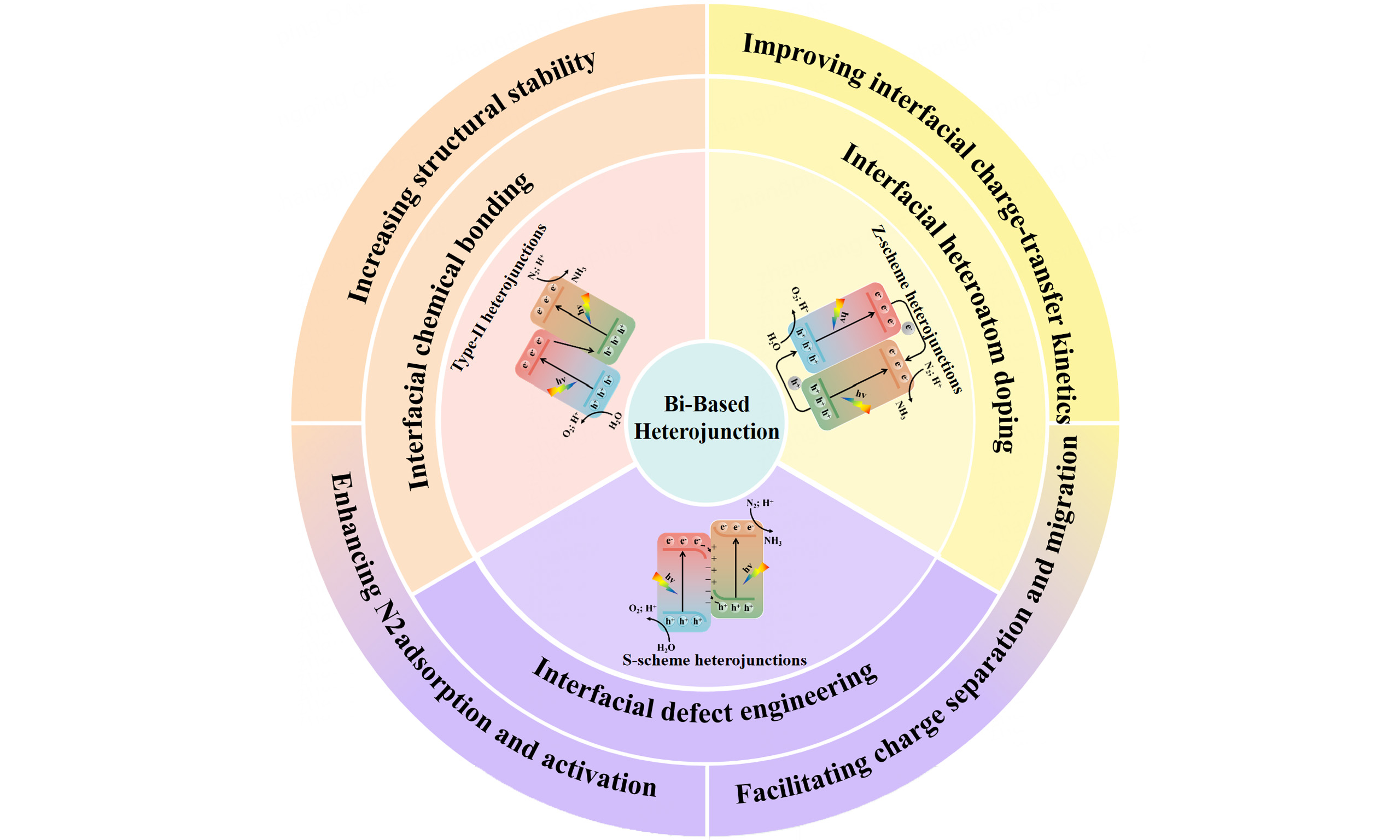
Through precise interfacial engineering, heterojunctions improve catalytic behavior across multiple aspects: a built-in electric field and interfacial chemical bonding facilitate efficient charge-transfer channels, promoting directional separation and migration of photogenerated charge carriers while suppressing their recombination. Interfacial atomic reconstruction and electron redistribution further generate dedicated active sites, which strengthen the adsorption and activation of reactants and, collectively, lower the reaction energy barrier[58]. Moreover, appropriate energy-level alignment at the heterojunction integrates the light-harvesting properties of the individual semiconductors, broadening the photoresponse from the ultraviolet to the visible and even the near-infrared regions. When combined with interfacial plasmon resonance and light-scattering effects, this configuration enhances light absorption and increases the yield of photogenerated charges. Interfacial chemical bonding inhibits component dissolution, phase transformation, and aggregation, thereby extending catalyst durability[59]. Xu et al.[60] induce precisely controlled decomposition of the organic ligands in CoV-MOF, thereby creating abundant ligand defects and undercoordinated active sites within the metal-organic framework. These defect sites exhibit strong interactions with V5+ ions on the BiVO4 surface, significantly enhancing the bonding strength of the interfacial V-O coordination bonds. This robust interfacial bonding effectively anchors V5+ ions in the BiVO4 lattice, blocking the V5+ leaching pathway triggered by photogenerated holes and thus fundamentally suppressing vanadium ion dissolution and loss during the reaction. Lv et al.[61] constructed a Bi atomic-layer-bonded interface via an in situ anion exchange method. The O-Bi-S bonds at the interface provide a strong built-in electric field and efficient electron-transport channels, enabling the atomic-layer-bonded interface to serve as a charge-transfer pathway. This results in robust interfacial coupling and ultrahigh structural stability, effectively suppressing phase separation and component agglomeration during photocatalytic reactions. Redistribution of interfacial charge also helps moderate surface redox activity, thereby reducing photo-corrosion and chemical degradation and improving cycling stability[62].
This review systematically summarizes recent advances in Bi-based heterojunction photocatalysts for nitrogen fixation. Our discussion focuses on the critical role of interfacial engineering in Type-II, Z-scheme, and S-scheme heterojunctions, as well as strategies to enhance ammonia production through precise interfacial design. Finally, we discuss current challenges and future directions, providing a roadmap for developing efficient and sustainable bismuth-based photocatalysts for large-scale nitrogen fixation and a greener energy future.
MECHANISM INSIGHTS TOWARD PHOTOCATALYTIC NITROGEN FIXATION
Understanding how photocatalytic nitrogen fixation works is important for designing better catalysts. There are two main mechanisms: dissociation and association. In the dissociation mechanism, the strong N≡N triple bond breaks completely before any hydrogenation, producing individual nitrogen atoms that are then protonated. This method is used in the traditional Haber-Bosch process. However, at room temperature and atmospheric pressure, breaking the N≡N bond (which requires about 941 kJ·mol-1) is kinetically very difficult. For the Bi-based photocatalysts studied here, experiments and calculations indicate they favor an associative pathway rather than full dissociation. In this mechanism, the N-N single bond remains intact during the early hydrogenation steps, which can proceed along two different routes, as shown in Figure 1. One branch is the distal mechanism: the far nitrogen gets hydrogenated one step at a time, after which the N-N bond breaks. The other branch is the alternating mechanism, where both nitrogen atoms are hydrogenated in a stepwise fashion until the N-N bond finally cleaves, releasing two ammonia molecules[63,64].
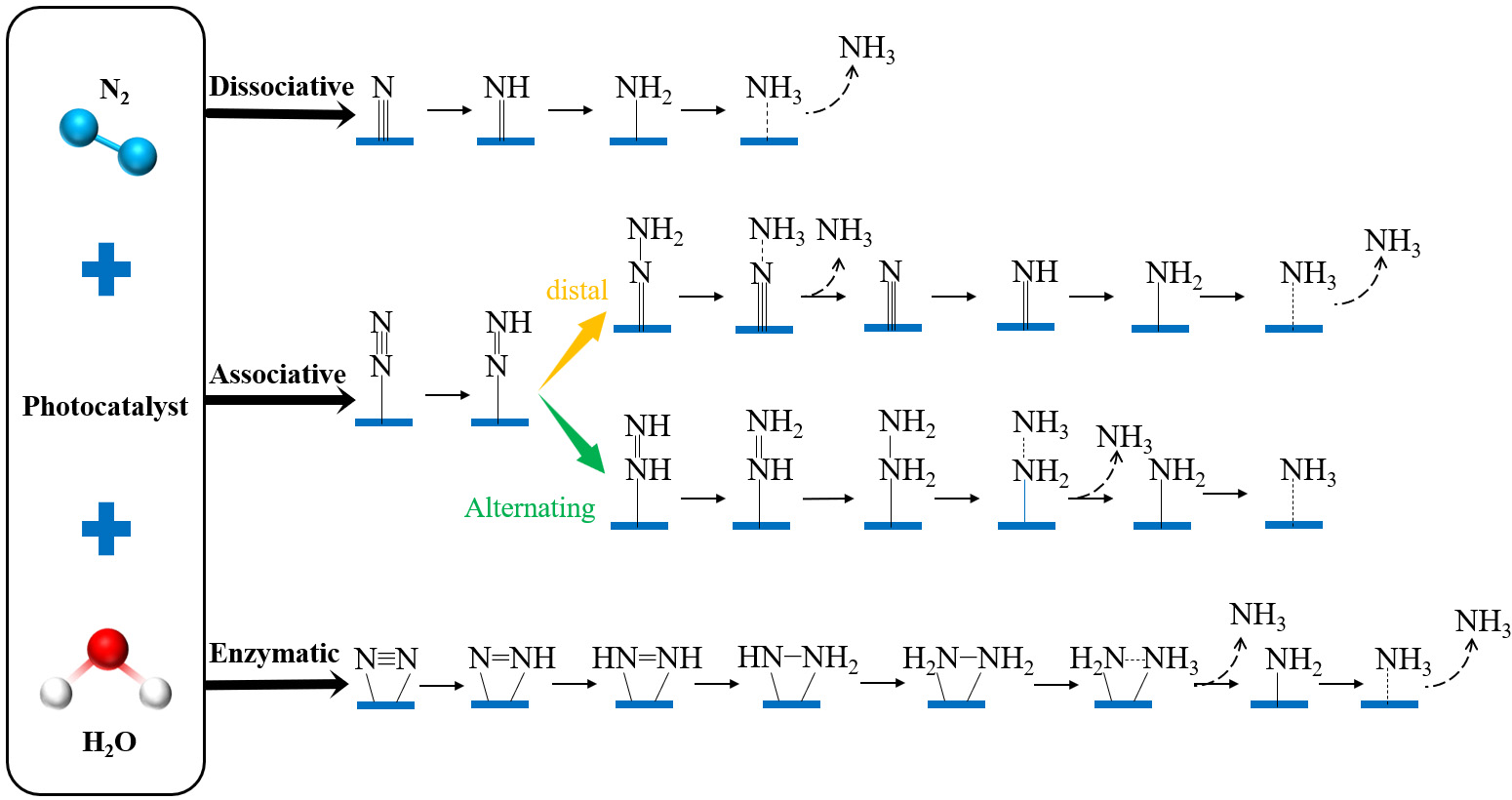
Figure 1. Various pathways for forming catalysts on photocatalysts.
The photocatalytic nitrogen fixation mechanism is initiated by the photoexcitation of electrons (e-) from the valence band (VB) to the conduction band (CB) under solar irradiation, resulting in the formation of electron-hole (e--h+) pairs. Subsequently, the resulting charge carriers are separated and migrate to the catalyst surface. There, N2 molecules are adsorbed onto active sites, such as metal centers, Lewis acid-base pairs, or defect sites. The adsorb N2 subsequently undergoes multiple steps of proton-coupled electron transfer (PCET). The hydrogenation proceeds via a distal pathway, involving intermediates such as *NNH, *NNH2, *NH, *NH2, or via an alternating pathway, involving intermediates such as *NNH, *NHNH, *NHNH2, *NH2NH2. Finally, upon desorption of the produced NH3 from the catalyst surface, the active sites are regenerated, and the catalytic cycle can repeat[65,66]. In the photocatalytic nitrogen fixation process, the reduction potentials are required to generate key active intermediate sites, as shown in Figure 2. Bismuth-based semiconductor catalysts exhibit sufficiently negative reduction potentials to drive the critical formation of the *N2H intermediate, a pivotal step in the Photocatalytic Nitrogen Fixation (PNF) pathway. The efficiency of this reaction can be further enhanced by optimizing the bandgap structure of bismuth-based photocatalysts (e.g., by reducing the bandgap), introducing structural defects such as oxygen vacancies (OVs), or increasing the density of surface-active sites[67,68].
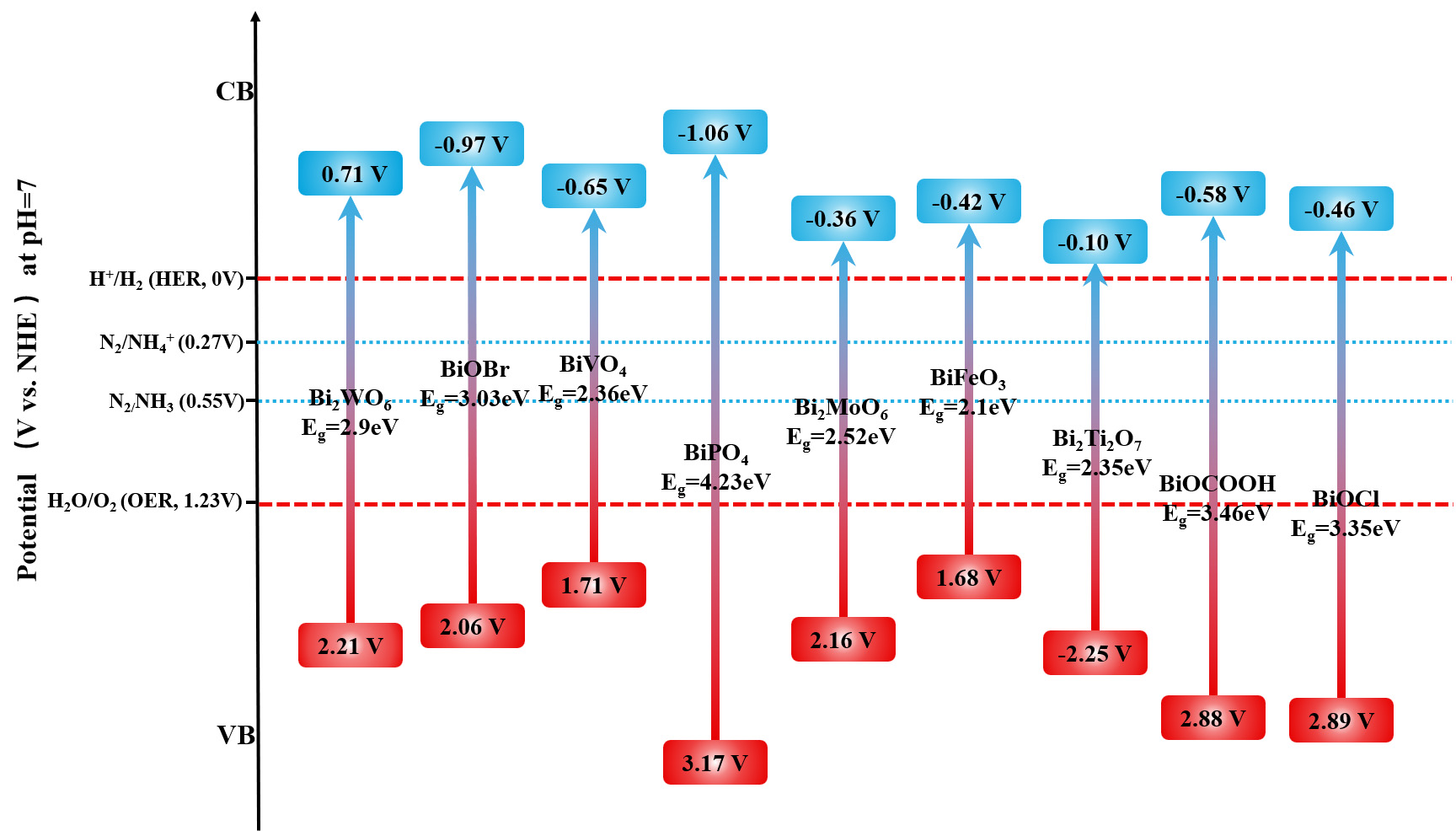
Figure 2. Energetic feasibility for N2 reduction: conduction band positions of bismuth-based semiconductors against relevant redox couples. HER: Hydrogen evolution reaction; OER: oxygen evolution reaction; CB: conduction band; VB: valence band; NHE: normal hydrogen electrode.
RATIONAL DESIGN OF EFFICIENT PHOTOCATALYST FOR NITROGEN FIXATION
The design of high-performance photocatalytic nitrogen fixation catalysts requires integrating photocatalysis principles with nitrogen activation mechanisms to enhance solar energy utilization, strengthen nitrogen adsorption/activation, and improve product selectivity[69]. The successful formation of heterojunctions relies on both fundamental conditions. Fundamental prerequisites include selecting semiconductors with distinct physical properties and chemical compatibility[20]. Crystal structure matching is critical; mismatched structures can lead to defective interfaces or even prevent heterojunction formation. Moreover, the semiconductors must achieve intimate contact, ideally through epitaxial growth or other advanced synthesis techniques, to form a coherent and stable interface[69]. Ideal conditions include lattice matching and exposure of highly reactive crystal facets. Different crystal facets exhibit distinct atomic arrangements and electronic structures, significantly influencing catalytic behavior. Efficient charge-transfer channels can be established between the two semiconductors by aligning their highly active crystal facets, thereby enhancing interfacial charge separation[70]. It is essential to form an atomically tight interface rather than simple physical mixing to avoid delamination or collapse during reactions, which would compromise the unique electronic structure and physicochemical properties that endow them with enormous application potential in photocatalysis, photo electrocatalysis, and other applications. In an ideal material pairing, at least one semiconductor should possess a strong visible-light absorption capacity to maximize solar energy harvesting[62]. Furthermore, the heterojunction structure should be designed to improve overall chemical stability and anti-photo corrosion properties[20].
Crystal engineering and architectural design of Bi-based catalysts
Bismuth-based catalysts have attracted significant attention due to their applications in energy-related fields. Based on their crystal structures, these catalysts can be primarily classified into four categories.
Layer-like structural bismuth oxyhalides
Layered bismuth oxyhalides (commonly denoted as BiOX, where X = Cl, Br, I) are typical representatives of this structural family. Their crystal structure consists of alternating cationic Bi2O22+ layers and anionic halogen ion (X-) slabs[71], which are stacked through weak van der Waals interactions, as shown in Figure 3A. This structural configuration yields a relatively high specific surface area along with abundant exposed active sites. Meanwhile, the band gap progressively narrows as the atomic number of the halogen increases (Eg, BiOCl > BiOBr > BiOI), thereby enhancing visible-light absorption. Notably, the weak interlayer bonding allows facile modification of bismuth oxyhalides through strategies such as ion exchange or intercalation (e.g., incorporation of organic molecules or metal nanoparticles). Moreover, an intrinsic static electric field is established between the positively charged Bi2O22+ layers and the negatively charged X- layers[39], which facilitates the separation of photogenerated electrons (e-) and holes (h+) while suppressing their recombination. Charge transport exhibits strong anisotropy: electrons migrate predominantly within the layers (perpendicular to the c-axis), whereas holes transport across the interlayer space, thereby improving charge carrier utilization efficiency. The layered architecture of bismuth oxyhalides offers versatile routes for material engineering, including heterojunction construction, surface defect incorporation, and morphological nanostructuring[72,73].
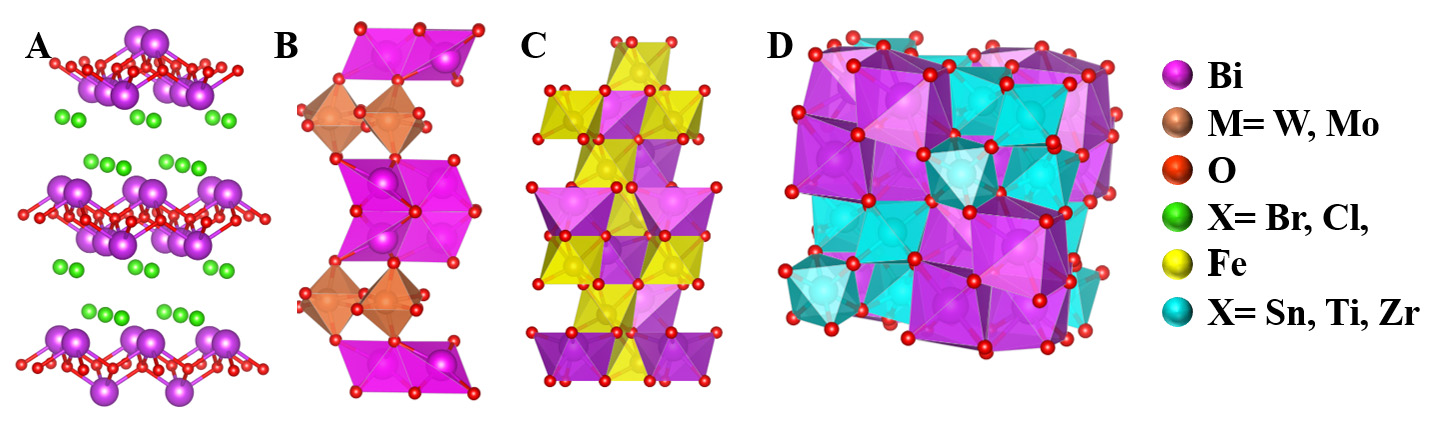
Figure 3. Typical crystal structure and energy-band structures of key bismuth-based catalysts. (A) Perovskite-like layered structure of BiOX (X = Cl, Br, I), (B) Bi2MO6 (M = W, Mo), (C) ABO3, (D) Bi2X2O7 (X = Sn, Ti, Zr).
Perovskite-like structural Bi-based semiconductor
Bi2MoO6 and Bi2WO6 are layered Aurivillius-type oxides, consisting of alternating stacks of positively charged Bi2O22+ layers and perovskite-like MO66- slabs (M = Mo, W), as shown in Figure 3B. The 6s2 lone-pair electrons of Bi3+ ions, being stereochemically active, give rise to spontaneous polarization, generating a strong internal electric field between the layers. This built-in field effectively promotes the unidirectional separation of photogenerated charge carriers, with electrons moving toward the perovskite-like slabs and holes toward the Bi2O22+ layers, thereby significantly suppressing recombination[74]. These materials exhibit a moderate band gap (approximately 2.4-2.9 eV), providing good visible-light absorption. The weak interlayer interactions facilitate interlayer charge transfer, enabling fast movement of photogenerated electrons from the perovskite-like slabs toward surface N2 adsorption sites and reducing carrier recombination. The layered architecture provides abundant surface-active sites, and hybridization between Bi 6s and N 2p orbitals improves the kinetics of nitrogen chemisorption and activation. Specifically, in Bi2MoO6, significant distortion of the MoO6 octahedra synergizes with the lone pair effect of Bi3+, reinforcing the internal electric field[42]. In Bi2WO6, the distortion of the WO6 octahedra is less pronounced; however, its ultrathin nanosheet morphology shortens charge migration pathways, further suppressing bulk recombination and exposing more active facets. Although interlayer coupling is relatively strong, strategies such as constructing heterojunctions can effectively tailor their catalytic performance[75].
Bismuth-based perovskite-structured semiconductors
Perovskites have the general formula ABO3, as shown in Figure 3C. In bismuth-based catalysts, bismuth (Bi) can occupy different sites (e.g., Bi0.5Na0.5TiO3 and SrBiO3). In either position, its inclusion fundamentally alters the material’s intrinsic properties. The bismuth ion (Bi3+) has a stereochemically active 6s2 lone pair of electrons. At the A-site, this lone pair induces pronounced local lattice distortion, breaking centrosymmetry. The distortion can generate internal electric fields and destabilize lattice oxygen, promoting oxygen vacancy formation. When bismuth occupies the B-site in higher valence states (e.g., Bi4+/Bi5+), it acts as a direct catalytic center. The Bi3+/Bi5+ redox couple provides efficient electron-transfer pathways for reactions. Notably, some bismuth-based perovskites (e.g., BiFeO3[76,77]) may undergo surface corrosion under mild conditions, leading to bismuth dissolution and the in situ formation of a highly active (hydr)oxide layer. This self-reconstruction creates a core-shell architecture: a stable perovskite core serves as a conductive skeleton, while the surface (hydr) oxide provides abundant active sites.
Pyrochlore structural bismuth-based semiconductor
Pyrochlore-structured materials, exemplified by Bi2X2O7 (X = Sn, Ti, Zr), feature a three-dimensional network composed of alternating Bi2O22+ layers and oxygen-based anionic groups, as shown in Figure 3D. In this structure, Bi3+ ions adopt an eight-coordinate geometry, while X4+ ions occupy distinct crystallographic sites[78-81]. The good match in ionic radii between the cations, combined with their linkage via oxygen bridges, confers excellent thermal and chemical stability to the framework. These materials exhibit a moderate band gap (typically 2.0-3.0 eV), fulfilling essential criteria for photocatalytic nitrogen fixation. Cation vacancies and a continuous oxygen-coordination network serve as efficient pathways for the transport of photogenerated electrons. Oxygen vacancies, as a prominent type of surface defect, function as active sites for nitrogen adsorption and activation. They promote N≡N bond cleavage by destabilizing the triple bond, thereby reducing the kinetic barrier for subsequent reduction[82]. Furthermore, pyrochlore-type compounds are often coupled with semiconductors such as TiO2 and g-C3N4 to form heterojunctions[83,84]. This approach extends the light-harvesting range and leverages the interfacial internal electric field to promote charge separation, leading to enhanced.
Overall photocatalytic efficiency. The structure also exhibits considerable tolerance to doping and defects, allowing its electronic structure and catalytic activity to be systematically tuned through compositional design.
Interface engineering in bismuth‑based heterojunctions
Interface engineering is a pivotal strategy for optimizing the nitrogen‑fixation performance of bismuth‑based photocatalysts. By precisely tailoring the structure, electronic states, and interactions at heterojunction interfaces, it systematically addresses critical challenges, including inefficient carrier separation and inadequate N2 activation. The primary roles of interface engineering can be summarized as follows: (i) Facilitating charge separation and migration: Intrinsic electric fields or directional charge-transport pathways are established at the interface, enabling the spatial decoupling of photogenerated charge carriers and their accumulation at nitrogen-reduction and water-oxidation sites, respectively[85]; (ii) enhancing N2 adsorption and activation: The interfacial chemical microenvironment is optimized to enhance N2 binding and destabilize the N≡N triple bond, thereby lowering the activation energy barrier[86]; (iii) improving interfacial charge‑transfer kinetics: Intimate interfacial contact reduces the barrier to charge transfer and considerably facilitates carrier transport across the interface[87,88]; (iv) increasing structural stability: Interfacial modification or composite formation suppresses the loss or deactivation of active components, extending the operational lifetime of the catalyst[89].
The routes for improving the nitrogen fixation performance of bismuth-based photocatalysts through interface engineering include: (i) Controlled introduction of defects, especially OVs[90-92], which modulate interfacial electronic states and adsorption behavior. OVs shift the conduction band minimum (CBM) of bismuth-based semiconductors negatively, improve N2 reduction capability, and induce localized charge accumulation that reinforces the built-in electric field. Defect sites also serve as selective adsorption centers for N2, lengthening the N≡N bond and lowering the activation barrier. Synergy between defects and Bi3+ sites creates dual-active centers. Simultaneously, shortened charge-transfer pathways caused by defects and increased band bending further inhibit carrier recombination. While oxygen vacancy engineering can significantly enhance light absorption, charge separation, and small-molecule activation in bismuth-based photocatalysts, excessive oxygen vacancy concentrations lead to significant lattice distortion and diminished crystallinity. Under such conditions, an overabundance of defects can serve as centers for recombination of photogenerated carriers, intensifying electron-hole recombination and decreasing charge-migration efficiency. Additionally, a high density of oxygen vacancies compromises the material’s structural stability, making the vacancies more prone to filling, which can lead to corrosion and catalyst deterioration. It also disrupts band energy alignment, weakening the driving force for redox reactions. Ultimately, these negative effects collectively result in a comprehensive decline in catalytic activity, selectivity, and cycling stability[93]; (ii) Interfacial chemical bonding[58,94].Constructing atomically precise chemical linkages across the interface creates “barrier-free” charge-transfer channels, lowering the energy barrier for carrier migration. The reinforced built-in electric field enables oriented charge flow and improves interfacial stability. Chemical bonds can also engage in secondary interactions with reaction intermediates (e.g., *N2, *NNH, *NH2), stabilizing transition states and reducing the energy barriers of hydrogenation steps. Moreover, chemically bonded proton-transfer pathways facilitate H+ delivery to active sites; (iii) Interfacial heteroatom doping[44]. Introducing metal or non-metal heteroatoms tunes the interfacial electronic structure and the distribution of active sites. Metal dopants introduce electrons into the N2 antibonding orbitals[39], compromising the N≡N bond, while non-metal atoms form covalent bonds that adjust local charge density. Furthermore, metal sites can create additional active centers that cooperate with Bi3+, whereas non-metal atoms help anchor OVs, preventing their aggregation and enhancing N2 adsorption. Doping also introduces defect levels that broaden light absorption and optimize band alignment.
Design and construction of Bi-based heterojunction
Constructing heterojunctions effectively promotes charge separation and migration in bismuth-based photocatalysts[95]. By coupling semiconductors with different Fermi level (EF), spontaneous electrons transfer from the lower work function (or ionization energy)[96]. Common types of heterojunctions encompass conventional, Z-scheme, and S-scheme heterojunctions. Traditional heterojunction photocatalysts are typically categorized into three groups, as shown in Figure 4A-C: Type-I (straddling gap), Type-II (staggered gap), and Type-III (broken gap). In traditional heterojunctions, the Type-I structure tends to promote charge recombination due to carrier confinement[97]. In contrast, the Type-III configuration, with its non-overlapping band structures, hinders interfacial charge transfer and cooperative redox reactions. In contrast, the Type-II heterojunction stands out as the most effective approach, as its structure facilitates the spatial separation of electron-hole pairs, thereby enhancing photocatalytic activity[98]. Upon photoexcitation of the Z-scheme heterojunction, electrons and holes are generated in the CB and VB of both photocatalyst II (PS II) and photocatalyst I (PS I)[99]. The photogenerated electrons in the CB of PS II then migrate to the VB of PS I via redox shuttles. This transfer results in the retention of highly oxidizing holes in the VB of PS II and highly reducing electrons in the CB of PS I, as shown in Figure 4D. These charge carriers can subsequently drive oxidation and reduction reactions on the photocatalyst surface[100]. In an S-scheme heterojunction, an oxidation semiconductor (OP) is coupled with a reduction semiconductor (RP), as shown in Figure 4E. The difference in their EF causes electrons from the RP to migrate toward the OP at the interface. When equilibrium is reached, the OP becomes negatively charged and the RP positively charged. This process leads to band bending at the interface and generates an internal electric field between the two semiconductors. Consequently, the combined action of the internal electric field and band bending prevents electrons from the RP’s conduction band from flowing into the OP’s conduction band, thereby facilitating the spatial separation of the electron-hole pairs[101-104].
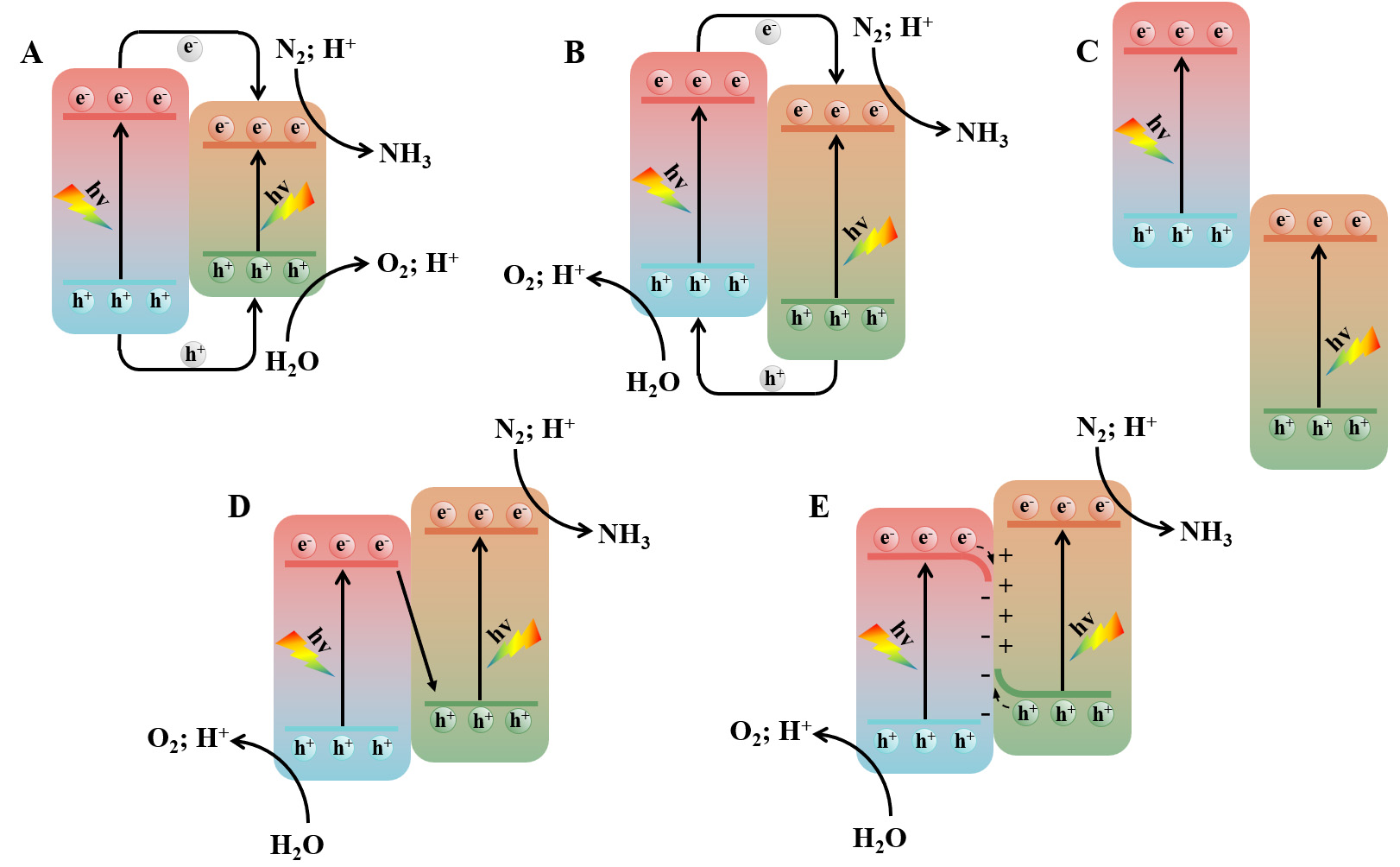
Figure 4. (A) Type-Ⅰ heterojunction; (B) Type-II heterojunction; (C) Type-Ⅲ heterojunction; (D) Z-scheme heterojunction; (E) S-scheme heterojunction.
Type-II heterojunction
In a Type II heterojunction, the energy bands of the two semiconductors are staggered, creating a mismatched alignment. Photogenerated electrons tend to move from the semiconductor with a higher CBM to the one with a lower CBM. Conversely, photogenerated holes migrate from the semiconductor with a lower valence band maximum (VBM) to the one with a higher VBM. This spatial separation of charges effectively reduces bulk recombination of electron-hole pairs and markedly extends carrier lifetimes - an important benefit of Type II heterojunctions in photocatalytic applications.
However, this charge separation incurs a reduction in some redox potential. Specifically, electrons localize on the semiconductor with a higher CBM (indicating a weaker reduction ability), while holes accumulate on the semiconductor with a lower VBM (indicating a weaker oxidation ability). Consequently, electrons and holes tend to become confined at sites where their reducing and oxidizing capabilities are comparatively limited. This results in a decreased driving force per charge carrier, despite an increased number of carriers available for surface reactions. Therefore, designing a Type II heterojunction requires balancing charge-separation efficiency with maintaining adequate redox potentials. When the band alignment of the two semiconductors is properly matched - even if electrons transfer to a slightly less favorable reduction site - the conduction band minimum can still be positioned above the thermodynamic potential needed for specific reactions such as N2 reduction to NH3[37]. In this case, photocatalytic efficiency is greatly enhanced while ensuring the reaction proceeds.
Constructing a Type-II heterojunction requires precise calculation and design of the band positions of the two semiconductors to achieve an ideal staggered alignment. Moreover, it is essential to form intimate, large-area heterointerfaces, such as core-shell structures or layered composites, to provide ample channels for the directional migration of electrons and holes. The synthesis process must be finely controlled to minimize interfacial defects, since the core of interface engineering in Type-II heterojunctions lies in ensuring good physical contact and proper band alignment while suppressing interfacial defects[101]. Table 1 summarizes data on type-II heterojunctions over the past few years.
Bi-based type-II heterojunction for N2 reduction to NH3
| Photocatalyst | Light source | Scavenger | Performance (μmol·g-1·h-1) | Catalyst loading (mg) | Reaction volume (mL) | Ref. |
| Vo-Bi12O17Br2/ZnCr-LDHs | 300 W Xe lamp | H2O | 286.0 | 50 | 100 | [37] |
| Bi4O5Br2/CdWO4 | 300 W Xe lamp | CH3OH/H2O | 501 | 100 | 200 | [105] |
| α-Bi2O3-Bi3O4Br | 300 W Xe lamp | CH3OH/H2O | 238.7 | 15 | 15 | [106] |
| Bi@BiOBr–Bi2MoO6 | 300 W Xe lamp | H2O | 167.2 | 10 | 100 | [107] |
| BrO3--Bi2O3/Bi(OH)3 | 300 W Xe lamp | H2O | 45.28 | 50 | 100 | [108] |
| KNbO3/Bi4O5Br2 | 300 W Xe lamp | CH3OH/H2O | 89.4 | 100 | 100 | [109] |
| g-C3N4/Bi2MoO6 | 500 W Xe lamp | C2H5OH/H2O | 1,090 | 40 | 40 | [110] |
| BiPO4/Bi4O5Br2 | 300 W Xe lamp | CH3OH/H2O | 370 | 100 | 100 | [111] |
| Bi12O17Cl2/BiOCOOH/Bi2MoO6 | 300 W Xe lamp | H2O | 107.78 | 15 | 15 | [112] |
| BiOBr-Vo/MIL-101(Fe)-F | 300 W Xe lamp (λ ≥ 420 nm) | H2O | 80.9 | 2 | 5 | [113] |
BiPO4 is a low-cost, non-toxic, and chemically stable Ultraviolet-Visible (UV)-responsive photocatalyst with activity surpassing that of TiO2. It has been widely employed as a cocatalyst to promote charge separation in a heterostructure. Zhao et al.[111] synthesized a BiPO4/Bi4O5Br2 composite photocatalyst via a simple solvothermal method, constructing a Type II heterojunction at the interface. Due to the higher Fermi level of
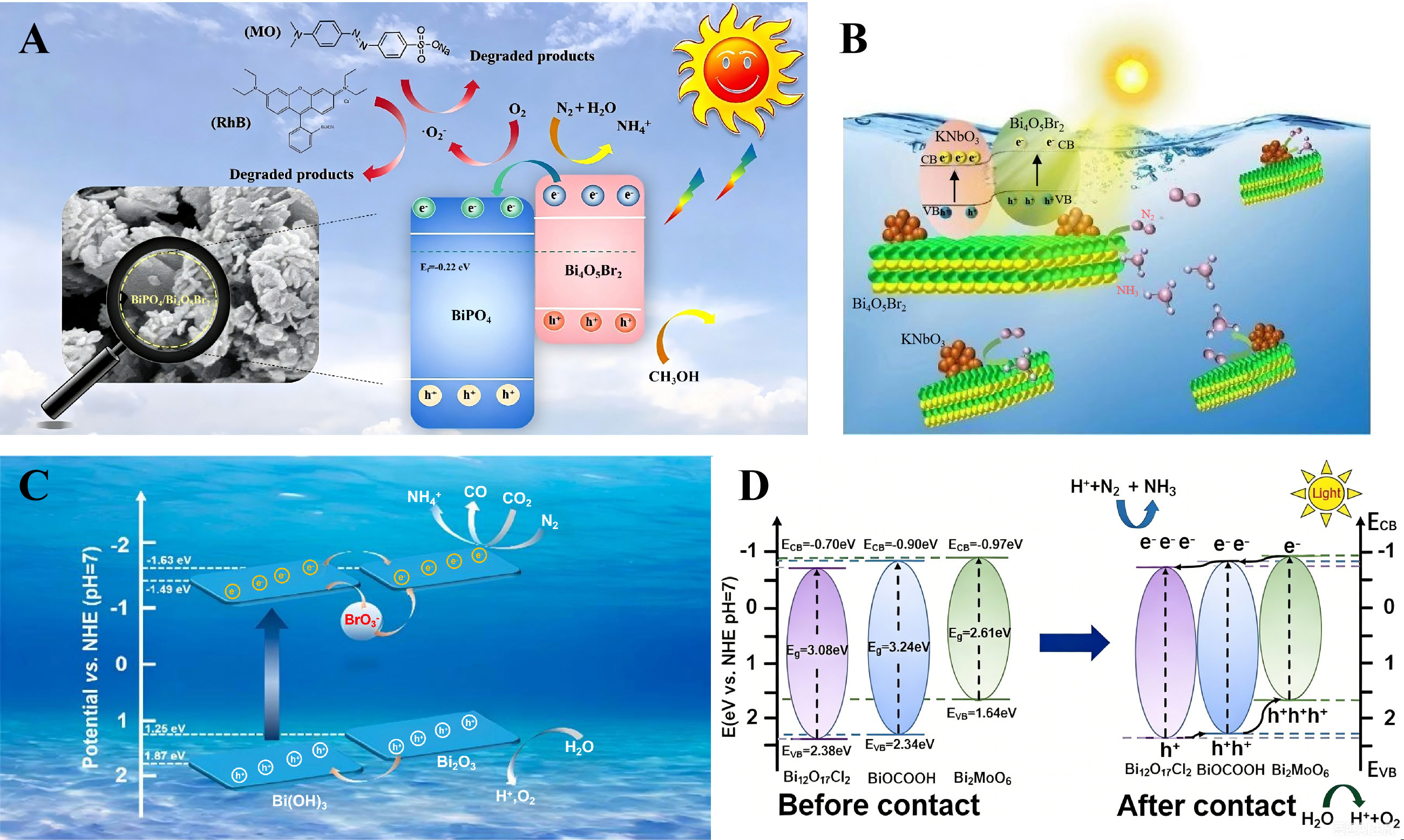
Figure 5. (A) Photocatalytic mechanisms of BiPO4/Bi4O5Br2. (Reproduced with permission from[111], Copyright 2023, Elsevier); (B) Photocatalytic mechanisms of KNbO3/Bi4O5Br2. (Reproduced with permission from[109]. Copyright 2024, Higher Education Press and Springer Nature; (C) Photocatalytic mechanisms of BrO3--bridged Bi2O2/Bi(OH)2. (Reproduced with permission from[108]. Copyright 2023, American Chemical Society; (D) Photocatalytic mechanisms of Bi12O17Cl2/BiOCOOH/Bi2MoO6. (Reproduced with permission from[112]. Copyright 2024, Elsevier). NHE: Normal hydrogen electrode.
Other bismuth-based semiconductors, such as BiOBr, Bi2WO6, Bi2MoO6, and Bi(OH)3, have also shown promise in photocatalysis. Among them, bismuth hydroxide [Bi(OH)3] exhibits notable activity, but its wide bandgap (3.40 eV) restricts light absorption to the UV region. To address this, Liu et al.[108] synthesized a BrO3--bridged Bi2O3/Bi(OH)3 heterojunction via a hydrothermal method under strongly alkaline conditions. At the interface, BrO3- forms a Bi-BrO3--O-Bi structure that serves as an effective charge-transfer bridge. This configuration captures photogenerated electrons from the conduction band of Bi2O3, facilitating the reduction of Br and increased local electron density, as shown in Figure 5C. Consequently, charge transport resistance is reduced, and interfacial charge-transfer efficiency is significantly enhanced. Cao et al.[112] constructed a ternary Bi12O17Cl2/BiOCOOH/Bi2MoO6 heterojunction via a one-step synthesis under mild conditions, achieving both heterojunction formation and the introduction of oxygen vacancies. Bi12O17Cl2 nanoparticles are uniformly deposited onto the precursor surface without altering its morphology, forming an intimate interfacial contact with no physical gaps. In term of charge transfer, electrons migrate sequentially from the CB of Bi2MoO6 to those of BiOCOOH and Bi12O17Cl2 in a stepwise energy increase, while holes transfer in the reverse direction, moving from the VB of Bi12O17Cl2 to BiOCOOH and Bi2MoO6, enabling effective spatial separation of charge carriers., enabling effectively spatial separation of charge carriers, as shown in Figure 5D.
Using an in-situ solvothermal approach, Xue et al.[114] decorated Bi2MoO6 nanorods with oxygen vacancy-rich p-type BiOBr nanosheets (OV-BiOBr), forming a hierarchical “nanorod-nanosheet” heterointerface, as shown in Figure 6A-C. The close contact between crystal facets and the type-II band alignment achieved through p-n junction engineering facilitates the migration of photogenerated electrons from the CB of Bi2MoO6 to that of OV-BiOBr and the migration of holes from the valence band of OV-BiOBr to that of Bi2MoO6, significantly suppressing electron-hole recombination. Moreover, the introduced OVs serve as electron traps at the interface, capturing transferred electrons and further reducing charge recombination, as shown in Figure 6D. Zhao et al.[105] synthesized Bi4O5Br2/CdWO4 composite via a two-step hydrothermal method, ensuring intimate interfacial contact rather than simple physical mixing. The resulting charge redistribution is accompanied by upward band bending in CdWO4 and downward band bending in Bi4O5Br2. This synergistic alignment greatly enhances the transfer of photogenerated electrons from the conduction band of Bi4O5Br2 to that of CdWO4 while promoting hole migration from the valence band of CdWO4 to the valence band of Bi4O5Br2, resulting in efficient spatial separation of charge carriers, as illustrated in Figure 6E. The type-II heterojunction also minimizes electron-hole recombination, which is supported by increased photocurrent, lowered charge-transfer resistance observed in electrochemical impedance spectroscopy, and notable suppression of photoluminescence emission, as depicted in Figure 6F-H.
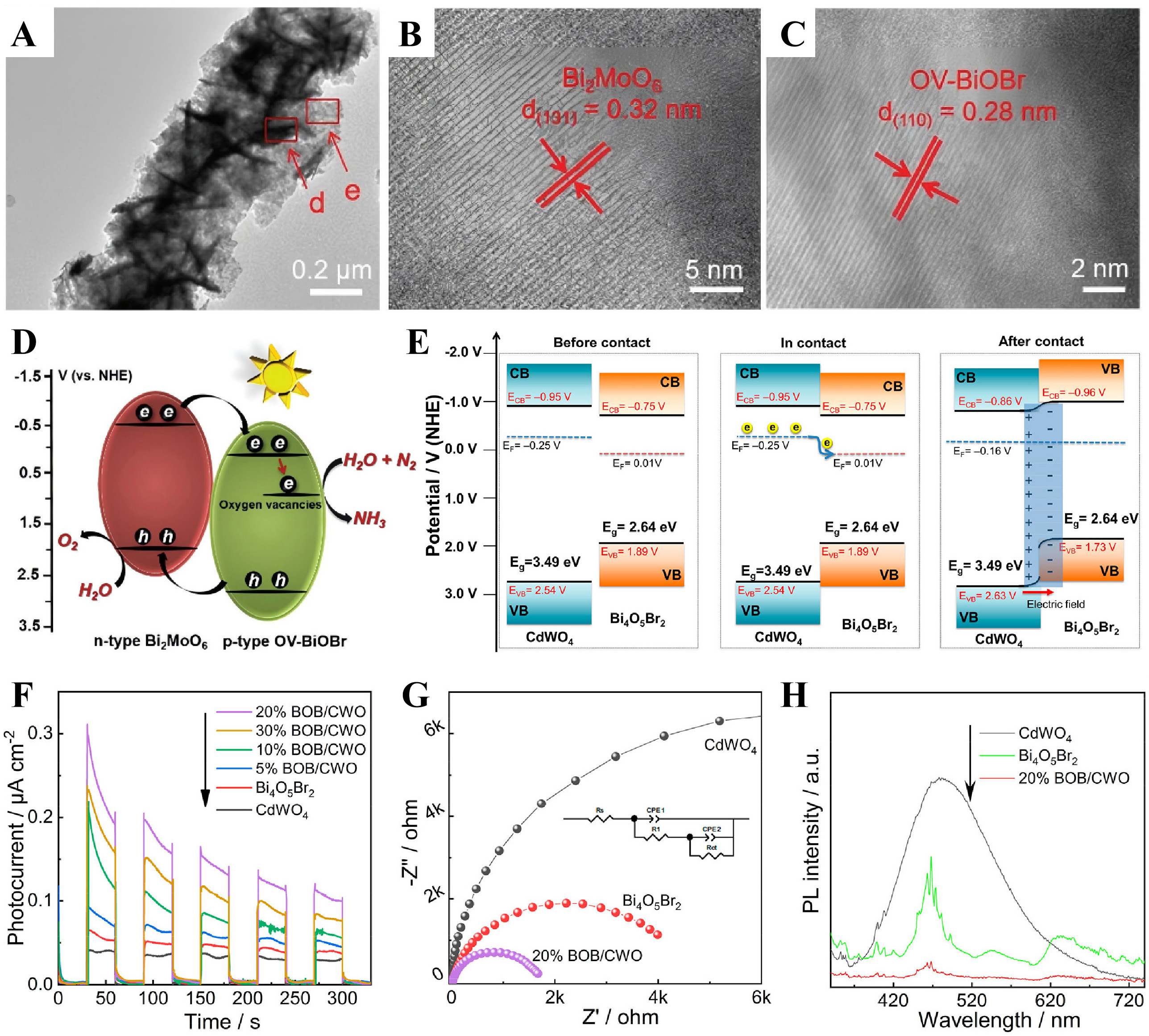
Figure 6. (A) Transmission electron microscopy (TEM) and (B and C) High-resolution TEM (HRTEM) images of Bi2MoO6/OV-BiOBr p-n heterojunctions; (D) The proposed reaction mechanism of photocatalytic N2 fixation over Bi2MoO6/OV-BiOBr heterojunctions. (A-D) Reproduced with permission from[114]. Copyright 2019, Royal Society of Chemistry; (E) band diagrams of CdWO4 and Bi4O5Br2. Transient photocurrent response (F), EIS plots (G), and photoluminescence (PL) spectra (H) of CdWO4, Bi4O5Br2, and Bi4O5Br2/CdWO4 composites. (E-H) Reproduced with permission from[105]. Copyright 2023, American Chemical Society. CB: Conduction band; VB: valence band; BOB: BiOBr; CWO: CdWO4; EIS: electrochemical impedance spectroscopy; NHE: normal hydrogen electrode.
Overall, Type-II heterojunctions offer a straightforward and effective interface engineering approach to spatially separate photogenerated carriers, although this may slightly weaken redox potentials. Their performance depends critically on close interfacial contact, staggered band alignment, and suppression of interfacial defects, which together improve the availability of electrons for nitrogen reduction.
Z-type heterojunction
In the Z-scheme heterojunction structure, photogenerated electrons (e-) accumulate in the CB of one component and engage in reduction half-reactions. Since the conduction band position of this component is higher than that of the other, these electrons have a stronger reduction potential. As a result, bismuth-based Z-scheme heterojunctions generally demonstrate superior photocatalytic reduction performance compared to type-II heterojunctions, making them a primary focus in photocatalytic nitrogen fixation. Although less structurally complex than type-II heterojunctions, Z-scheme heterojunctions still necessitate close contact between the semiconductors and the intermediate conductor to facilitate effective electron transfer. The core strategy in interface engineering for Z-scheme heterojunctions is therefore to construct a conductive “bridge” that directs the selective recombination of charge carriers. This mechanism ensures the spatially directed recombination of less active charge carriers, thereby retaining holes with the highest oxidation potential in the component with a lower valence band position, and electrons with the highest reduction potential in the component with a higher conduction band position[115]. Table 2 summarizes data on Z-type heterojunctions over the past few years.
Bi-based Z-scheme heterojunction for N2 reduction to NH3
| Photocatalyst | Light source | Scavenger | Performance (μmol·g-1·h-1) | Catalyst loading (mg) | Reaction volume (mL) | Ref. |
| Bi/Bi2S3/SnS2 | 300 W Xe lamp | H2O | 96.4 | 20 | 100 | [29] |
| βBi2O3/BiOCOOH | 300 W Xe lamp | CH3OH/H2O | 65.56 | 15 | 15 | [38] |
| BiVO4/ZnIn2S4 | 300 W Xe lamp | H2O | 80.6 | 50 | 200 | [91] |
| Bi2MoO6/g-C3N4 | 300 W Xe lamp | H2O | 227.8 | 50 | 100 | [116] |
| BiOBr/Bi4O5Br2 | 300 W Xe lamp | H2O | 66.87 | 50 | 100 | [117] |
| Bi-Bi2O3/KTa0.5Nb0.5O3 | 300 W Xe lamp | CH3OH/H2O | 466.2 | 50 | 100 | [118] |
| KBiFe2O5/BiOBr | 300 W Xe lamp | H2O/isopropanol | 1,500 | 25 | 25 | [119] |
| GQDs/g-C3N4/BiOCl | 300 W Xe lamp | CH3OH/H2O | 1,773.8 | 20 | 50 | [120] |
| Cu2O/BiFeO3@Ti3C2 MXene | 300 W Xe lamp | H2O | 366 | 50 | 100 | [121] |
| BiOCl/NMT | 300 W Xe lamp | H2O | 88.6 | 50 | 100 | [122] |
| Cu/WO2/C-BiOBr | 300 W Xe lamp | H2O | 477.5 | 10 | 100 | [123] |
| Cu2O@BiOCl[100] | 300 W Xe lamp | H2O | 181.9 | 50 | 200 | [124] |
| Bi2O3@CoAl-LDHs | 300 W Xe lamp | Na2SO3 solution | 48.7 | 50 | 150 | [125] |
| ZnO/Bi2O4 | 300 W Xe lamp | CH3OH/H2O | 220 | 50 | 50 | [126] |
Liu et al.[56] directly anchored 2D boron-doped graphene quantum dots (BGQDs) onto the surface of 3D Bi2MoO6 (BMO) microspheres using an in-situ growth method, forming a closely integrated “quantum dot-microsphere” structure, as shown in Figure 7A-C. The BGQDs are bonded to surface atoms of BMO via chemical bonds, such as B-C and B-O, thereby avoiding interface detachment issues associated with physical mixing. The interfacial chemical bonding also suppresses the agglomeration tendency of BGQDs, as shown in Figure 7D-F. Even when the loading of BGQDs is increased to 30%, only a slight performance decline is observed, without severe light-blocking. Cao et al.[116] utilized interlayer van der Waals forces to spontaneously form a 2D/2D stacked heterojunction of Bi2MoO6/g-C3N4 (BMO/CN). This process requires no additional binders or high-temperature treatment, thereby avoiding interface contamination and structural damage, and ensuring the cleanliness and integrity of the interface. Differential charge density calculations reveal significant charge redistribution at the CN-BMO interface, as shown in Figure 7G. Bader charge analysis indicates that approximately 0.92 e is transferred from CN to BMO, confirming the directionality of electron transfer at the interface. The bridging N atoms of CN at the interface serve as electron migration channels, facilitating efficient interfacial charge transport, as shown in Figure 7H-I.
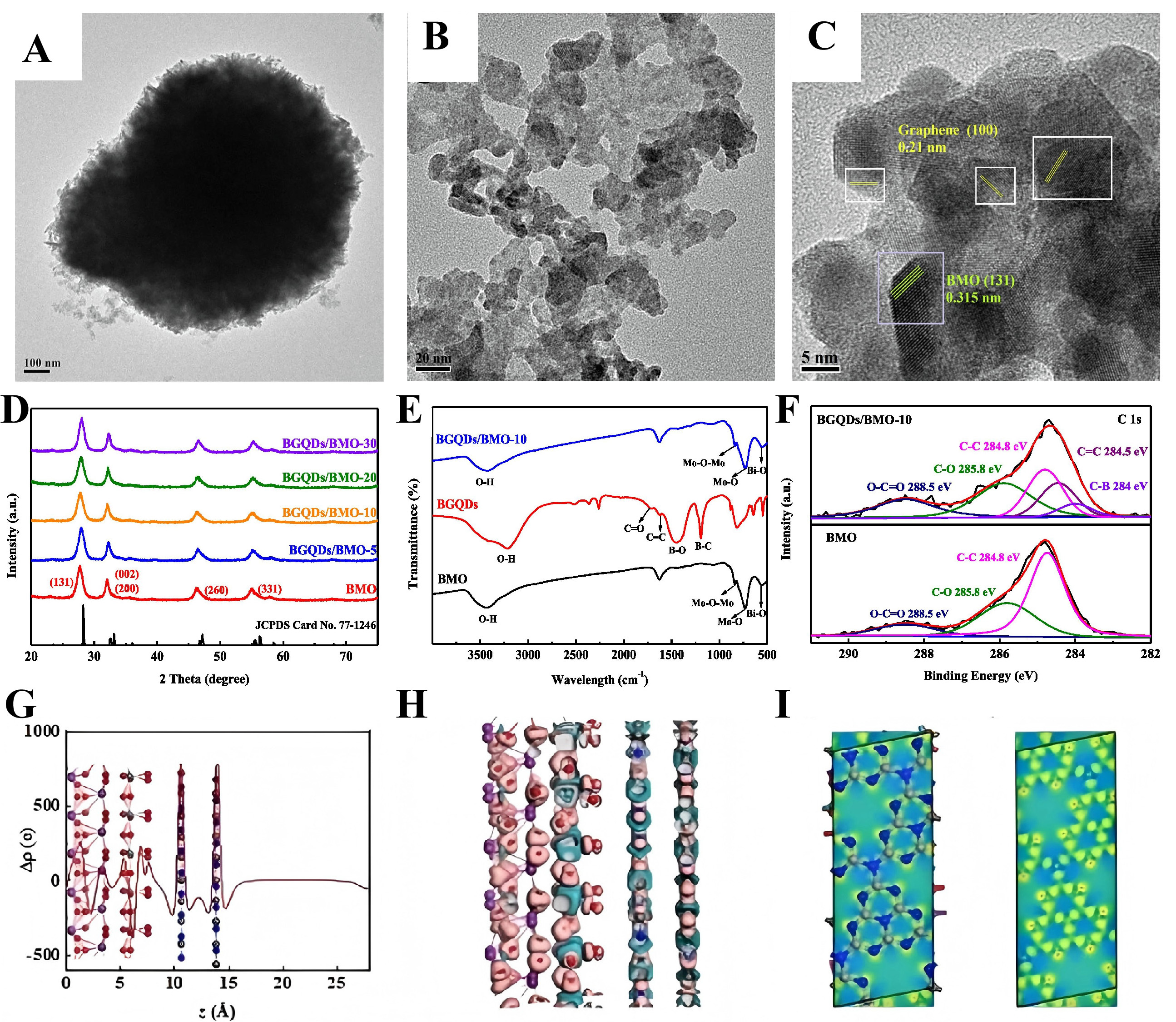
Figure 7. (A and B) TEM images of BGQDs/BMO. (C) HRTEM image of BGQDs/BMO. (D) XRD patterns of BMO and BGQDs/BMO. (E) Fourier transform infrared spectra of BGQDs, BMO, and BGQDs/BMO. (F) XPS C1S spectra of BMO and BGQDs/BMO. (A-F) Reproduced with permission from[56]. Copyright 2023, Elsevier; (G) Planeaveraged differential charge density. (H) Charge density distribution of CN-BMO. (I) The slice of charge density distribution of CN-BMO. (G-I) Reproduced with permission from[116]. Copyright 2024, Elsevier. TEM: Transmission electron microscopy; HRTEM: high-resolution TEM; BGQDs: boron-doped graphene quantum dots; BMO: Bi2MoO6; XRD: X-ray powder diffraction; XPS: X-ray photoelectron spectroscopy.
Noble metals (e.g., Pt, Au, Ag) have been widely used as electron mediators in traditional Z‑scheme heterojunction photocatalysts[12,127,128] but these are costly and hinder large-scale applications. Moreover, in photocatalytic nitrogen fixation, the HER strongly competes with the nitrogen reduction reaction (NRR), thereby reducing the efficiency of NH3 production. To address these issues, Chen et al.[118] Co-deposited Bi metal and Bi2O3 onto the surface of KTa0.5Nb0.5O3 (KTN) via a one-step solvothermal method, forming a Bi-Bi2O3/KTN ternary composite system, rather than a modification with only Bi or Bi2O3. The incomplete core-shell structure plays a key interfacial role, as shown in Figure 8A and B. It ensures compatibility between KTN and Bi2O3, while the exposed Bi metal serves as active sites for N2 adsorption, suppresses HER, and enhances NRR. Upon photoexcitation, electrons from the CB of Bi2O3are transferred through the Bi metal bridge to the VB of KTN, where they recombine with holes. Meanwhile, the electrons retained in the conduction band of KTN participate in N2 reduction, as shown in Figure 8C. Through tailoring the composition and structure of the interface, the selectivity of interfacial reactions is improved. Owing to its high hydrogen adsorption energy and low HER activity, the exposed Bi metal suppresses the reduction of H+ to H2 at the interface, thereby minimizing competitive H2 evolution against NRR. Moreover, Bi metal can effectively adsorb and activate the N≡N triple bond. Through its synergistic interaction with KTN, the energy barrier for N2 reduction is lowered.
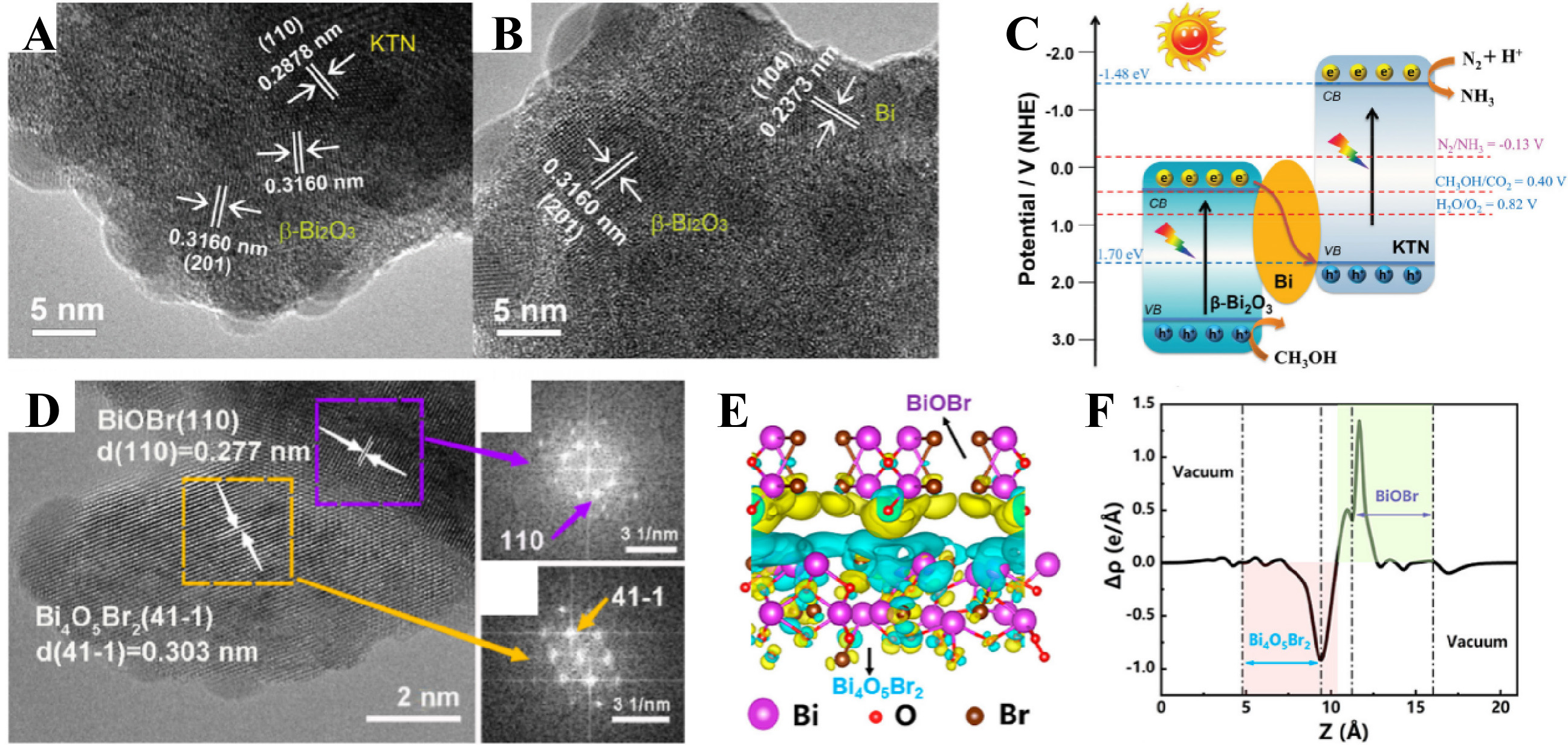
Figure 8. (A and B)TEM images, (C) band structure diagram of Bi-Bi2O3/KTN. (A-C) Reproduced with permission from[118]. Copyright 2024, Elsevier. (D) HRTEM images, (E) charge density difference, (F) planar-averaged charge density difference along the Z-axis of BiOBr/Bi4O5Br2. (D-F) Reproduced with permission from[117]. Copyright 2024, American Chemical Society. TEM: Transmission electron microscopy; HRTEM: high-resolution TEM; KTN: KTa0.5Nb0.5O3.
Most photocatalysts, including TiO2, g-C3N4[129,130], and BiOX (X = Cl, Br, I), are constrained ed by rapid recombination of photogenerated electron-hole pairs, which severely limits the number of charge carriers available for N2 reduction. Despite its suitable band structure and excellent chemical stability, which make Bi4O5Br2 promising for photocatalytic nitrogen fixation, the single-component system still suffers from fast charge recombination. To overcome this limitation, Wang et al.[117] constructed a direct Z-scheme heterojunction between BiOBr and Bi4O5Br2 via a one-step solvothermal method. HRTEM images showed continuous and well-aligned lattice fringes at the BiOBr/Bi4O5Br2 interface, confirming a high degree of lattice matching, as shown in Figure 8D. These structural features help reduce interfacial charge transfer resistance and provide a foundation for efficient cross-interface migration of photogenerated charge carriers. Theoretical calculations indicated that electrons predominantly migrate from Bi4O5Br2 to BiOBr, resulting in a pronounced charge-density difference at the interface, as shown in Figure 8E. This clearly demonstrates directional electron transfer across the heterojunction. Quantitative charge density analysis along the Z-axis further confirmed electron enrichment on the BiOBr side, as shown in Figure 8F. The BiOBr region displayed increased electron density, while the Bi4O5Br2 area showed a decrease, aligning with the qualitative profile. These findings collectively confirm the direction of electron transfer and the spatial distribution of accumulated electrons. Within the constructed BiOBr/Bi4O5Br2 Z-scheme heterojunction, electrons migrate from Bi4O5Br2 to BiOBr, whereas holes remain in the valence band of Bi4O5Br2. This mechanism promotes the spatial separation of photogenerated electron-hole pairs and effectively inhibits their rapid recombination within individual regions.
In summary, Z-scheme heterojunctions overcome the redox potential loss of Type-II systems by enabling selective recombination of less active carriers, thereby preserving strong reduction and oxidation abilities. Interface engineering - such as conductive bridges, chemical bonding, or noble-metal mediators - is essential to direct the desired charge-transfer pathway and enhance nitrogen-fixation selectivity.
S-type heterojunction
The S-type heterojunction is a semiconductor heterostructure that optimizes the separation and transport of photogenerated charge carriers and is widely used in photocatalysis. Its name comes from the stepped band alignment of two semiconductors, not a literal “S-shape”. When in contact, their energy bands form a staggered configuration for directional charge migration[102]. Table 3 presents data on S-type heterojunctions over the past few years.
Bi-based S-scheme heterojunction for N2 reduction to NH3
| Photocatalyst | Light source | Reaction solution | Performance (μmol·g-1·h-1) | Catalyst loading (mg) | Reaction volume (mL) | Ref. |
| MoS2/In-Bi2MoO6 | 300 W Xe lamp | H2O | 90 | 100 | 100 | [44] |
| Ti-BiOBr/TiO2 | 300 W Xe lamp | H2O | 231 | 100 | 100 | [47] |
| BiOBr/BiSBr | 300 W Xe lamp | H2O | 116.3 | 20 | 50 | [61] |
| Bi2S3@PCN | 300 W Xe lamp | H2O | 228 | 20 | 50 | [95] |
| Bi2S3/Bi2MoO6 | 300 W Xe lamp | H2O | 126 | 100 | 100 | [131] |
| Bi2Sn2O7/BiOBr | 300 W Xe lamp | H2O | 459.04 | 50 | 100 | [132] |
| Cs3Bi2Br9/BiOBr | 300 W Xe lamp | (CH3)2CHOH/H2O | 130 | 5 | 0.4 | [133] |
| Cs3MoxSbyBr9/BiVO4 | 300 W Xe lamp | (CH3)2CHOH/H2O | 300 ± 5 | 3 | 0.4 | [134] |
| NaNbO3/Bi2O2CO3 | 300 W Xe lamp | CH3OH/H2O | 453.1 | 100 | 200 | [135] |
| g-C3N4/Bi4O5Br2 | 400 W metal halide lamp | H2O | 151.9 | 50 | - | [136] |
| BiSI/TiO2 QDs/TiO2–x | 500 W Xe lamp | H2O | 6,968 | 40 | 40 | [137] |
| Bi2O2CO3/g-C3N4/SrTiO3 | 300 W Xe lamp | CH3OH/H2O | 2,173.11 | 30 | 100 | [138] |
| Bi2Sn2O7/Bi2MoO6 | 300 W Xe lamp | H2O | 275.67 | - | 50 | [139] |
Lv et al.[61] successfully constructed an S-scheme BiOBr/BiSBr (BOB/BSB) heterojunction featuring a strongly coupled interface with atomic layer bonding (ALB) via an in-situ anion exchange strategy. The interface is characterized by a shared Bi atomic layer and O-Bi-S covalent bonds, which significantly enhance interfacial binding strength and charge-transport capability, as shown in Figure 9A and B. This interfacial engineering strategy drives S-scheme charge transfer and spatial separation via strong orbital hybridization and a reinforced built-in electric field. Meanwhile, oxygen vacancies are introduced to optimize the Fermi level and surface adsorption behavior. The synergistic effect between the strongly coupled ALB interface and oxygen vacancies improves orbital hybridization, promotes N2 and H2O activation, and reduces the Gibbs free energy of the rate-determining step, as shown in Figure 9C. Han et al.[138] precisely constructed a Bi2O2CO3/g-C3N4/SrTiO3 (BOC/CN/STO) dual S-scheme heterojunction via a multi-step hydrothermal process. This substantially lowers the reaction energy barrier by strengthening the built-in electric field, achieving intimate interfacial coupling and strong electronic interactions among the three components, as shown in Figure 9D. Benefiting from dual built-in electric fields and a staggered band alignment, this system drives efficient separation and directional transport of photogenerated charge carriers along dual S-scheme pathways, suppressing interfacial charge recombination. Compared with single components and conventional binary heterojunctions, this interfacial engineering strategy prolongs carrier lifetimes, enhances interfacial charge-transfer kinetics, and preserves the materials’ strong redox capability, as shown in Figure 9E-G.
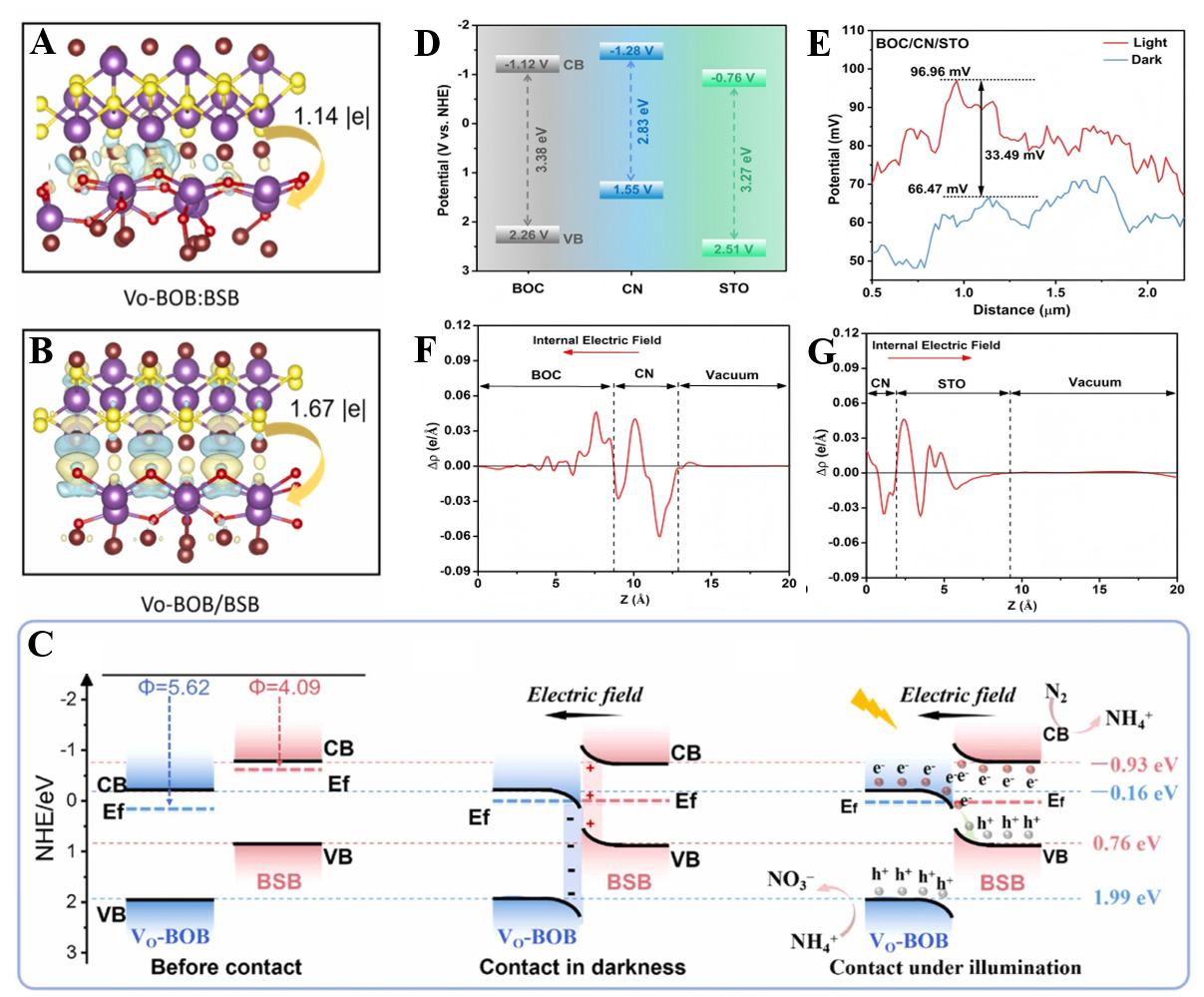
Figure 9. Front-view of the charge difference distribution of physically mixed (A) VO-BOB:BSB and (B) VO-BOB/BSB heterojunction. (C) Energy band diagrams before and after VO-BOB and BSB come into contact, proposed mechanisms for photocatalytic overall N2 fixation. (A-C) Reproduced with permission from[61]. Copyright 2026, Elsevie; (D) A schematic illustration of band structures for CN, STO, and BOC; (E) Surface potential difference of the BOC/CN/STO under irradiation; Planar-averaged electron density difference Δρ(z) of (F) BOC/CN and (G) CN/STO. Copyright 2026, (D-G) Reproduced with permission from[138]. Wiley-VCH GmbH. BOB: BiOBr; BSB: BiSBr; BOC: Bi2O2CO3; CN: g-C3N4; STO: SrTiO3; CB: conduction band; VB: valence band; BSB: BiSBr.
Recently, our group designed and fabricated a MoS2/In-Bi2MoO6 heterojunction catalyst through electrostatic self-assembly, resulting in interfacial chemical bonding. Instead of mere physical attachment, the Mo-S bonds formed at the interface serve as an “electron bridge” connecting the two materials. This chemical bond, functioning as an electron conduit, removes the interfacial transport barrier. Compared with the Mo-S bond in pure MoS2[44], the bond length in the heterojunction is elongated by 0.15 Å, which further facilitates electron transfer, as shown in Figure 10A and B. Meanwhile, the work function mismatch between MoS2 and In-Bi2MoO6 induces an interfacial potential difference, resulting in a built-in electric field that directionally drives the migration of photogenerated carriers, thereby promoting electron transfer from In-Bi2MoO6 to MoS2, as shown in Figure 10C. Thus, the separation of charge carriers is addressed from a thermodynamic perspective, which aligns with the fundamental principles of negative charge carriers to achieve the spontaneous assembly of the two materials, thereby constructing an In2O3/Bi2MoO6 heterojunction[58]. At the interface, In-O-Mo chemical bonds form, serving as an “electron bridge” to remove the physical potential barrier, in line with the fundamental principle of interfacial potential regulation in heterojunction systems. Recently, we employed the electrostatic attraction between positively charged Bi2MoO6 and the gap to achieve atomic-level intimate contact between the components, as shown in Figure 10D-F. This facilitates electron transfer from In2O3 to Bi2MoO6 and establishes a continuous pathway for charge transport. The formation of In-O-Mo bonds create a significant number of oxygen vacancies, which enhance nitrogen adsorption and activation, providing more active sites for photocatalytic nitrogen fixation.
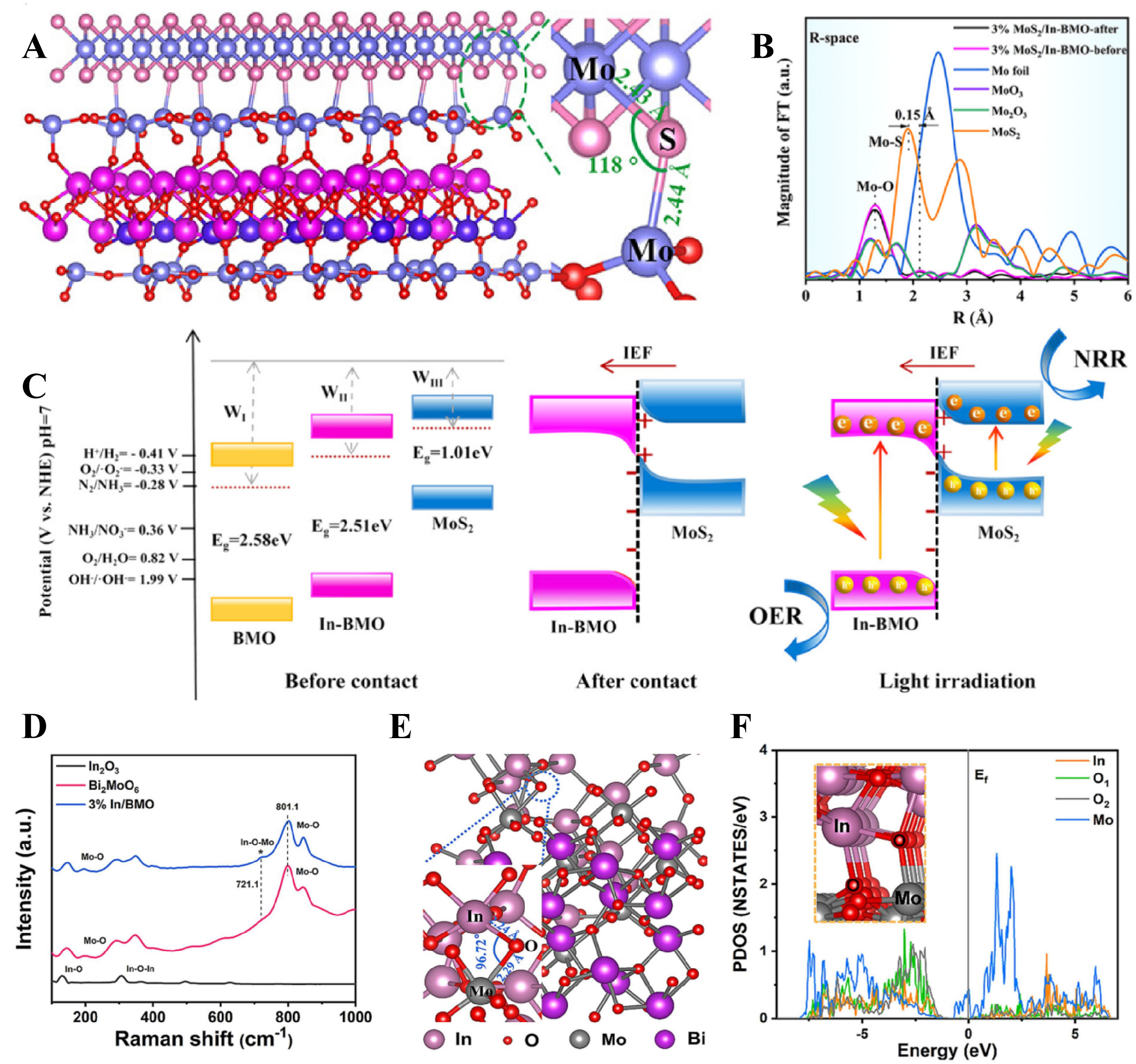
Figure 10. (A) Formation of interfical chemical-bond at MoS2 and In-Bi2MoO6 interface. (B) Mo extended X-xay absorption fine structure spectra shown in the k3 weighted R-space of 3% MoS2/In-Bi2MoO6. (C) S-scheme photogenerated carrier transfer pathway mechanism. (A-C) Reproduced with permission from[44]. Copyright 2024, American Chemical Societ; (D) Raman spectra of as-prepared samples, and the (E) optimized molecular structure model of 3% In/Bi2MoO6. (F) Projection density-of-states of various atoms involved in bonding at the Bi2MoO6/In2O3 interface. (D-F) Reproduced with permission from[58]. Copyright 2024, Elsevier. NRR: Nitrogen reduction reaction; OER: oxygen evolution reaction; BMO: Bi2MoO6; IEF: built-in electric field.
More recently, Ren et al.[133] fabricated an S-scheme Cs3Bi2Br9/BiOBr heterojunction by growing Cs3Bi2Br9 nanocrystals in situ on BiOBr hollow nanotubes. This in situ transformation strategy enables the formation of intimate interfacial contact within the heterojunction. The interface between Cs3Bi2Br9 and BiOBr exhibits a smooth transition without discernible gaps, confirming that the in situ approach achieves atomic-level interfacial intimacy and provides an uninterrupted pathway for charge transfer, as shown in Figure 11A. A strong, homogeneous surface photovoltage signal is observed on the sample surface, indicating efficient separation and surface accumulation of photogenerated charge carriers, as shown in Figure 11B and C. Liu et al.[134] employed an anti-solvent induction strategy to enable the in-situ growth of Cs3MoxSbyBr9 nanocrystals on BiVO4 nanosheets, thereby forming a tightly connected heterojunction interface. Lattice overlap between the two materials is observed at the interface, without discernible defects or gaps, ensuring efficient charge transport. By varying the amount of MoBr4 added, a series of Cs3MoxSbyBr9/BiVO4 heterojunctions with different Mo doping levels was synthesized to optimize the interfacial properties. Upon Mo functionalization, the d-band center of Cs3MoxSbyBr9 is upshifted toward the Fermi level (from -29.43 eV to -4.31 eV), leading to enhanced N2 binding and promoted activation of the N≡N bond, as shown in Figure 11D-F.
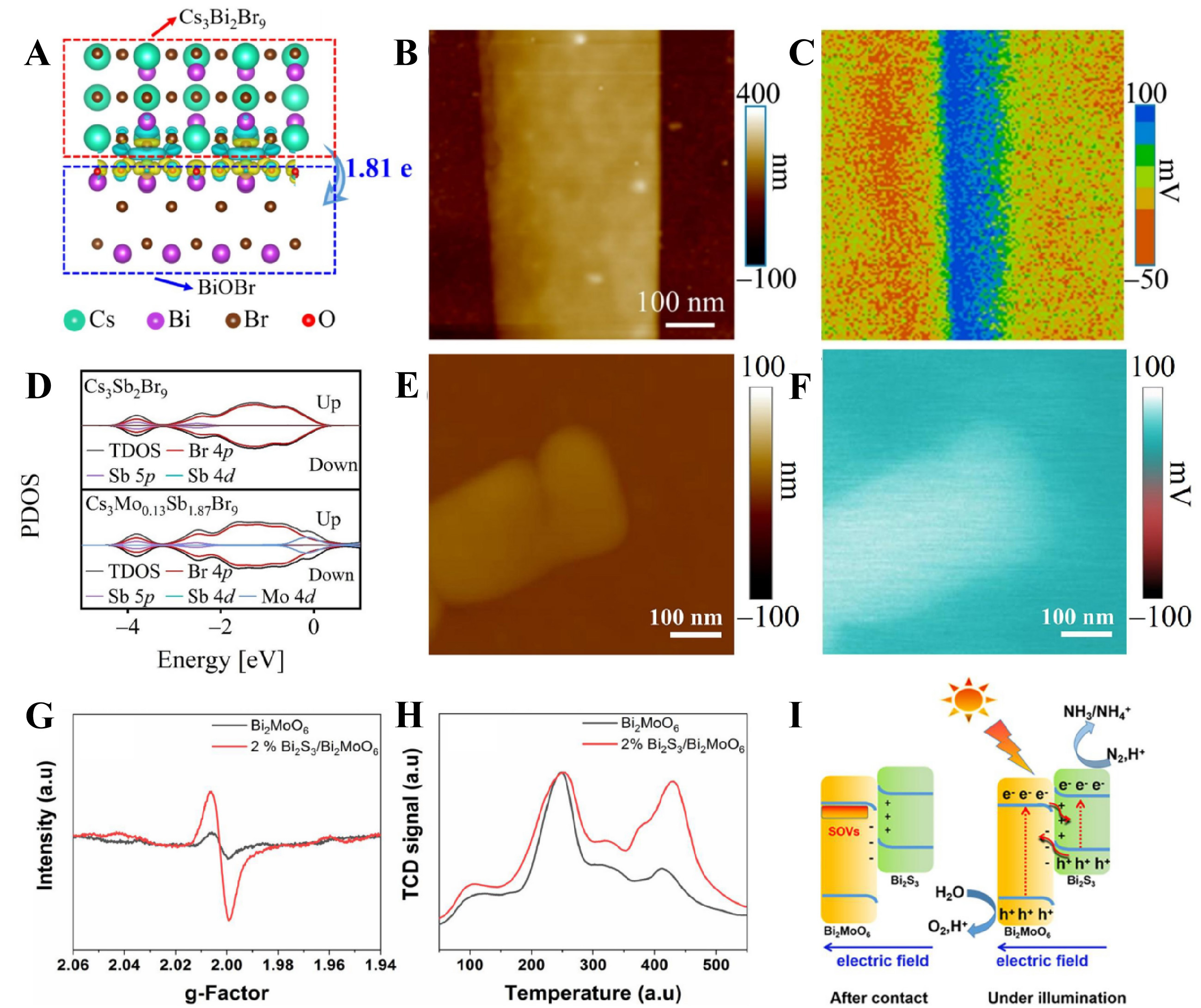
Figure 11. (A) Charge density difference of the Cs3Bi2Br9/BiOBr heterojunction. Atomic force microscope (AFM) height images of (B) Cs3Bi2Br9/BiOBr. SPV images of (C) Cs3Bi2Br9/BiOBr under illumination. (A-C) Reproduced with permission from[133]. Copyright 2024, Elsevier; (D) PDOS configurations of Cs3Sb2Br9 and Cs3Mo0.13Sb1.87Br9. AFM height images of (E) Cs3Mo0.13Sb1.87Br9/BiVO4. SPV images of (F) Cs3Mo0.13Sb1.87Br9/BiVO4 under illumination. (D-F) Reproduced with permission from[134]. Copyright 2024, Elsevier; (G) Electron spin resonance spectra, (H) Nitroge temperature-programmed desorption profiles of the catalyst of Bi2MoO6 and 2% Bi2S3/Bi2MoO6. (I) Photocatalytic mechanisms of Bi2S3/OV-Bi2MoO6. (G-I) Reproduced with permission from[131]. Copyright 2022, Elsevier. PDOS: Partial density of states; SPV: surface photovoltage.
Recently, our group fabricated a Bi2S3/OV-Bi2MoO6 heterojunction via an in-situ anion-exchange method[131], where Bi2S3 nanoparticles were uniformly anchored on the surface of Bi2MoO6 without observable physical gaps at the interface, achieving intimate interfacial contact. The strong interaction between Bi2S3 and Bi2MoO6 during interface formation leads to the reduction of Mo6+ to Mo5+, accompanied by the generation of abundant OVs, as shown in Figure 11G. These OVs, together with Bi2S₃, form dual active sites, while the intimate interfacial contact and the introduction of oxygen vacancies synergistically promote N2 activation, as shown in Figure 11H. Meanwhile, an S-scheme charge transfer pathway enhances the utilization efficiency of photogenerated carriers. Consequently, both the NRR and oxygen evolution reaction (OER) are simultaneously enhanced, as shown in Figure 11I.
Li et al.[139] constructed a chemically bonded Bi2Sn2O7/Bi2MoO6 S-scheme heterojunction. By leveraging the built-in electric field and band bending, they achieved efficient spatial separation of photogenerated charge carriers while preserving strongly reductive electrons and strongly oxidative holes, effectively addressing the key issues of severe carrier recombination and inadequate redox capability in traditional heterojunctions, as shown in Figure 12A. Moreover, the chemically bonded interface induces the formation of asymmetric Bi-Sn dual-atom active sites, enabling side-on adsorption and efficient activation of N2, thereby significantly reducing the energy barrier for the nitrogen reduction reaction. This enables synergistic regulation of interfacial structure, charge transport, and N2 activation at the atomic level, ultimately substantially enhancing the photocatalytic nitrogen fixation performance, as shown in Figure 12B.
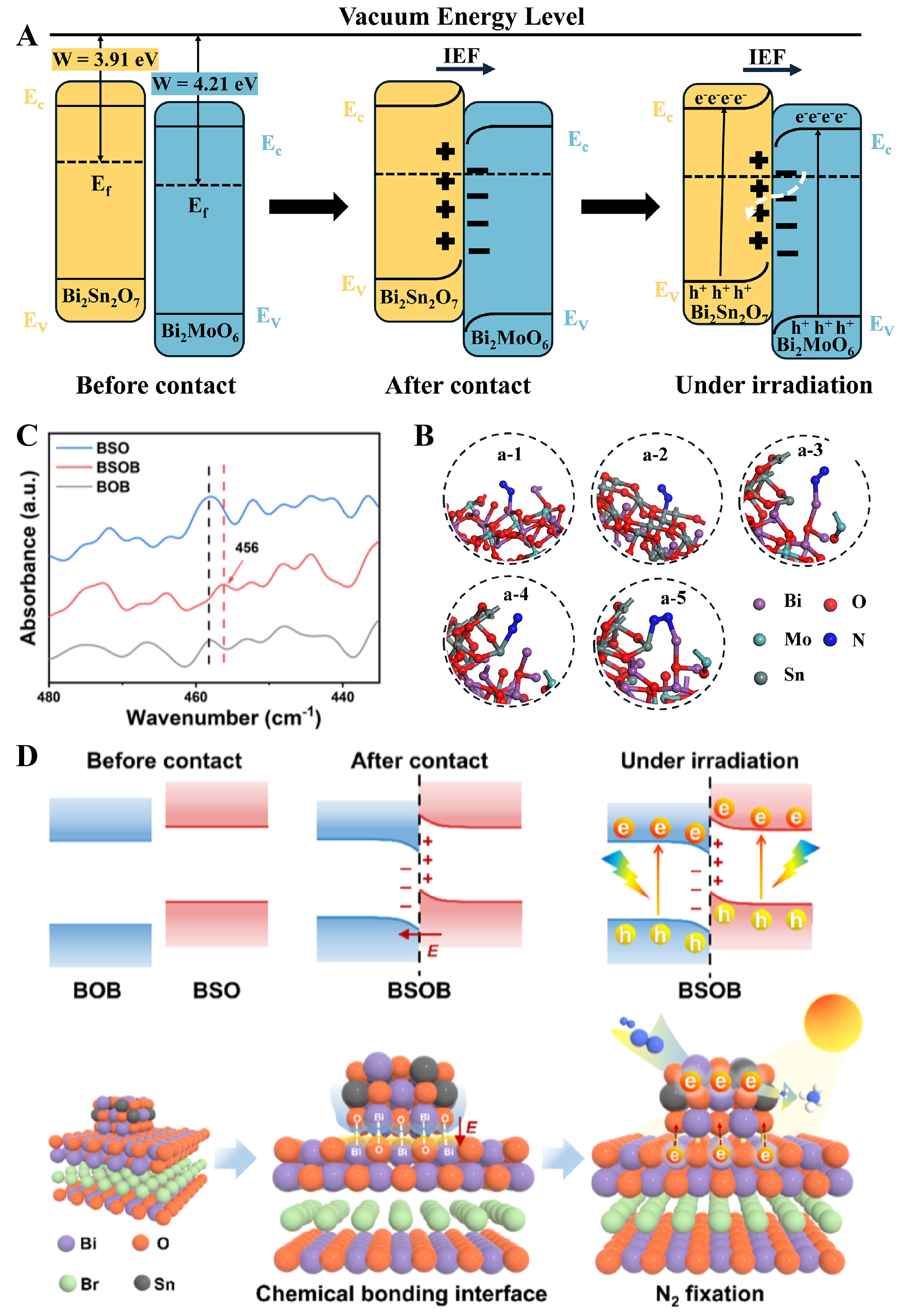
Figure 12. (A) Diagram illustrating the S-scheme charge transfer within the Bi2Sn2O7/Bi2MoO6 heterojunction. (B) Five possible adsorption configurations of the N2 molecule on the Bi2MoO6 plane, Bi2Sn2O7 plane, and Bi2Sn2O7/Bi2MoO6. (A and B) Reproduced with permission from[139]. Copyright 2026, Elsevier; DMPO spin-trapping Electron Spin Resonance (ESR) spectra of as-prepared samples detected in (C) methanol. (D) The inferred electronic structure model and the mechanism of photocatalytic nitrogen fixation. (C and D) Reproduced with permission from[132]. Copyright 2023, Elsevier. BOB: BiOBr; BSO: Bi2Sn2O7; BSOB: Bi2Sn2O7; IEF: built-in electric field; DMPO: projected density of states.
Zhang et al.[132] demonstrated the formation of a heterojunction between Bi2Sn2O7 (BSO) and BiOBr (BOB), in which the defective sites (unsaturated Bi and O atoms) on the heterojunction surface interact to create new Bi-O covalent bonds, thereby tightly connecting the two materials, as shown in Figure 12C. This chemically bonded interface, as opposed to mere physical adsorption, establishes a “rigid linkage” that prevents interfacial detachment or charge-transfer blockage. Under illumination, electrons from the CB of BOB and holes from the VB of BSO recombine rapidly via the Bi-O bonds (deactivating less reactive carriers). In contrast, the highly reductive electrons in the CB of BSO and the oxidative holes in the VB of BOB are preserved. The Bi and Sn atoms surrounding oxygen vacancies on the BSO surface provide active sites for N2 adsorption, as shown in Figure 12D. The accumulated electrons are efficiently transferred through the Bi-O bonds to the adsorbed N2 molecules, weakening the N≡N bond and lowering the energy barrier to nitrogen reduction.
In summary, S-scheme heterojunctions effectively address key challenges in photocatalytic nitrogen fixation, such as low charge separation efficiency and the difficult activation of N2, by leveraging stepped band alignment, a built-in electric field, and selective carrier recombination. Further advances in interfacial engineering, active site design, and system optimization may further promote their practical application in green ammonia synthesis.
Other heterojunction
Beyond the heterojunctions previously discussed, other heterojunctions, such as ohmic heterojunctions, have also been explored. For instance, Zheng et al.[140] prepared a structurally aligned 2D-2D ohmic heterojunction by epitaxially growing a two-dimensional bismuth layer on BiOBr nanosheets via in situ annealing, as shown in Figure 13A. This process formed a Schottky-barrier-free ohmic contact interface, eliminating the energy barrier to electron transfer and establishing a nearly impedance-free charge-transport channel, as shown in Figure 13B and C. Simultaneously, high-density OVs were introduced at the BiOBr interface during annealing, as shown in Figure 13D. The formed Bi-BiOBr coordination bonds at the interface alter the chemical environment of surrounding atoms, further optimizing the electronic structure for N2 adsorption, weakening the N≡N bond energy, and promoting the activation and dissociation of N2, as shown in Figure 13E. In situ Fourier transform infrared Spectroscopy (FTIR) spectroscopy confirmed that the Bi/BiOBr interface significantly enhances the chemical adsorption of N2, and the adsorbed N2 can directly participate in the subsequent reactions, as shown in Figure 13F and G.
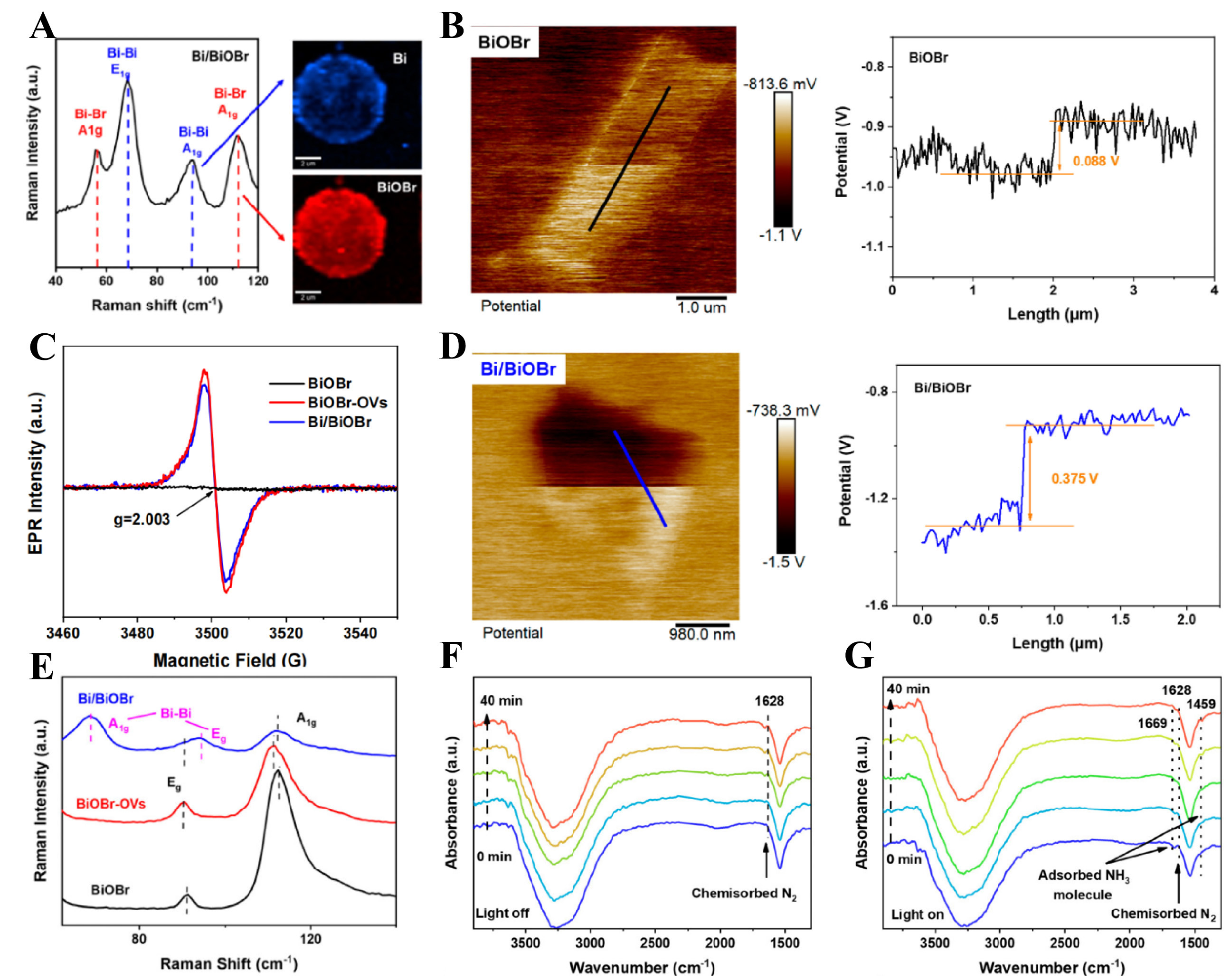
Figure 13. (A) Raman mapping images of the BiOBr, BiOBr-OVs, and Bi/BiOBr. Kelvin probe force microscopy (KPFM) images and the potential change spectrum of the lines: (B) BiOBr, (C) Bi/BiOBr. (D) EPR spectra and (E) Raman spectra of BiOBr, BiOBr-OVs, and Bi/BiOBr. Characterization of photocatalytic nitrogen fixation: in situ FTIR spectra with (F) light off and (G) light on. (A-G) Reproduced with permission from[140]. Copyright 2024, American Chemical Society. EPR: Electron paramagnetic resonance; FTIR: fourier transform infrared spectroscopy; OVs: oxygen vacancies.
CONCLUSIONS AND PERSPECTIVES
This review delineates recent developments in photocatalytic nitrogen fixation utilizing bismuth-based heterojunctions. It commences with an elucidation of the fundamental principles underpinning photocatalytic nitrogen fixation and the primary structural characteristics of Bi-based materials. Subsequently, it offers a comprehensive discussion of various heterojunction engineering strategies: Type-II heterojunctions facilitate charge separation; Z-scheme heterojunctions augment redox capability; and S-scheme heterojunctions promote efficient carrier migration. The review also assesses different ammonia detection methodologies. Despite notable advancements in nitrogen reduction employing bismuth-based heterojunction photocatalysts, several challenges persist; future research should aim to overcome current limitations to fully utilize the distinctive advantages of these heterojunctions. Additionally, subsequent investigations should employ reliable detection techniques and explore coupled reaction systems. Continued innovation is imperative for the realization of practical, solar-driven ammonia synthesis. By delineating these directions, the review aspires to influence sustainable nitrogen fixation strategies, guide future scholarly endeavors, and enhance both academic impact and commercial viability.
Engineering intimate interfaces for superior photocatalysis
To achieve higher photocatalytic performance, constructing a more intimate heterojunction interface is a key strategy. Close interfacial contact can significantly enhance the efficient separation and migration of photogenerated charge carriers, thereby effectively suppressing electron-hole pair recombination. The interfacial contact area can be enhanced through the following approaches. The first approach involves constructing a core-shell heterojunction. In this design, one semiconductor material serves as the “core”, tightly encapsulated by a complete “shell” formed from another material. This three-dimensional omnidirectional contact creates a substantial interfacial contact area and establishes clear, continuous pathways for charge transfer between the two materials. The second approach is the in-situ growth synthesis method. Unlike traditional physical mixing, this method involves the direct chemical “growth” of a second material on a substrate, resulting in atomic- or molecular-scale interfacial bonding. These synthesis methods can ensure very tight, uniform heterojunction interfaces, reduce interfacial defects, and often achieve lattice matching, providing an optimal pathway for charge transfer. The third approach is surface ligand passivation. In this method, specific chemical molecules bind to the surface atoms of nanomaterials (such as quantum dots, metal nanoparticles, or semiconductor thin films), saturating the dangling bonds on the surface. This eliminates or neutralizes surface defect states and steers the surface chemical activity toward a direction more favorable for the target photocatalytic reaction. The fourth method is atomic layer deposition (ALD), a thin-film fabrication technique based on self-limiting surface chemical reactions. In a typical ALD process, two or more gaseous precursors are alternately pulsed into the reaction chamber. Each precursor chemisorbs onto the substrate surface and reacts until saturation, after which an inert gas purges away the excess precursor. One complete cycle - precursor A pulse, purge, precursor B pulse, purge - grows a single atomic layer. Thus, the film thickness can be controlled with atomic-scale precision simply by adjusting the number of cycles. This precise control provided by ALD facilitates the balance between light absorption and charge separation. Furthermore, by alternating between various precursors, it is possible to produce multilayered, doped, or compositionally graded films. In photocatalytic applications, exposed surface defects often serve as catalysts for side reactions. Post-ALD deposition, the surface chemical activity is diminished, leading to improved selectivity toward the desired reaction. The fifth technique involves electrochemical interface reconstruction. By applying a controlled electrochemical potential during or subsequent to catalyst synthesis, the surface composition, oxidation state, and atomic configuration of bismuth-based photocatalysts can be dynamically adjusted. This in situ or ex situ reconstruction enables the formation of new active interfaces, the removal of unstable surface species, and the optimization of contact between different components, thereby enhancing charge transfer and reaction kinetics. Electrochemical reconstruction represents a versatile and tunable approach to generate intimate heterointerfaces that are challenging to achieve through conventional chemical synthesis.
Converging materials and synthetic biology for solar nitrogen fixation
Developing innovative photocatalytic N2 fixation systems through the integration of materials science and synthetic biology. For example, artificial bio-inspired systems can be engineered by coupling bismuth-based light-harvesting units with molecular mimics of the nitrogenase active site, thereby facilitating the directional transfer of photogenerated electrons to the catalytic center and emulating the high selectivity of enzymatic processes. Additionally, bio-inorganic hybrid systems may be constructed, such as assembling bismuth-based catalysts on the surface of engineered microorganisms. This integrated approach enables solar energy to synergistically enhance endogenous nitrogen fixation metabolism, supporting efficient solar-driven biosynthesis.
Designing integrated systems for multi-energy N2 fixation
The development of photo-electro-thermal coupled catalytic systems presents a promising approach to overcome the efficiency limitations of single-mode photocatalytic nitrogen fixation. By applying an electric field, the directional separation and migration of photogenerated carriers can be effectively driven, charge recombination can be suppressed, and the catalyst surface potential can be modulated to optimize N2 adsorption and activation barriers. When combined with mild heating at 50-100 °C, the adsorption and diffusion of N2 molecules on the catalyst surface are enhanced, and the conversion kinetics of key intermediates are accelerated, addressing the sluggish reaction rates typically observed under ambient conditions. This synergistic multi-field strategy not only increases the ammonia synthesis rate but also suppresses competing HER through precise energy barrier modulation, thus improving process selectivity. Future research should aim to design integrated catalyst-reactor systems tailored for multi-field operation to enable efficient coupling and conversion of optical, electrical, and thermal energy inputs.
Coupling nitrogen fixation with hole-driven catalysis
The photocatalytic NRR employs photogenerated electrons to reduce N2 molecules. In conventional processes, sacrificial hole scavengers are commonly used to consume photogenerated holes. However, given their potent oxidizing ability, these holes can be strategically used to drive catalytic oxidation reactions for the synthesis of higher-value chemicals. Examples include organic transformations, such as the conversion of benzyl alcohol to benzaldehyde and 5-hydroxymethylfurfural (HMF) to 2,5-furandicarboxylic acid (FDCA), as well as pollutant degradation. Harnessing photogenerated holes in this way promises to broaden the application potential of photocatalytic technology significantly.
Standardization and normalization methods for evaluating photocatalytic nitrogen fixation performance
The ammonia yield rates reported in different studies are often difficult to compare directly, owing to significant variations in reactor configuration, light source type and intensity, catalyst loading, reaction volume, illuminated area-to-reaction volume ratio, and product detection methods. Therefore, establishing a standardized approach to reporting performance is an urgent need to promote the healthy development of this field. In photocatalytic nitrogen fixation studies, reactors with identical configuration and volume should be used whenever possible, and the light intensity and wavelength should be described in detail to facilitate comparison. Meanwhile, ion chromatography should be preferentially adopted as the detection method due to its higher accuracy.
Reactor design and scalable synthesis
To facilitate the transition toward practical application, advancements in both reactor engineering and scalable fabrication techniques are indispensable. In reactor design, research should prioritize the development of efficient systems, such as continuous-flow fixed-bed or membrane reactors. Structural optimization efforts should aim to enhance light distribution and improve gas-liquid-solid triphase mass transfer, thereby increasing light utilization efficiency, ammonia production rate, and operational stability. Concerning scalable fabrication, strategies must strike a balance between performance and cost, with an emphasis on environmentally sustainable and scalable synthesis routes. This includes reducing reliance on precious-metal cocatalysts and investigating cost-effective alternatives based on transition metals or non-metals. A systematic assessment of scalability from gram-scale laboratory synthesis to kilogram- and ton-scale industrial production is essential, as it addresses process stability, energy consumption, and environmental impact. For instance, a continuous-flow fixed-bed reactor immobilizes the photocatalyst as a thin film or packed bed within a transparent reaction channel. Gaseous nitrogen and liquid water flow continuously over the catalyst surface, where the photocatalytic reaction proceeds and produces an ammonia-containing effluent stream. Unlike conventional batch reactors, the fixed-bed configuration enables a “reaction‑and‑outflow” operational mode, eliminating the laborious post‑reaction separation of the catalyst from the reaction medium. Moreover, because the catalyst is fixed to the channel surface, the light-scattering and shielding effects typically caused by catalyst agglomeration in conventional suspension systems are avoided, thereby enhancing photon utilization efficiency.
DECLARATIONS
Authors’ contributions
Conceptualization, resources, writing-review & editing: Zhang, D.; Guo, L.; Wang, D.
Conceptualization, data curation, investigation, formal analysis: Li, Z.
Data curation: Yang, C.
Data curation, investigation: Wang, T.
Availability of data and materials
Not applicable.
AI and AI-assisted tools statement
Not applicable.
Financial support and sponsorship
This work was financially supported by the National Natural Science Foundation of China (No. 22568049), the Science and Technology Planning Project of Yan’an City (No. 2024-CYL-030), and the Yan’an University Graduate Student Scientific Research Innovation Program Project (No. YKY2025066).
Conflicts of interest
All authors declared that there are no conflicts of interest.
Ethical approval and consent to participate
Not applicable.
Consent for publication
Not applicable.
Copyright
© The Author(s) 2026.
REFERENCES
1. Majumder, M.; Saini, H.; Dědek, I.; et al. Rational design of graphene derivatives for electrochemical reduction of nitrogen to ammonia. ACS. Nano. 2021, 15, 17275-98.
2. Liu, Y.; Fernández, C. A.; Varanasi, S. A.; Bui, N. N.; Song, L.; Hatzell, M. C. Prospects for aerobic photocatalytic nitrogen fixation. ACS. Energy. Lett. 2021, 7, 24-9.
3. Li, H.; Wang, J.; Ruan, Z.; et al. Electron transfer bridge inducing polarization of nitrogen molecules for enhanced photocatalytic nitrogen fixation. Mater. Horiz. 2023, 10, 5053-9.
4. Boretti, A. Advancing ammonia synthesis: pathways toward decarbonization and sustainability. Chem. Eng. Res. Des. 2025, 217, 235-51.
5. Wang, T.; Zhai, R.; Liu, Z.; Liu, S.; Cheng, Y.; Zhang, J. Electron donation of violet phosphorene nanosheets to sustain the oxygen vacancies of BiOBr for excellent photocatalytic nitrogen fixation. J. Mater. Chem. A. 2025, 13, 13551-9.
6. Wang, X. H.; Wu, B.; Zhu, Y.; et al. Design refinement of catalytic system for scale-up mild nitrogen photo-fixation. Nano. Micro. Lett. 2025, 17, 182.
7. Ge, X.; Zheng, X.; Zhou, T.; et al. Engineering spin state of atomic iron centers for high‐performance photocatalytic nitrogen fixation. Angew. Chem. Int. Ed. 2025, 64, e202506470.
8. Chen, T. Y.; Ying, Y. R.; Wu, J.; Liu, X. H.; Huang, H. Fe-N4‐anchored carbon layer patched TiO2 cavities to construct an “in‐lattice heterojunction” for enhanced photocatalytic nitrogen reduction reactions. Angew. Chem. Int. Ed. 2025, 64, e202509705.
9. Qu, J.; Zhu, Z.; Xu, X.; et al. Single‐atom Cu anchoring on heterocyclic ring of metal‐organic frameworks for photocatalytic nitrogen fixation. Small. Methods. 2025, 10, 2500493.
10. Liu, C.; Liu, Y.; Xu, G.; Wang, T. Associative-distal mechanism of the haber-bosch process on a ferrierite catalyst with spatially isolated dual molybdenum sites. J. Phys. Chem. C. 2024, 128, 6711-8.
11. Liu, C.; Xu, G.; Wang, T. Theoretical approach toward a mild condition haber-bosch process on the zeolite catalyst with confined dual active sites. JACS. Au. 2023, 3, 3374-80.
12. Wang, J.; Tang, Y.; Yang, Q.; et al. Enhanced photocatalytic nitrogen fixation via Pt-induced active hydrogen supply over Pt@NM-101(Fe). Appl. Catal. B. Environ. Energy. 2025, 373, 125364.
13. Xia, M.; Gong, X.; Teng, W.; et al. Nanopit-mediated electron pooling effect for efficient piezo-photocatalytic N2 fixation in pure water. Appl. Catal. B. Environ. Energy. 2026, 380, 125756.
14. Schrauzer, G. N.; Guth, T. D. Photolysis of water and photoreduction of nitrogen on titanium dioxide. J. Am. Chem. Soc. 2002, 99, 7189-93.
15. Mao, S.; He, R.; Song, S. S-scheme heterojunction with ultrafast interfacial electron transfer for artificial photosynthesis. Chin. J. Catal. 2024, 64, 1-3.
16. Hao, P.; Chen, Z.; Yan, Y.; Shi, W.; Guo, F. Recent advances, application and prospect in g-C3N4-based S-scheme heterojunction photocatalysts. Sep. Purif. Technol. 2024, 330, 125302.
17. Li, J.; Zhang, C.; Bao, T.; et al. Dual near‐infrared‐response S‐scheme heterojunction with asymmetric adsorption sites for enhanced nitrogen photoreduction. Adv. Mater. 2024, 37, 2416210.
18. Wang, X.; Li, Y.; Feng, L.; Yang, Y.; Zheng, X. Construction of BiOBr/hydrophobic carbon cloth heterojunction with internal electric field for enhanced photocatalytic nitrogen fixation. Small 2025, 21, e03853.
19. Zhang, Y.; Wang, Y.; Wu, X.; et al. Photocorrosion of metal sulfides: mechanism, characterization, anti-photocorrosion strategies and solar catalysis applications. Coord. Chem. Rev. 2025, 545, 217021.
20. Xia, P.; Pan, X.; Jiang, S.; et al. Designing a redox heterojunction for photocatalytic “overall nitrogen fixation” under mild conditions. Adv. Mater. 2022, 34, 2200563.
21. Xiong, L.; Hu, Y.; Yang, Y.; et al. Electron pump strengthened facet engineering: organic half-metallic C(CN)3 enclosed (100) facet exposed WO3 for efficient and selective photocatalytic nitrogen fixation. Appl. Catal. B. Environ. 2022, 317, 121660.
22. Wang, C.; Wang, S.; Ping, Y.; et al. Ru@MIL-125/MnOx metal-organic-framework-based cocatalysts for photocatalytic nitrogen fixation. Appl. Catal. B. Environ. Energy. 2024, 347, 123781.
23. Hu, J.; An, K.; Ren, Y.; et al. Plasmonic MoO3-x/Ag Photocatalyst for the fixation of N2 from air with the solar energy conversion efficiency reaching over 0.28%. Adv. Mater. 2025, 37, e09652.
24. Cheng, M.; Li, H.; Wu, Z.; Yu, Z.; Tao, X.; Huang, L. Synergistic effects of CQDs and oxygen vacancies on CeO2 photocatalyst for efficient photocatalytic nitrogen fixation. Sep. Purif. Technol. 2025, 354, 129299.
25. Wang, F.; Yang, W.; Ding, Q.; et al. Chiral Au@CeO2 helical nanorods with spatially separated structures for polarization‐dependent N2 photofixation. Angew. Chem. Int. Ed. 2024, 64, e202415031.
26. Zhang, H.; Bao, L.; Pan, Y.; Ge, J. Doping carbon dots on etched CeO2-based bimetallic hydroxides for improved photocatalytic ammonia production. Solar. Energy. 2023, 264, 112002.
27. Lan, M.; Wang, Y.; Dong, X.; et al. Controllable fabrication of sulfur-vacancy-rich Bi2S3 nanorods with efficient near-infrared light photocatalytic for nitrogen fixation. Appl. Surf. Sci. 2022, 591, 153205.
28. Chen, L.; Dai, X.; Li, X.; et al. A novel Bi2S3/KTa0.75Nb0.25O3 nanocomposite with high efficiency for photocatalytic and piezocatalytic N2 fixation. J. Mater. Chem. A. 2021, 9, 13344-54.
29. Lan, M.; Dong, X.; Zheng, N.; Zhang, X.; Wang, Y.; Zhang, X. In-situ construction of novel sulfur-vacancy-rich Bi/Bi2S3/SnS2 Z-scheme heterostructure photocatalysts for efficient Cr(VI) reduction and nitrogen fixation. J. Mater. Sci. Technol. 2023, 167, 237-47.
30. Bi, Y.; Fang, Y.; Yuan, L.; et al. Chemically bonded schottky junction for efficient N2 photofixation. ACS. Catal. 2024, 15, 246-54.
31. Dong, Q.; Li, X.; Sun, J.; et al. Regulating concentration of surface oxygen vacancies in Bi2MoO6/Bi-MOF for boosting photocatalytic ammonia synthesis. J. Catal. 2024, 433, 115489.
32. Ren, G.; Zhao, J.; Zhao, Z.; et al. Defects‐induced single‐atom anchoring on metal-organic frameworks for high‐efficiency photocatalytic nitrogen reduction. Angew. Chem. Int. Ed. 2023, 63, e202314408.
33. Sun, Y.; Ji, H.; Sun, Y.; et al. Synergistic effect of oxygen vacancy and high porosity of nano MIL‐125(Ti) for enhanced photocatalytic nitrogen fixation. Angew. Chem. Int. Ed. 2023, 63, e202316973.
34. Nguyen, T. T.; Edalati, K. High-entropy oxide with tailored heterogeneous electronic structure as a low-bandgap catalyst for antibiotic photodegradation under visible light. Appl. Catal. B. Environ. Energy. 2026, 382, 126011.
35. Zhang, S.; Zhao, Y.; Shi, R.; et al. Efficient photocatalytic nitrogen fixation over Cuδ+‐modified defective ZnAl‐layered double hydroxide nanosheets. Adv. Energy. Mater. 2020, 10, 1901973.
36. Zhao, Y.; Zhao, Y.; Waterhouse, G. I. N.; et al. Layered‐double‐hydroxide nanosheets as efficient visible‐light‐driven photocatalysts for dinitrogen fixation. Adv. Mater. 2017, 29, 1703828.
37. Chen, J.; Zang, S.; Gao, K.; Zhang, C.; Wang, X.; Liu, H. Efficient photocatalytic nitrogen fixation over novel 2D/2D Bi12O17Br2/ZnCr layered double hydroxide heterojunction. Appl. Surf. Sci. 2023, 639, 158216.
38. Zhang, Y.; Zhang, J.; Yi, Q.; et al. In situ construction of porous β-Bi2O3/BiOCOOH heterojunction photocatalysts: enhancing nitrogen fixation activity by the synergistic effect of oxygen vacancies and lattice oxygen. ACS. Appl. Energy. Mater. 2022, 5, 9503-11.
39. Tan, C.; Ai, L.; Wang, L.; Jia, D.; Guo, N.; Zha, M. Revealing the nature of asymmetric Lewis acid sites by dual-orbital hybridization in Tb-BiO1-xCl/BiO1-xCl homostructure for superior photocatalytic performance. Appl. Catal. B. Environ. Energy. 2025, 373, 125336.
40. Liu, C.; Xiang, Y.; Dong, X.; Wang, Y.; Niu, J.; Zheng, N. Modulation of bismuth vacancies on BiOCl surface by tungsten doping for photocatalytic nitrogen reduction. Sep. Purif. Technol. 2025, 361, 131424.
41. Shen, Z.; Li, F.; Lu, J.; et al. Enhanced N2 photofixation activity of flower-like BiOCl by in situ Fe(III) doped as an activation center. J. Colloid. Interface. Sci. 2021, 584, 174-81.
42. Yang, C.; Zhang, Y.; Yue, F.; et al. Co doping regulating electronic structure of Bi2MoO6 to construct dual active sites for photocatalytic nitrogen fixation. Appl. Catal. B. Environ. 2023, 338, 123057.
43. Ma, T.; Yang, C.; Guo, L.; et al. Refining electronic properties of Bi2MoO6 by in-doping for boosting overall nitrogen fixation via relay catalysis. Appl. Catal. B. Environ. 2023, 330, 122643.
44. Ma, T.; Li, R.; Huang, Y.; et al. Interfacial chemical-bonded MoS2/In-Bi2MoO6 heterostructure for enhanced photocatalytic nitrogen-to-ammonia conversion. ACS. Catal. 2024, 14, 6292-304.
45. Zhang, L.; Zhou, X.; Liu, S.; et al. Two birds, one stone: rational design of Bi-MOF/g-C3N4 photocatalyst for effective nitrogen fixation and pollutants degradation. J. Clean. Prod. 2023, 425, 138912.
46. Wang, Y.; Li, Z.; Zhu, H.; et al. S-scheme homojunction and activate site engineering over TiO2 for highly efficient photocatalytic nitrogen fixation. Chem. Eng. J. 2024, 484, 149583.
47. Li, R. Q.; Bian, Y. J.; Yang, C. M.; et al. Electronic structure regulation and built‐in electric field synergistically strengthen photocatalytic nitrogen fixation performance on Ti‐BiOBr/TiO2 heterostructure. Rare. Met. 2023, 43, 1125-38.
48. Shi, K.; Meng, H.; Liu, J.; Ma, S.; Tang, W. Synergistic contact‐electro‐catalysis and photocatalysis via TiO2@PTFE composites for efficient N2 to NH3 conversion. Angew. Chem. Int. Ed. 2025, 64, e202515707.
49. Ding, Z.; Li, X.; Kang, C.; et al. Single ru atoms confined into MOF/C3N4 for dual improved photocatalytic carbon dioxide reduction and nitrogen fixation. Chem. Eng. J. 2023, 473, 145256.
50. Jia, B.; Sui, G.; Zhuang, Y.; et al. Platinum single atom anchoring on nano-MOF/tubular carbon nitride enabled nitrogen activation and multiple electron transfer for photocatalytic nitrogen fixation. J. Colloid. Interface. Sci. 2025, 700, 138410.
51. Zeng, H.; Liu, L.; Zhang, D.; et al. Fe(III)-C3N4 hybrids photocatalyst for efficient visible-light driven nitrogen fixation. Mater. Chem. Phys. 2021, 258, 123830.
52. Zhang, L.; Gu, R.; Zhang, J.; et al. Plasmonic Bi-doped Bi-Bi2Sn2O7/Bi-g-C3N4 photothermal catalysis for nitrogen fixation. Green. Chem. 2025, 27, 2138-49.
53. Wang, X.; Gao, R.; Fan, G.; et al. Dual Defects‐induced iron single atoms immobilized in metal-organic framework‐derived hollow BiOBr microtubes for low‐barrier photocatalytic nitrogen reduction. Angew. Chem. Int. Ed. 2025, 64, e202501297.
54. Dong, X.; Cui, Z.; Shi, X.; et al. Insights into dynamic surface bromide sites in Bi4O5Br2 for sustainable N2 photofixation. Angew. Chem. Int. Ed. 2022, 61, e202200937.
55. Liu, L.; Liu, J.; Sun, K.; Wan, J.; Fu, F.; Fan, J. Novel phosphorus-doped Bi2WO6 monolayer with oxygen vacancies for superior photocatalytic water detoxication and nitrogen fixation performance. Chem. Eng. J. 2021, 411, 128629.
56. Liu, Z.; Luo, M.; Yuan, S.; et al. Boron-doped graphene quantum dot/bismuth molybdate composite photocatalysts for efficient photocatalytic nitrogen fixation reactions. J. Colloid. Interface. Sci. 2023, 650, 1301-11.
57. Yang, F.; Su, Y.; Lin, G.; et al. Synergistic effects of Fe/Br co-doped bismuth molybdate for enhanced photocatalytic nitrogen fixation. Sep. Purif. Technol. 2025, 378, 134552.
58. Huang, X.; Du, R.; Zhang, Y.; et al. Modulating charge oriented accumulation via interfacial chemical-bond on In2O3/Bi2MoO6 heterostructures for photocatalytic nitrogen fixation. J. Colloid. Interface. Sci. 2024, 664, 33-44.
59. Shen, R.; Li, N.; Qin, C.; et al. Heteroatom‐ and bonded Z‐scheme channels‐modulated ultrafast carrier dynamics and exciton dissociation in covalent triazine frameworks for efficient photocatalytic hydrogen evolution. Adv. Funct. Mater. 2023, 33, 2301463.
60. Xu, L.; Zhang, Y.; Liu, B.; et al. Strengthening bonding interaction of a (Co0.91V0.09)3(BTC)2 metal-organic framework with BiVO4 photoanodes enabling ultrastable photoelectrochemical water oxidation. ACS. Nano. 2025, 19, 15863-75.
61. Lv, S.; Li, K.; Zhang, D.; et al. Anion-exchange-induced synthesis of an atomic layer bonding coupled BiOBr/BiSBr heterojunction: a highly efficient S-scheme photocatalyst for overall nitrogen fixation. Appl. Catal. B. Environ. Energy. 2026, 393, 126790.
62. Wang, X.; Wang, B.; Yin, S.; Xu, M.; Yang, L.; Sun, H. Highly efficient photocatalytic nitrogen fixation on bio-inspired triphase interface with improved diffusion of nitrogen. J. Clean. Prod. 2022, 360, 132162.
63. Li, X.; Dong, Q.; Wang, J.; et al. Molecular engineering of active fe center in metalloporphyrin coupled with polyoxometalates for efficient photochemical nitrogen fixation: synergistic effect of multiactive sites strengthening metal‐N‐N* interactions. Adv. Funct. Mater. 2025, 35, 2424128.
64. Liang, H.; Ye, C.; Wu, Y.; et al. Fe single atom trigger asymmetric In-In polarized site pairs boosting near-infrared N2 photoreduction. Mater. Today. 2025, 86, 96-103.
65. Hu, K.; Huang, Z.; Zeng, L.; et al. Recent advances in MOF‐based materials for photocatalytic nitrogen fixation. Eur. J. Inorg. Chem. 2021, 2022, e202100748.
66. Hao, Q.; Liu, C.; Jia, G.; et al. Catalytic reduction of nitrogen to produce ammonia by bismuth-based catalysts: state of the art and future prospects. Mater. Horiz. 2020, 7, 1014-29.
67. Bo, Y.; Wang, H.; Lin, Y.; et al. Altering hydrogenation pathways in photocatalytic nitrogen fixation by tuning local electronic structure of oxygen vacancy with dopant. Angew. Chem. Int. Ed. 2021, 60, 16085-92.
68. Zhu, C.; Zhang, L.; Cui, L.; et al. Fe-Bi dual sites regulation of Bi2O2.33 nanosheets to promote photocatalytic nitrogen fixation activity. J. Colloid. Interface. Sci. 2024, 661, 46-58.
69. Sun, Y.; Ahmadi, Y.; Kim, K.; Lee, J. The use of bismuth-based photocatalysts for the production of ammonia through photocatalytic nitrogen fixation. Renew. Sustain. Energy. Rev. 2022, 170, 112967.
70. Kim, T.; Kang, M. J.; Kwon, N. H.; et al. Hybridization-driven introduction of anion vacancies to boost the photocatalytic nitrogen fixation functionality of low-lattice-energy nanosheets. ACS. Nano. 2025, 19, 29798-812.
71. Di, J.; Xia, J.; Li, H.; Guo, S.; Dai, S. Bismuth oxyhalide layered materials for energy and environmental applications. Nano. Energy. 2017, 41, 172-92.
72. Fernández-escamilla, H.; Paez-ornelas, J.; Gutiérrez-lazos, C.; Solís-pomar, F.; Guerrero-sánchez, J.; Pérez-tijerina, E. Bismuth and oxygen vacancies induce (2 × 1) reconstructions in bismuth oxyhalide (BiOX, X = Cl, Br, I) (0 0 1) surfaces. Appl. Surf. Sci. 2023, 618, 156583.
73. Latthiwan, P.; Hussain, T.; Thongnum, A.; et al. Unveiling polaronic effects on carrier transport in BiOBr, BiOI, and BiOBr-BiOI heterostructures. ACS. Appl. Energy. Mater. 2025, 8, 8488-99.
74. Li, B.; Liu, X. J.; Zhu, H. W.; Guan, H. P.; Guo, R. T. A review on Bi2WO6‐based materials for photocatalytic CO2 reduction. Small 2024, 20, 2406074.
75. Huang, X.; Soomro, R. A.; Shen, H.; Guo, L.; Yang, C.; Wang, D. Bi2MO6 (M = Mo, W) aurivillius oxides for efficient photocatalytic N2-to-NH3 conversion: a perspective review. Inorg. Chem. Front. 2025, 12, 1773-97.
76. Wu, K.; Xu, Z.; Xu, K.; Xu, J.; Zhang, C. Bismuth-based compounds platforms: from fundamentals to chemiresistive gas sensor applications. Coord. Chem. Rev. 2026, 548, 217174.
77. Zeng, Z.; Wang, Y.; Liu, X.; et al. In-situ precipitation enabled Bi/BiFeO3 schottky junction with an electronic tunnel for promoting photocatalytic ammonia synthesis. Appl. Catal. B. Environ. Energy. 2025, 378, 125596.
78. Zhang, S.; Xu, J.; Lu, C.; et al. Preparation method investigation and structure identification by XRD and Raman techniques for A2B2O7 composite oxides. J. Am. Ceram. Soc. 2024, 107, 3475-96.
79. Gayen, P.; Saha, S.; Ramani, V. Pyrochlores for advanced oxygen electrocatalysis. Acc. Chem. Res. 2022, 55, 2191-200.
80. Anantharaman, A. P.; Dasari, H. P. Potential of pyrochlore structure materials in solid oxide fuel cell applications. Ceram. Int. 2021, 47, 4367-88.
81. Sun, M.; Sun, A.; Wu, Q.; Zhu, H.; Liu, X.; Xing, Y. Synergistic engineering of oxygen vacancies and Schottky junctions for enhanced solar-driven nitrogen fixation on hierarchical hollow Bi4Ti3O12. J. Mater. Sci. Technol. 2026, 255, 86-95.
82. Li, P.; Wu, R.; Li, P.; et al. Bi2Ti2O7 quantum dots for efficient photocatalytic fixation of nitrogen to ammonia: impacts of shallow energy levels. Adv. Sci. 2024, 11, 2408829.
83. Feng, M.; Qiu, H.; Jiang, H.; Gao, W.; Lin, J.; Liu, X. Accompanying Bi clusters can effectively enhance the photocatalytic H2O2 production performance of Bi2Sn2O7/g-C3N4 S-Scheme heterostructures. Carbon 2025, 238, 120253.
84. Gao, F.; Li, W.; Duan, W.; Liao, G.; Wang, C. Improved solar‐powered water‐splitting performance of Bi4Ti3O12/TiO2 composite with synergistically interacted heterointerfaces under platinum cocatalysis. Small 2025, 21, 2503677.
85. Yang, X.; Cui, D.; Liu, Y.; Xiang, Y.; Li, F. Construction of dual electron channels and multiple active sites in Co-In/Bi/BiOBr for enhanced photocatalytic ammonia production. J. Colloid. Interface. Sci. 2025, 695, 137806.
86. Sun, A.; Sun, M.; Zhang, R.; Zhu, H.; Xing, Y. Surface and interface engineering of CAU-17/MXene Schottky heterojunction for efficient photocatalytic nitrogen fixation. Sep. Purif. Technol. 2025, 362, 131939.
87. Xiang, L.; Liu, S.; Zhao, L.; Yuan, S.; Li, X.; Li, N. Modifying the electronic structure of MoS2 via interface engineering to boost intrinsic activity for nitrogen fixation. J. Alloys. Compd. 2023, 945, 169201.
88. Ranjith, K. S.; Maleki, R.; Ghoreishian, S. M.; et al. Defective phase engineering of S-scheme TiO2-SnS/SnS2 core-shell photocatalytic nanofibers for elevated visible light responsive H2 generation and nitrogen fixation. J. Mater. Chem. A. 2024, 12, 33818-33.
89. Zhang, L.; Jiang, M.; Tian, H.; et al. Oxygen and nitrogen vacancies in a BiOBr/g-C3N4 heterojunction for sustainable solar ammonia fertilizer synthesis. ACS. Sustainable. Chem. Eng. 2024, 12, 2028-40.
90. Zhang, S.; Si, Y.; Li, B.; Yang, L.; Dai, W.; Luo, S. Atomic‐level and modulated interfaces of photocatalyst heterostructure constructed by external defect‐induced strategy: a critical review. Small 2020, 17, 2004980.
91. Zhang, G.; Yuan, X.; Xie, B.; Meng, Y.; Ni, Z.; Xia, S. S vacancies act as a bridge to promote electron injection from Z-scheme heterojunction to nitrogen molecule for photocatalytic ammonia synthesis. Chem. Eng. J. 2022, 433, 133670.
92. Wu, D.; Hong, L.; Gu, X.; et al. Spherical micro-heterostructured Bi2MoO6/Mo-Bi2O3 with interfacial oxygen vacancies enabling efficient photocatalytic NH3 production from N2 and H2O. Catal. Sci. Technol. 2025, 15, 5480-90.
93. Tian, J.; Li, J.; Guo, Y.; Liu, Z.; Liu, B.; Li, J. Oxygen vacancy mediated bismuth-based photocatalysts. Adv. Powder. Mater. 2024, 3, 100201.
94. Mao, Y.; Wang, P.; Zhan, S. Shedding light on the role of interfacial chemical bond in heterojunction photocatalysis. Nano. Res. 2022, 15, 10158-70.
95. Chen, C.; Ji, R.; Xia, X.; et al. Dispersed Bi2S3 site in a porphyrin-based metal-organic framework for photocatalytic nitrogen fixation. Appl. Energy. 2024, 357, 122508.
96. Chen, Q.; Zhang, Z.; Chen, Y.; Yu, J. C.; Liu, C.; Wu, L. Fe S bridged CdS/MIL-68(Fe) heterojunction for biomimetic photocatalytic N2 fixation. Appl. Catal. B. Environ. Energy. 2026, 380, 125823.
97. He, Y.; Chen, X.; Wu, Z.; Xue, Q.; Tian, F. In situ fabrication of N-doped Ti3C2Tx-MXene-modified BiOBr Schottky heterojunction with high photoelectron separation efficiency for enhanced photocatalytic ammonia synthesis. J. Alloys. Compd. 2023, 969, 172470.
98. Li, J.; Feng, J.; Guo, X.; et al. Defect-band bridge photothermally activates type III heterojunction for CO2 reduction and typical VOCs oxidation. Appl. Catal. B. Environ. 2022, 309, 121248.
99. Ali, H.; Masar, M.; Guler, A. C.; Urbanek, M.; Machovsky, M.; Kuritka, I. Heterojunction-based photocatalytic nitrogen fixation: principles and current progress. Nanoscale. Adv. 2021, 3, 6358-72.
100. Zhao, D.; Yang, Y.; Binas, V.; Shen, S. Interface engineering of Z-scheme heterojunction for photocatalytic water splitting. Fundam. Res. 2025, 5, 2204-8.
101. Xu, Q.; Zhang, L.; Cheng, B.; Fan, J.; Yu, J. S-scheme heterojunction photocatalyst. Chem 2020, 6, 1543-59.
102. Li, F.; Zhu, G.; Jiang, J.; et al. A review of updated S-scheme heterojunction photocatalysts. J. Mater. Sci. Technol. 2024, 177, 142-80.
103. Kavitha, R.; Manjunatha, C.; Yu, J.; Kumar, S. Rational design and interfacial engineering of hierarchical S-scheme heterojunction and their photocatalytic applications. EnergyChem 2025, 7, 100159.
104. Wang, C.; Zhao, Y.; Cheng, C.; Li, Q.; Guo, C.; Hu, Y. S-scheme heterojunction photocatalysts: mechanism, challenges and opportunities. Coord. Chem. Rev. 2024, 521, 216177.
105. Zhao, C.; Li, X.; Yue, L.; et al. Bi4O5Br2 nanoflower and CdWO4 nanorod heterojunctions for photocatalytic synthesis of ammonia. ACS. Appl. Nano. Mater. 2023, 6, 15709-20.
106. Chen, B.; Hou, Y.; Li, H.; et al. Self-sacrificed BiOBr template-assisted synthesis of α-Bi2O3/Bi3O4Br heterojunctions with oxygen vacancies for enhanced photocatalytic nitrogen fixation. J. Colloid. Interface. Sci. 2023, 652, 1857-66.
107. Lan, M.; Zheng, N.; Dong, X.; et al. Facile construction of a hierarchical Bi@BiOBr-Bi2MoO6 ternary heterojunction with abundant oxygen vacancies for excellent photocatalytic nitrogen fixation. Sustain. Energy. Fuels. 2021, 5, 2927-33.
108. Liu, S.; Ren, G.; Meng, X. BrO3- bridge Bi2O3/Bi(OH)3 heterojunction with multiple charge transfer channels for efficient photocatalytic nitrogen fixation and CO2 reduction. ACS. Sustainable. Chem. Eng. 2023, 11, 15599-608.
109. Yue, L.; Zeng, Z.; Ren, X.; et al. Enhanced photocatalytic N2 fixation using KNbO3/Bi4O5Br2 type II heterojunction. Front. Chem. Sci. Eng. 2024, 18, 66.
110. Vesali-kermani, E.; Habibi-yangjeh, A.; Diarmand-khalilabad, H.; Ghosh, S. Nitrogen photofixation ability of g-C3N4 nanosheets/Bi2MoO6 heterojunction photocatalyst under visible-light illumination. J. Colloid. Interface. Sci. 2020, 563, 81-91.
111. Zhao, C.; Li, X.; Yue, L.; et al. Fabrication of novel BiPO4/Bi4O5Br2 heterojunctions for improving photoactivity in N2 fixation and dye degradation. Mater. Res. Bull. 2023, 167, 112377.
112. Cao, Y.; He, H.; Chang, J.; et al. Surface ion-exchange induced Bi-rich Bi12O17Cl2/BiOCOOH/Bi2MoO6 heterojunction with oxygen vacancies for enhanced photocatalytic nitrogen fixation. Int. J. Hydrogen. Energy. 2024, 85, 335-45.
113. Tang, D.; Wang, Y.; Jing, X.; Duan, C. Construction of a BiOBr-Vo/MIL-101(Fe)-F microsphere heterostructure for photocatalytic nitrogen fixation. Dalton. Trans. 2025, 54, 10030-6.
114. Xue, X.; Chen, R.; Yan, C.; et al. Efficient photocatalytic nitrogen fixation under ambient conditions enabled by the heterojunctions of n-type Bi2MoO6 and oxygen-vacancy-rich p-type BiOBr. Nanoscale 2019, 11, 10439-45.
115. Shabbir, A.; Sardar, S.; Mumtaz, A. Mechanistic investigations of emerging type-II, Z-scheme and S-scheme heterojunctions for photocatalytic applications - a review. J. Alloys. Compd. 2024, 1003, 175683.
116. Cao, C.; Huang, Y.; Tian, L.; et al. 2D/2D Bi2MoO6/g-C3N4 direct Z-scheme Van der Waals heterojunction photocatalyst for boosting nitrogen fixation. J. Environ. Chem. Eng. 2025, 13, 115019.
117. Wang, H.; Chen, Z.; Shang, Y.; et al. Boosting carrier separation on a BiOBr/Bi4O5Br2 direct Z-scheme heterojunction for superior photocatalytic nitrogen fixation. ACS. Catal. 2024, 14, 5779-87.
118. Chen, L.; Wang, J.; Li, X.; et al. A novel Z-scheme Bi-Bi2O3/KTa0.5Nb0.5O3 heterojunction for efficient photocatalytic conversion of N2 to NH3. Inorg. Chem. Front. 2022, 9, 2714-24.
119. Kottarathil, S.; Abhinand, O.; Sridharan, K. In-situ engineered KBiFe2O5/BiOBr Z-scheme heterojunction photocatalyst for the pharmaceutical pollutant degradation and nitrogen fixation. Appl. Surf. Sci. 2026, 718, 164869.
120. Cai, J.; Maimaitizi, H.; Okitsu, K.; Tursun, Y.; Abulizi, A. Z‐type heterojunction of graphene quantum dots/g-C3N4/BiOCl with excellent photocatalytic performance for nitrogen fixation. Int. J. Energy. Res. 2022, 46, 12147-59.
121. Bai, Y.; Osman, H.; Lin, H.; et al. Synthesis of a novel Cu2O/BiFeO3@Ti3C2 MXene Z-scheme heterojunction for enhanced photocatalytic wastewater treatment and N2 fixation: mechanistic insights and optimization. J. Water. Process. Eng. 2025, 73, 107708.
122. Wang, L.; Wu, X.; Zhang, Y.; et al. Enhancement of built-in electric field strength of BiOCl/NMT Z-scheme heterojunctions through photoinitiated defects for optimized photocatalytic performance. J. Mater. Chem. C. 2025, 13, 17179-88.
123. Yang, X.; Cui, D.; Zhang, T.; Liu, Y.; Li, F. LSPR-enhanced photocatalytic N2 fixation over Z-scheme POMOF-derived Cu/WO2 modified C-BiOBr with multiple active sites. Inorg. Chem. Front. 2024, 11, 8246-57.
124. Zhang, L.; Meng, Y.; Shen, H.; et al. High-efficiency photocatalytic ammonia synthesis by facet orientation-supported heterojunction Cu2O@BiOCl[100] boosted by double built-in electric fields. Inorg. Chem. 2022, 61, 6045-55.
125. Xia, S.; Zhang, G.; Gao, Z.; et al. 3D hollow Bi2O3@CoAl-LDHs direct Z-scheme heterostructure for visible-light-driven photocatalytic ammonia synthesis. J. Colloid. Interface. Sci. 2021, 604, 798-809.
126. Wu, D.; Tian, J.; Xing, Y.; Jin, X.; Ni, G. Fabrication of Z-scheme ZnO/Bi2O4 heterojunction photocatalyst with superior photocatalytic nitrogen fixation under visible light irradiation. Solid. State. Sci. 2021, 119, 106709.
127. Ren, X.; Wang, J.; Yuan, S.; et al. Decoration of CdMoO4 micron polyhedron with Pt nanoparticle and their enhanced photocatalytic performance in N2 fixation and water purification. Front. Chem. Sci. Eng. 2023, 17, 1949-61.
128. Fu, R.; Kong, Y.; Wang, G.; et al. Promoting the hydrogen spillover via dual active sites synergistically for efficient photo-driven nitrogen fixation. Appl. Catal. B. Environ. Energy. 2025, 362, 124671.
129. Xue, Y.; Ma, C.; Yang, Q.; et al. Construction of g-C3N4 with three coordinated nitrogen (N3C) vacancies for excellent photocatalytic activities of N2 fixation and H2O2 production. Chem. Eng. J. 2023, 457, 141146.
130. Hu, T.; Jiang, G.; Yan, Y.; et al. Facile synthesis of Fe single-atom porous photocatalysts via direct metal atomization achieving efficient photocatalytic nitrogen fixation. J. Mater. Sci. Technol. 2023, 167, 248-57.
131. Zhang, Y.; Guo, L.; Wang, Y.; et al. In-situ anion exchange based Bi2S3/OV-Bi2MoO6 heterostructure for efficient ammonia production: A synchronized approach to strengthen NRR and OER reactions. J. Mater. Sci. Technol. 2022, 110, 152-60.
132. Zhang, Y.; Di, J.; Zhu, X.; et al. Chemical bonding interface in Bi2Sn2O7/BiOBr S-scheme heterojunction triggering efficient N2 photofixation. Appl. Catal. B. Environ. 2023, 323, 122148.
133. Ren, A.; Liu, Z.; Yuan, S.; Zhang, M.; Lu, T. Constructing S-scheme heterojunction Cs3Bi2Br9/BiOBr via in-situ partial conversion to boost photocatalytic N2 fixation. J. Colloid. Interface. Sci. 2025, 678, 1203-12.
134. Liu, Z.; Luo, H.; Zhang, M.; et al. The construction of Cs3MoxSbyBr9/BiVO4 S-scheme heterojunction photocatalyst for efficient photocatalytic N2 fixation. Chem. Eng. J. 2024, 491, 151913.
135. Yue, L.; Zhang, J.; Zeng, Z.; et al. In situ fabrication of an S-Scheme NaNbO3/Bi2O2CO3 heterojunction for enhanced performance in photocatalytic nitrogen fixation. Langmuir 2023, 39, 13267-78.
136. Zhang, Y.; Yu, X.; Gong, Z.; et al. Facile synthesis of g-C3N4/Bi4O5Br2 S-scheme heterojunction composite with enhanced photocatalytic performance in nitrogen fixation and contaminant degradation. Appl. Surf. Sci. 2025, 700, 163100.
137. Pournemati, K.; Habibi-yangjeh, A.; Khataee, A. Synergy of homojunction/heterojunction to enforce photocatalytic performance of BiSI/TiO2 quantum Dots/TiO2-x nanocomposites in NH3 generation. Ind. Eng. Chem. Res. 2024, 63, 17168-80.
138. Han, M.; Sun, M.; Jia, X.; et al. Spatially engineered dual s‐scheme heterojunctions with significantly enhanced space charge separation for boosting artificial photosynthetic nitrogen fixation. Adv. Funct. Mater. 2026, 36, e74936.
139. Li, Y.; Kong, X.; Bao, R.; et al. Robust oxygen vacancy surfaces induce chemical bonding interfaces of Bi2Sn2O7/Bi2MoO6 S-scheme heterojunction with asymmetric adsorption sites for efficient photocatalytic nitrogen fixation. Chem. Eng. J. 2026, 531, 173870.
Cite This Article
 Open Access
How to Cite
Download Citation
Export Citation File:
Type of Import
Tips on Downloading Citation
Citation Manager File Format
Type of Import
Direct Import: When the Direct Import option is selected (the default state), a dialogue box will give you the option to Save or Open the downloaded citation data. Choosing Open will either launch your citation manager or give you a choice of applications with which to use the metadata. The Save option saves the file locally for later use.
Indirect Import: When the Indirect Import option is selected, the metadata is displayed and may be copied and pasted as needed.
About This Article
Copyright

Data & Comments
Data
0











Comments
Comments must be written in English. Spam, offensive content, impersonation, and private information will not be permitted. If any comment is reported and identified as inappropriate content by OAE staff, the comment will be removed without notice. If you have any queries or need any help, please contact us at support@oaepublish.com.